Companies in Bilbao today face the same difficult combination: making decisions faster, protecting internal knowledge, and getting technology to respond to real business problems. A traditional intranet is no longer enough if it only classifies documents. The natural evolution is an intranet with knowledge graph, a system that does not store information as isolated files, but as connected nodes: people, projects, customers, processes and decisions.
A knowledge graph turns corporate search into a discovery experience. Instead of returning a list of links, it answers with context. For example, an operations employee can ask what process follows after a rejected invoice, and the system identifies the actual flow, the person responsible, and previous incidents. That connection between tools and teams is what makes an intranet useful in 2026.
Q2BSTUDIO approaches this type of challenge from a custom software perspective. Rather than imposing a closed platform, it designs a solution that starts from the organization's real knowledge map. This approach allows the intranet to adapt to existing processes, complement them, and automate them without forcing internal tools to change.
The technical architecture of an intranet with knowledge graph is critical. Q2BSTUDIO integrates APIs, relational databases, document systems, and active directories to build a semantic layer. On top of that layer, AI models are connected to interpret natural-language questions, extract metadata, and suggest answers. All of this is deployed on AWS or Azure cloud infrastructure, with private networks and secure tunnels when it is necessary to connect with systems that remain on-premises.
Cybersecurity is not a later addition. An intranet connected to ERP, CRM, and internal files becomes a confidential asset. That is why Q2BSTUDIO designs access with role-based controls, encryption protocols, audit logging, and vulnerability review. Data governance is defined at the beginning of the project: who accesses what information, under what conditions, and with what usage permission. This aligns the project with GDPR and with company compliance policies.
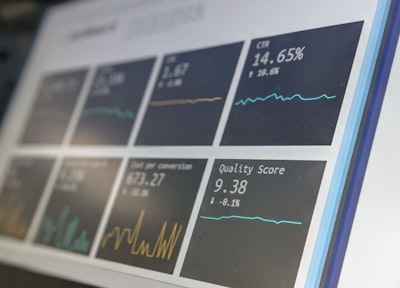
Another necessary layer is business intelligence. When knowledge is connected, it can be measured. Q2BSTUDIO integrates BI dashboards, for example with Power BI, so management can visualize the evolution of flows instead of relying on manual reports. These dashboards show average resolution time, tasks that consume more hours, and bottlenecks that deserve attention.
Automation and AI agents appear once the graph has enough information. A company can delegate to AI agents the classification of requests, preparation of replies, search for similar projects, or updating records. Every action is traced, and when the decision is relevant, human approval is requested. This point is important: AI does not replace critical judgment; it strengthens it.
For senior management, the expectation should be clear: an intranet with knowledge graph is not a corporate website with a search box. It is a process enabler. For IT management, the difference is in the data model. A graph makes it possible to represent facts and relationships as queryable objects, and processes are modeled on top. This turns the intranet into an operational source of truth, not a document download area.
In the design process, Q2BSTUDIO takes time to understand how each team works. It is not enough to analyze documents; it is necessary to observe conversations, approvals, and the criteria people use when deciding. That information feeds the graph and makes the difference between an intranet that only archives and an intranet that thinks.
It is also useful to define metrics from the start. For example, response time to a request, number of steps in a process, or percentage of tasks with manual intervention. These metrics make it possible to compare the situation before and after, and they show management whether the investment is generating value or whether the approach should be adjusted.
One advantage of working with Q2BSTUDIO is that the solution can be implemented in phases. The first stage usually involves connecting current knowledge sources and creating a semantic repository with advanced search. In the next phase, integrations with ERP, CRM, and productivity tools are added. Then come automated workflows and AI agents. Each phase generates learning and allows investment to be adjusted before scaling the entire platform.
Integration with existing systems is a common demand in Bilbao, where many companies combine legacy industrial software, cloud tools, and office suites. Q2BSTUDIO prepares connectors with SAP, Salesforce, Microsoft Dynamics, Odoo, SharePoint, and custom APIs. The goal is not to replace the current technology base, but to give it a central brain. The knowledge graph acts as an interpreter between systems that previously did not communicate.
On the business side, return on investment is observed when employees stop searching and start executing. Onboarding time goes down, because a new person can explore the graph and understand how projects relate. Tacit knowledge from more experienced people is recorded in connections, not in lost documents. And management has traceability of operations to detect inefficiencies that were previously hidden.
Team adoption is the factor that determines success. Q2BSTUDIO works with project managers to design the user experience, train employees, and define indicators that show progress. It is not about installing technology and delivering a manual, but about creating a system that people want to use because it makes their day easier.
Q2BSTUDIO's combination of services includes web development, AI, automation, cybersecurity, cloud, and BI. This comprehensive view avoids the usual problem of hiring several providers that do not talk to each other. For a company in Bilbao that wants to modernize its intranet, having a single technical team reduces friction and accelerates results.
Q2BSTUDIO does not sell a generic license. Every connection, every permission, and every flow responds to a real business context. That is the difference between buying a tool and building a system.
In practice, Q2BSTUDIO sees that the best results are achieved when the project starts with critical processes, not entire departments. Choosing a specific flow — for example, incident management, purchase requests, or customer service — allows the impact of the intranet to be measured clearly. From that first win, the graph is expanded with more domains and more value.
An organization's knowledge does not live only in databases. It also lives in accumulated experience, tacit agreements, and the small shortcuts that teams teach each other. An intranet with knowledge graph can capture part of that intelligence and make it available to the whole company.
Bilbao represents an industrial and service environment with very specific needs. The economic diversity of the city makes each intranet unique: an engineering firm that needs to connect technical specifications is not the same as a service company that needs to know who spoke with each customer. An intranet with knowledge graph is designed around that uniqueness.
The question for 2026 is not whether a company needs AI, but how to integrate it into daily operations. An intranet with knowledge graph is the foundation for AI to work with organized, meaningful data. Without that foundation, virtual assistants are still charming demos. With it, they become part of the team.
In addition, the flexibility of the phased model allows companies to start with a proof of concept in a specific area and expand later. This strategy reduces investment risk and makes approval easier, because each new phase demonstrates value before moving forward.
Q2BSTUDIO offers an initial discovery conversation to map the needs of each company. In that session, the flows with the most potential, the technical starting point, and measurable short-term goals are defined. The goal is for the company in Bilbao to have a clear roadmap, without hidden commitments or unnecessary technology.
An intranet with knowledge graph in 2026 is much more than a place to upload files. It is a living system that learns, connects, and acts with people. Q2BSTUDIO brings the technical and business vision to build it with judgment, security, and measurable results.