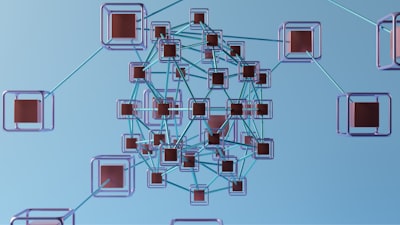
In 2026, an industrial company in Barcelona with 40 employees faced a common problem: critical information was scattered across the ERP, spreadsheets, shared folders and the knowledge of key people. Every manual process consumed hours, new hires took weeks to get up to speed and management lacked a unified view. Q2BSTUDIO's proposal was to design an intranet with a knowledge graph: a semantic layer that connects documents, data, teams and workflows in a single environment.
Before starting development, Q2BSTUDIO carried out a digital maturity assessment. Fourteen critical processes, 36 data sources and 9 required integrations were identified. The goal was not to replace existing tools, but to build a knowledge layer to unify them. To do this, custom applications, artificial intelligence and automation were combined, while keeping security and regulatory compliance as non-negotiable requirements.
The final solution included an intranet portal based on custom web technology, a knowledge graph generated from technical documents, internal procedures and Teams conversations, and a set of AI agents capable of answering questions, drafting summaries and suggesting actions. These agents did not act without control: every decision with economic or legal impact went through a human checkpoint, a key feature for internal adoption.
One of the most relevant technical elements was process orchestration with automation tools, which connected the semantic knowledge layer to operational systems. This made it possible, when an incident occurred, for the system to locate the associated procedure, prepare the corresponding form and send the notification to the manager. Human validation remained, but the preliminary work was no longer manual.
The infrastructure was deployed in the cloud, using AWS and Azure services, taking advantage of Azure OpenAI, secure storage and private networks. Q2BSTUDIO gave special attention to cybersecurity: role-based access control, Active Directory authentication, encryption in transit and at rest, and auditing of every interaction with AI models. The company was able to demonstrate traceability in the event of an inspection or internal audit.
For management, a Power BI dashboard was enabled to consolidate usage indicators, resolution times, cost per process and automation level. For the first time, management had a clear view of which departments generated the most administrative burden and which automations delivered the highest return. This visibility was essential to extend the project to other areas of the organization.
The project was executed in phases. During the first weeks, key performance indicators were defined and a measurement baseline was established. Then a minimum viable product was developed with three high-impact use cases: semantic document search, a supplier onboarding assistant and automatic generation of quality reports. The pilot was presented to a small group of users, feedback was collected and the models were adjusted before the full deployment.
Results after the third month showed a 37% reduction in time spent searching for internal information and a 26% increase in response speed for recurring requests. In processes assisted by AI agents, manual administrative tasks decreased by more than half, and user satisfaction exceeded 85% in the internal survey. Beyond the numbers, the organization noticed a qualitative improvement: fewer interruptions, fewer errors and greater team autonomy.
A decisive aspect was integration with the ERP and CRM. Q2BSTUDIO developed specific connectors to synchronize master data, avoid duplicates and enrich the graph with updated information. This meant that knowledge did not become outdated. AI models were retrained with user corrections, so answer accuracy improved over time.
The intranet with knowledge graph project also made it possible to address cybersecurity from a business perspective. By centralizing access to information, uncontrolled copies of documents were reduced and clearer control policies were established. Q2BSTUDIO performed penetration tests on the platform before production launch and documented incident response protocols.
Another lesson learned is that adoption does not depend on technology, but on experience design. For the operations team to trust the assistant's answers, each answer showed the sources used and allowed the original document to be opened. This gesture of transparency generated trust and reduced resistance to change. The portal also included a training section that explained each automation in plain language.
The company also benefited from the BI view. Power BI was connected to portal usage data and transactional systems, creating a dashboard that allowed comparing the workload before and after implementation. Area managers could configure their own alerts without depending on the technical department. That autonomy was one of the keys to keeping the project alive beyond the initial launch.
From a technical point of view, the architecture combined custom applications in the presentation layer, REST services for integration, a graph database to store semantic relationships and an indexing service that fed the search models. The AI agents ran in a private environment, protected by VPN and identity policies, preventing sensitive information from leaving the company's control.
Q2BSTUDIO supported the client during the first months of operation, monitoring performance, reviewing audit logs and adjusting model confidence thresholds. The company configured an administration portal so that the business team itself could update prompts, review the question history and manage AI usage budgets without requiring advanced technical knowledge.
The case shows that an intranet with a knowledge graph is not just an improved document repository. It is an infrastructure capable of transforming how an organization accesses its knowledge, automates repetitive tasks and makes decisions. For the Barcelona company, the project marked the starting point of a continuous data-driven improvement program.
If a company wants to achieve similar results, Q2BSTUDIO recommends starting with a brief diagnosis, defining concrete metrics and choosing two or three critical workflows. Technology must serve a clear business objective, and security must accompany the entire data lifecycle. The combination of custom software, AI, automation, cybersecurity and cloud makes it possible to build solutions that truly remain in the organization.