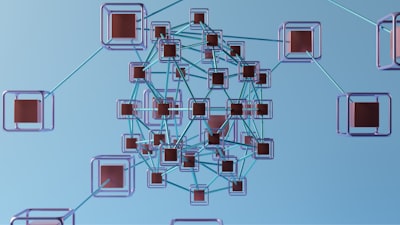
In today's business environment, information is the most valuable asset, and a professional intranet must become the backbone that connects people with the knowledge they need to decide and execute. An intranet with knowledge graph goes far beyond the traditional repository: it builds a semantic map of the organization, where every document, person, project, client and process is related with context. Q2BSTUDIO, a software development company in Barcelona, has turned this architecture into a lever for transforming productivity in teams that handle high volumes of information.
The problem is not a lack of technology, but fragmentation. Companies often store knowledge across multiple systems: email, Microsoft Teams, SharePoint, ERP, CRM and internal databases. Each team works inside its own silo, and when someone needs an answer, they must guess where the document is or who to ask. This lost time is repeated every day and becomes an invisible cost for the organization. An intranet with knowledge graph solves this fragmentation by representing knowledge in a connected and queryable way.
The difference from a classic intranet is remarkable. A traditional search engine shows a list of files sorted by keywords. A knowledge graph understands relationships between concepts. For example, if an employee searches for 'remote work policy', the system can show, in addition to the document, the responsible person, exceptions by department, associated applications and the latest published changes. This contextual view reduces uncertainty and speeds up decision making.
Q2BSTUDIO approaches this challenge with a combination of custom software applications, artificial intelligence, automation and cloud. The company designs custom applications that allow companies to keep their current systems while extending their analytical and operational capability. Instead of imposing a generic platform, it builds a solution that respects existing workflows and integrates with the systems the company already uses.
For an intranet with knowledge graph to work, it is necessary to design a semantic model that represents the key business entities: clients, products, projects, employees, policies, contracts, incidents. On top of this model, search indexes, navigation relationships and visibility rules are built. Q2BSTUDIO develops this model together with the client, identifying data sources and quality criteria that guarantee the reliability of information.
The artificial intelligence component relies on retrieval augmented generation, also known as RAG. Instead of sending questions to a generic external model, the system first searches the corporate knowledge base and uses those results to generate a contextual answer. This enables AI agents to respond accurately and also cite sources. If an employee asks 'what does a client need to renew a contract?', the agent locates the contract, the commercial terms and the approval flow, and provides a complete answer.
AI agents do not only answer questions. They also execute administrative and operational tasks: create a support ticket, update a CRM record, send a notification to the financial officer or generate an incident summary. Connected through APIs, these agents drastically reduce repetitive manual work. Process automation becomes a natural extension of the intranet, not an isolated module.
Technology infrastructure plays an essential role. Q2BSTUDIO deploys solutions on AWS and Azure cloud services, with private environments, VPN tunnels and restricted endpoints when the intranet must connect with on-premises systems. This architecture guarantees data confidentiality and service availability, while allowing horizontal scaling as knowledge volume grows.
Security is a cross-cutting layer in every project. The intranet includes role-based access control, authentication integrated with Active Directory, audit logging of all actions and privacy policies aligned with GDPR. In addition, Q2BSTUDIO performs cybersecurity assessments and pentesting to identify potential vulnerabilities before production. In regulated environments, human supervision checkpoints are included to review automated decisions with greater impact.
Business Intelligence is equally important. An intranet with knowledge graph generates a rich source of data about knowledge usage: what information is searched most, which areas find answers on their own, which processes require manual intervention and where bottlenecks occur. Q2BSTUDIO integrates these indicators into BI/Power BI dashboards, where management can visualize tool adoption and the efficiency of automated flows.
From an operational perspective, the benefits are measurable. Organizations that implement a semantic intranet reduce information search time, speed up onboarding of new profiles, decrease errors caused by outdated data and improve decision traceability. In Q2BSTUDIO projects, reductions of 30% to 60% in repetitive manual tasks, increases of up to 45% in process cycle speed and a significant drop in repetitive queries to internal support teams have been observed.
Methodologically, the process begins with a discovery phase in which workflows, information sources, technological dependencies and priority KPIs are mapped. This analysis makes it possible to define a first viable increment in four to eight weeks. From there, the project develops in phases, prioritizing the use cases with the highest return and extending the intranet in a controlled way to other departments or countries.
The budget for an intranet with knowledge graph is not a fixed figure. It depends on scope, the number of integrations and the level of customization required. A functional project usually ranges between 5,000 and 60,000 euros, with a payback period estimated between six and twelve months. The key is to define success indicators from the start and choose a partner that understands the business, not just how to write code.
A differentiating aspect of Q2BSTUDIO is the autonomy delivered to the client. Each solution includes a custom administration portal, where business teams can configure agent prompts, monitor the costs of each flow and adjust automations without depending on the IT department. This turns the intranet into a living platform, able to evolve with business needs and incorporate new knowledge without friction.
Ultimately, an intranet with knowledge graph is a strategic decision that transforms corporate knowledge into an accessible, reliable and actionable asset. For companies in Barcelona and its surroundings, having a technology partner that combines custom software development, artificial intelligence, cloud and cybersecurity makes the difference between an isolated initiative and a sustainable performance improvement. Q2BSTUDIO offers a free discovery session to analyze how these solutions can be applied to the specific context of each organization and start building the intranet its team needs.