In 2026, the corporate intranet is no longer a simple document repository; it has become a strategic asset. Organizations in Alicante that want to compete in an increasingly digital market need an intranet with knowledge graph, a system that organizes information through semantic relationships and lets people find answers quickly and contextually. This article offers a technical and business perspective on how to launch this type of platform and why Q2BSTUDIO, a software development and technology company, is a suitable partner for the project.
What makes an intranet with knowledge graph different? Unlike classic solutions based on folders and keyword searches, this approach models the links between documents, teams, processes and objectives. If an employee searches for a teleworking policy, for example, the system not only shows a file, but also presents the current version, the owner, the approval flow and related FAQs. In practice, the intranet stops being a destination for finding files and becomes an assistant that understands context. This connected view accelerates onboarding, reduces repetitive work and improves decision-making in areas such as HR, operations or customer service.
Companies in Alicante have a clear opportunity to stand out. The province's productive fabric combines industrial firms, international trade, hotels and a growing tech community. Many of these companies use AI in isolated tools, but few have integrated it into core processes. To capture its full potential, buying a generic platform is not enough: what is needed is custom development that takes into account existing systems, internal culture and business goals. Q2BSTUDIO addresses this challenge with custom software development that adapts to each organization.
An intranet with knowledge graph needs a semantic layer that connects data with natural language. This is where AI delivers real value. Instead of simply indexing documents, the platform understands the intent of the query, consults the graph and builds an accurate answer with verifiable references. Q2BSTUDIO designs this layer with artificial intelligence, retrieval augmented generation (RAG), AI agents and automation workflows that execute actions within the intranet: create an incident, request a signature, update a record or route a task to the right team. These agents can operate autonomously on repetitive tasks, always with supervision and traceability.
Adding generative AI to the intranet requires rethinking data security and governance. There cannot be open answers about confidential information. Therefore, a serious implementation includes role-based access control, audit logging, personal data protection and human supervision at critical points. Q2BSTUDIO integrates these capabilities into every project, ensuring that AI acts within the boundaries defined by the company's security policy.
Infrastructure also plays an essential role. A modern intranet needs a robust cloud deployment, whether AWS or Azure, with secure connectivity between the cloud environment and on-premises systems. Q2BSTUDIO uses VPN, private endpoints and cybersecurity practices to protect data traffic and external user access. In this way, the intranet can integrate with ERP, CRM, office tools and industry platforms without exposing sensitive information.
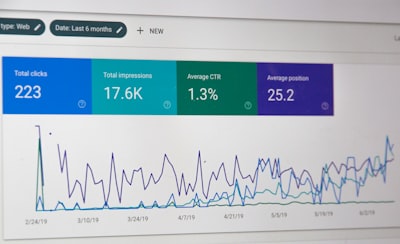
Another differentiating factor is the ability to measure results. An intranet with knowledge graph must translate into concrete indicators: cycle times, operational load, internal satisfaction levels or knowledge reuse rates. To visualize this information, Q2BSTUDIO includes dashboards based on BI and Power BI, so management has a clear view of the platform's impact and can continuously detect improvement opportunities. The combination of BI and automation makes it possible, for example, to detect bottlenecks and propose changes before they affect the business.
The implementation process follows a results-driven methodology. First, a diagnosis of current workflows and available information sources is carried out. Then, a delivery plan is defined with a minimum viable product in a short timeframe. Afterwards, Q2BSTUDIO handles integration with SAP, Salesforce, SharePoint, Microsoft Teams or other tools through APIs, as well as the automation of internal processes. In addition, training plans are established so the internal team can administer the platform and evolve its own workflows. Finally, monitoring mechanisms are launched to optimize the system based on real data.
The required investment depends on scope, but it should be understood as a strategic decision rather than an operating expense. A limited implementation can start with a pilot in a specific area, validate the return and then expand progressively. Companies that integrate AI into their core processes achieve much greater impact than those running isolated experiments. Every company has a different starting point; that is why the discovery phase is critical. Q2BSTUDIO offers a free discovery session to analyze the specific case, define success indicators and propose a realistic roadmap, with no obligation.
In short, the intranet with knowledge graph represents a natural evolution of the digital workplace. For companies in Alicante, adopting this technology can become a clear competitive advantage in 2026 and beyond. Doing it well requires a combination of custom software, AI, cybersecurity, cloud and continuous outcome measurement, an integrated combination that Q2BSTUDIO provides. Contacting their team is the first step to transforming how an organization shares knowledge and makes decisions.