
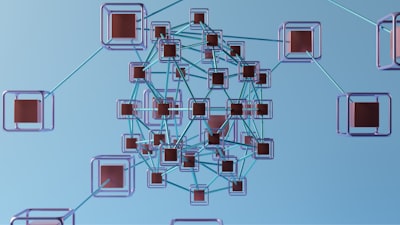
In 2026, companies in Alicante face a challenge that sounds simple but is not: getting people to find the right information at the exact moment. An intranet with a knowledge graph goes beyond a document repository; it turns scattered data into a semantic network of entities, relationships and contexts. This article explains how to find the right technology partner in Alicante to deploy this infrastructure without falling for generic promises.
For years, the corporate intranet was a set of static pages, shared folders and search engines that returned results by text matching. That model is exhausted. With today's information volume, employees cannot rely on knowing that a document exists or memorizing routes. They need a system that understands the intent of the query and delivers answers, not just links. A knowledge graph solves this by organizing information as nodes and relationships.
Let's use an example. A maintenance technician searches for a safety policy to work on a specific machine. In a traditional intranet, they get a list of PDFs. In an intranet with a knowledge graph, the system knows that the technician belongs to a shift, that the machine is in a plant, that there is an associated regulation and that an external supplier also needs that same document. The answer includes context, contacts, alerts and related actions. That level of understanding cannot be achieved with a simple text search.
Alicante's business fabric combines industrial companies, services, tourism, retail and technology. Many organizations have hybrid teams, with people in the city, in other regions or working remotely. In this scenario, the intranet stops being a digital bulletin board and becomes a living knowledge system. Having a local provider that understands this reality is decisive, but not enough: it also must have the technical ability to design a robust architecture.
When evaluating a provider of intranet with knowledge graph in Alicante, five dimensions are useful. First, methodology: how it discovers relevant information, how it models entities and how it validates that relationships are useful. Second, integration: the graph does not live in isolation; it must connect with the ERP, the CRM, the active directory, messaging tools and databases. Third, security: what access, encryption and audit mechanisms are applied. Fourth, analytical capability: how usage and impact are measured. Fifth, maintenance: who updates the model and how often.
Q2BSTUDIO approaches these projects as one piece of a larger digital strategy. We do not start from a standard product that is configured in a few days; we design a solution based on the reality of each company. This includes custom software development, integration with AWS/Azure cloud services and the creation of AI agents that enrich the graph with every interaction.
Custom software development allows the intranet to adapt to specific workflows instead of forcing the company to change the way it works. On that foundation, the knowledge graph can grow without artificial limits. At the same time, AWS/Azure infrastructure ensures high availability and real scalability. If the number of users or documents grows, the system responds without requiring a complete redesign.
Artificial intelligence is no longer a futuristic feature. In an intranet with a knowledge graph, AI is what keeps the model alive. AI agents detect duplicates, classify documents, extract entities, suggest relationships and answer employee questions in natural language. With this approach, adding a new document does not end in a lost folder: the system places it in its semantic context automatically.
Cybersecurity is a precondition, not an option. A knowledge graph concentrates a lot of sensitive information: customer data, intellectual property, internal processes, contracts. If access is not properly controlled, the advantage of having a semantic network becomes a risk. Therefore, any project must include strong authentication, granular permissions, encryption in transit and at rest, and an activity log that can detect anomalous behavior.
Measurement also matters. A Business Intelligence layer, for example with Power BI, makes it possible to see which areas consume the most knowledge, which content is obsolete, which searches produce no answer and how usage evolves over time. That data guides improvements and demonstrates return on investment. Without metrics, a knowledge graph can remain an experiment without governance.
Alicante companies that already use AI in isolated areas wonder why they don't get complete results. The usual reason is that these efforts are siloed: a chat assistant, an invoice automation, a data dashboard. An intranet with a knowledge graph connects all those pieces. AI stops being a set of tricks and becomes part of daily operations.
The economic return is tangible. When employees find answers in seconds instead of minutes, productivity rises. When a new team member learns by exploring the graph instead of asking colleagues, onboarding shortens. When a key person leaves the company, part of their knowledge remains in documented relationships. In mid-sized companies, those benefits usually exceed the project cost within a few months.
When looking for a partner, ask for concrete cases. A serious provider will explain how it has modeled ontologies, how it handles synonym tables, how it deals with unstructured data or how it has prevented incorrect inference. It must also speak clearly about maintenance effort. Demos are necessary, but they don't prove delivery capacity in a real environment with imperfect data.
The advantage of working with a local company in Alicante is closeness. Discovery sessions, user interviews and training are more effective when the team knows the working culture. Q2BSTUDIO combines that closeness with a professional vision and agile delivery techniques. It is not a generic consultancy that lands for a project and disappears: it is a technology partner that participates in the evolution of the system.
It is also worth asking about project sustainability. Who keeps the graph updated after the initial team leaves? Can users contribute new concepts or is a technical profile always required? Are there data quality policies? A good provider leaves clear documentation and trains client staff so the solution doesn't depend on a single person.
In short, finding an intranet with a knowledge graph in Alicante in 2026 requires more than a provider directory. It requires understanding what is needed, what kind of architecture can support it and what security and continuity guarantees each candidate offers. The mature technology is there; the difference lies in the quality of design and execution.
Q2BSTUDIO develops technology solutions from a practical perspective. For a company that needs an intranet with a knowledge graph, the starting point is usually a discovery session where use cases, involved systems and return expectations are analyzed. From there, a project is built with measurable milestones, avoiding monolithic deliveries and impossible promises.
If you are looking for an intranet that understands your business, relates documents, people and processes, and improves month after month, Q2BSTUDIO's proposal connects custom software, AI, cloud and cybersecurity in a single solution. The company is not just a tool integrator; it is a development studio that designs, builds and supports.
The next step is to talk. Each project is different, and Alicante has a mature enough ecosystem to take advantage of this technology. Set clear criteria, visit real cases and talk with the people who will maintain the system. If the goal is to make decisions with connected and contextual information, an intranet with a knowledge graph will be a competitive advantage.

