In 2026, a company's competitive edge no longer depends solely on the technology it buys, but on its ability to connect internal knowledge with decision-making. An intranet with a knowledge graph lets teams access the right information at the right time, not through generic search engines, but through a living map of relationships between people, projects, processes and documents. This evolution turns the intranet from a passive repository into an intelligent system that learns, anticipates and recommends.
The problem with traditional intranets is not the lack of content, but the lack of context. Employees face endless folders, duplicate documents and search engines that return lists of files without explaining why they matter. The result is wasted time, avoidable mistakes and a corporate culture that ends up depending on the memory of a few people. A knowledge graph intranet removes this friction by representing information as a semantic network rather than a simple file tree.
The key difference is that the graph stores entities and links. For example, an employee is linked to a project, that project uses a specific technology, that technology was documented by a team, and that team is located in a certain region. When a user runs a query, the system does not merely search for keywords: it traverses the graph, interprets intent and offers answers with real context. This makes it possible to discover internal experts, understand the impact of a system change or retrieve information naturally.
From a technical perspective, this kind of intranet requires a solid integration layer, a domain ontology, semantic search services and a granular permission model. It is not about installing a generic product, but about designing a solution that understands each business's particular terminology and processes. Q2BSTUDIO addresses this challenge through custom software development and data architecture, combining experience in Azure and AWS cloud environments with a practical, results-driven approach.
AI agents have become a central piece in this type of architecture. An agent can automatically classify documents, detect outdated information, generate summaries for each department or answer frequent questions based on corporate knowledge. But for those agents to be reliable, they must operate on a well-governed data space. The knowledge graph provides exactly that structural context: AI does not hallucinate because it answers from a bounded and verifiable network.
In practice, Q2BSTUDIO deploys these agents with private models or through cloud AI services, depending on the sensitivity of the information. For hybrid environments, secure tunnels and private connections to virtual machines are used, so critical data never leaves the authorized perimeter. This combination of AI and AWS/Azure cloud makes it possible to scale without compromising performance or privacy.
Cybersecurity must be present from day one. An intranet that centralizes sensitive knowledge becomes an obvious target for internal and external attacks. Therefore, role-based access controls, authentication integrated with Azure Active Directory, encryption in transit and at rest, audit logging and endpoint protection are mandatory. Q2BSTUDIO incorporates security principles throughout the software lifecycle and performs resilience tests to minimize vulnerabilities.
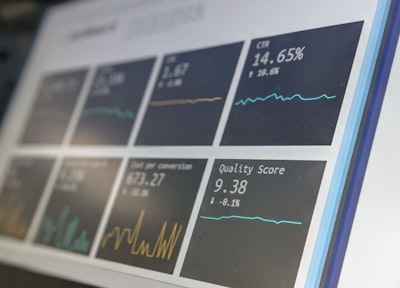
Another aspect that separates a mature initiative is the ability to measure its impact. A knowledge graph intranet generates valuable data about what employees search for, how they navigate, which answers are useful and where bottlenecks occur. Putting that data into a Business Intelligence dashboard allows management to see adoption, satisfaction and productivity metrics in real time. Power BI dashboards connected to the graph help turn information into decisions.
The business benefits can be seen in specific processes: onboarding, HR inquiries, project management, customer service or internal communication. By reducing the time spent looking for information, teams devote more time to high-value work. In addition, understanding the relationships between systems and people helps organizations anticipate risks and coordinate changes with greater agility.
Q2BSTUDIO's approach to this kind of project begins with a discovery phase in which current workflows, pain points and key performance indicators are analyzed. From there, a minimum viable product is defined and can be launched in a few weeks, with clear measurement targets and a defined return-on-investment model from the outset. This methodology removes uncertainty and lets steering committees approve the project with data, not intuition.
In 2026, the difference between a company that takes advantage of AI and one that simply experiments with it lies in integration. The knowledge graph becomes the central nervous system where AI, automation and people work on the same reality. Companies that understand this opportunity build advantages that are hard to copy, because they rely not only on algorithms, but on the unique knowledge they have modeled.
In short, a knowledge graph intranet is much more than an internal improvement project: it is a strategic lever for competing in an information-saturated environment. Organizations that adopt it with the support of a solid technology partner gain speed, precision and adaptability. The first step is to understand the starting point and define the road ahead.