A corporate intranet is no longer just a document repository. When combined with a knowledge graph, it becomes a system capable of connecting data, people, projects and processes. Many executives ask whether that combination can predict trends. The answer is yes, as long as the solution is designed with a proper architecture, integrated data and analytical models that provide context. At Q2BSTUDIO we build this kind of platform with custom software, artificial intelligence and a clear business vision.
A knowledge graph organizes information as entities and relationships. Instead of isolated folders, each element — a customer, a product, an employee, a project — is linked to others through semantic connections. That structure allows the intranet to understand complex queries and provide contextual answers. But the real value appears when those connections are analyzed to discover patterns. A rise in incidents in one department, for example, can be related to recent process changes and trigger an early alert.
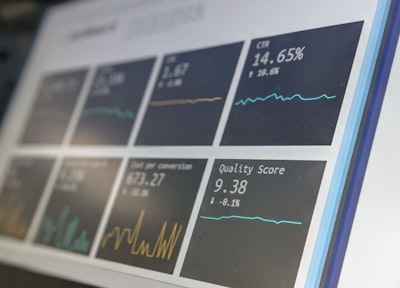
Predicting trends does not depend only on technology, but on data quality and integration. A knowledge graph intranet needs to feed on internal and external sources: ERP, CRM, forms, documents, email or HR systems. On that base, a business intelligence layer can be built to visualize indicators and trends. Tools such as Power BI help turn raw data into executive dashboards, while the graph enriches those dashboards with relationships that a traditional report does not show.
Predictive models use time series, regressions, classifications or simulations to anticipate behavior. For example, they can forecast the demand for a service, identify customers at risk of churn or estimate workload in the coming months. A knowledge graph intranet brings those results directly into employees' workflows: when searching for a customer, the system shows their retention probability; when checking a process, it indicates the risk of delay. That is the leap from a passive system to a proactive one.
AI agents add a layer of intelligent automation. These agents can monitor the knowledge graph, analyze changes, generate summaries and recommend actions. They can also simulate scenarios: what happens if we reduce inventory by 20%? How would a campaign affect the sales team's workload? At Q2BSTUDIO we integrate AI agents into corporate intranets so teams can make better decisions without relying on the IT department for every query.
Security is an essential condition. A predictive intranet handles strategic information and personal data. That is why we work with AWS or Azure cloud, encrypted connections, VPN, federated identities and role-based access policies. Cybersecurity is not an add-on, but part of the design. Governance must also include audit logs and human review checkpoints to avoid unjustified automatic decisions. A predictive model helps, but the final decision must be explainable.
Integration with existing systems is another critical factor. Many companies already use SharePoint, Microsoft Teams, Active Directory, SAP, Salesforce or other platforms. A knowledge graph intranet does not force them to replace those tools; on the contrary, it complements them. The key is to connect nomenclatures, synchronize data and respect established workflows. With a well-designed integration layer, the organization keeps its tools and gains a unified view.
Implementing this kind of solution requires a method. At Q2BSTUDIO we start with a discovery phase to understand processes, identify data sources and define key indicators. Then we build a minimal viable product in a few weeks and iterate until we reach the desired scope. This approach fits our model of custom software development, which recovers the particularities of each business instead of forcing generic software.
Some use cases show the real potential. A legal intranet can predict which contracts require urgent review based on deadlines and clauses. A manufacturing intranet can anticipate bottlenecks from work orders and machine data. A sales intranet can identify purchasing patterns and recommend retention actions. All these examples prove that predicting trends is not a futuristic promise, but a practical application of artificial intelligence in daily work.
Difficulties also exist. Data quality is the first obstacle: if records are incomplete or duplicated, predictions lose reliability. Resistance to change appears when employees do not understand how to interpret a probability or why the system suggests an action. That is why training teams and designing a clear interface are essential. Results must be explained transparently, showing not only the forecast, but also the factors that support it.
Impact is measured with concrete indicators. Reducing search time, improving decision-making, reducing errors or increasing productivity are some examples. With a BI dashboard, leadership can verify whether the intranet is meeting its goals. Power BI allows combining knowledge graph indicators with operational metrics, generating a complete executive view.
In conclusion, a knowledge graph intranet can predict trends if it is built with the right components: integrated data, analytical models, AI agents, cloud security and an interface that people actually use. It is not a magic tool, but well-executed engineering. Q2BSTUDIO combines experience in AWS and Azure cloud, cybersecurity, business intelligence and software development to deliver sustainable solutions. If your organization wants to move toward a predictive intranet, starting with a feasibility analysis and a measurable pilot is a sensible first step.