An intranet with a knowledge graph represents a qualitative leap over traditional portals. Instead of a hierarchical folder structure, knowledge is organized as a network of related entities: people, projects, customers, skills, decisions and documents. This allows employees to find answers in seconds, discover internal experts and receive contextual recommendations without relying on keyword searches. The idea sounds good on paper, but its implementation raises reasonable concerns in operations and technology teams. How do you change the system without stopping the business? How do you prevent the project from becoming an isolated lab? What role do artificial intelligence and data play in this transformation?
The starting point is not technology, but the knowledge the organization needs to govern. A knowledge graph is built from an ontological model that defines relevant entities and their relationships. For example, 'person works on project', 'project uses system', 'document belongs to process'. This shared semantics allows the intranet to understand queries like 'who is the person responsible for billing in Spain?' and return a precise answer with supporting evidence. That is the foundation for employees to trust the system.
The technical side must rely on a solid architecture. It is necessary to connect heterogeneous data sources, apply extraction and normalization processes, and resolve duplicate entities. This is where connectors to document management systems, ERP, CRM and collaboration tools come into play. The resulting graph can be stored in a graph database or in a managed service. Deployment options in cloud AWS/Azure make it possible to scale without rigid infrastructure investments. At the same time, a cybersecurity strategy should be defined to protect access to information according to the user's role.
Artificial intelligence extends the value of the knowledge graph when it is integrated into daily workflows. An internal assistant can use retrieval augmented generation (RAG) techniques to answer questions based on graph relationships, citing the exact source. But the potential goes further. AI agents can execute actions: create a ticket, summarize a project, schedule a contract review or update a customer record. The difference is that they do not act on a loose document, but on a semantic map that connects decisions, people and processes.
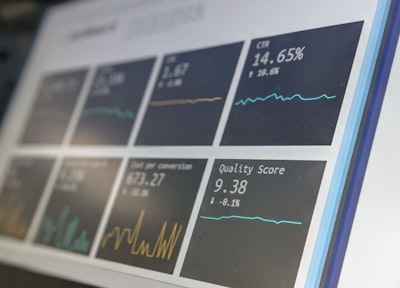
The measurement layer should not be neglected. A knowledge graph intranet needs indicators to know whether it is fulfilling its function. With a data model connected to BI/Power BI, managers can see in real time usage by department, the most demanded topics, knowledge gaps and the effectiveness of AI agents. That visibility helps prioritize improvements and justify the investment to senior management. Analytics becomes an accelerator, not simply a final report.
The key to implementing this type of intranet without disruption lies in combining an incremental strategy with clear communication. Instead of a 'big bang' that replaces everything at once, it is better to choose a specific business process and a representative user group. With that pilot, ontology, data quality and search experience are validated. Then the rollout expands gradually to other areas, keeping legacy systems running in parallel for a while. In this way, people can compare results and trust the new environment before it becomes the only way of working.
Training is a strategic factor. When people understand that the intranet is not just a search engine but an assistant that knows the organization, they change the way they use it. During the first weeks, the project team must support users, answer questions and collect exceptions that had not been foreseen. It is also advisable to appoint internal ambassadors who help spread success stories and normalize the use of the graph in daily routines.
Governance defines who can create, modify or retire knowledge. A knowledge graph without clear owners eventually degrades. It is important to set administration roles, review flows and a data quality policy. Human supervision in sensitive decisions provides confidence. Q2BSTUDIO recommends incorporating audit checks and mechanisms to correct errors quickly, so the platform matures over time.
Q2BSTUDIO is a software development company with experience in digitalization and artificial intelligence projects. Its approach combines custom software development, integration with existing systems and the deployment of AI in secure environments. For a knowledge graph intranet, the Q2BSTUDIO team works with the client to define the ontology, select the cloud infrastructure, design the security model and launch AI agents. This holistic view avoids fragmented solutions and ensures that technology serves the business.
The connection with existing management systems is another decisive factor. An intranet cannot live in isolation if it wants to be useful. It must integrate with collaboration tools, corporate directories, business applications and databases. Thanks to custom software, it is possible to build specific connectors for each environment, from an industrial ERP to a legacy application. This work is done with APIs and modern integration patterns that avoid duplication of effort.
The benefits of this approach are measurable from the early stages. Onboarding times for new employees are reduced when they have access to a guided knowledge network. The number of repeated questions to IT or HR departments decreases, because employees solve their doubts in the intranet itself. Furthermore, the graph helps identify bottlenecks in processes: decisions that wait too long, documents that do not reach the right owner or projects that depend on a single person's knowledge. This information guides continuous improvement plans.
In short, a knowledge graph intranet is not a technology fad, but a working platform that gives meaning to scattered organizational data. Its implementation can be carried out without disruption if it is approached with an incremental strategy, clear governance and the collaboration of an experienced technology partner. Artificial intelligence, cybersecurity, cloud and analytics are not optional layers; they are necessary components for the solution to work in production and generate sustainable value.