The corporate intranet has ceased to be a simple place to upload documents. Today it is expected to help people find answers, connect information and automate tasks. Companies that still rely on keyword-based search waste time, duplicate effort and make decisions with incomplete data. A knowledge graph changes that paradigm: instead of indexing files as if they were isolated pieces, it models the reality of the business through entities and relationships. A project, for example, is not a folder; it is an entity connected to its owner, its deliverables, its budget, the clients involved and the knowledge generated during its execution. That semantic network is the foundation on which an intranet with artificial intelligence, automation capability and data governance is built.
The starting point is understanding that corporate knowledge does not live in a single system. Information is spread across CRM, ERP, shared documents, email and team conversations. When someone needs a critical piece of data, they usually spend hours searching, asking colleagues or recreating something already solved before. That friction has a direct cost, although many organizations do not measure it. An intranet with knowledge graph removes that friction by providing contextual answers instead of lists of files.
The fundamental difference from a classic intranet is semantics. In a knowledge graph, concepts are connected by business relationships. The person, department, document, policy, incident, project and objective form a network. When searching for a hiring policy, the system does not show every PDF containing those words, but the current version, the owner who approved it, review dates and related frequently asked questions. This approach allows the intranet to understand user intent and offer actionable information.
The business impact appears on several fronts. First, productivity: employees spend less time searching and more time executing. Second, consistency: with a single source of truth, decisions are based on up-to-date information. Third, innovation: when knowledge is connected, previously invisible links emerge. And fourth, automation: a knowledge graph feeds workflows that detect changes, notify the right people and update records without manual intervention.
For management to approve this kind of investment, it must be expressed in terms of return. Reducing onboarding time for new employees, lowering operational errors, increasing response speed to incidents and improving project execution are some of the variables that generate a clear ROI. This is not about modernizing for its own sake, but about linking every improvement to a measurable economic value.
From a technical perspective, an intranet with knowledge graph is built on a combination of custom software, artificial intelligence, cloud infrastructure and integration layers. Q2BSTUDIO, a software development and technology company, approaches such projects with a modular focus: first critical processes are identified, then the knowledge model is defined, and finally the solution is implemented on the most suitable architecture. In many cases, AWS/Azure cloud is used to provide elasticity and lower operating costs, and generative AI services are included when the context demands it.
Artificial intelligence inside the intranet is not a shallow chat. Q2BSTUDIO designs systems based on retrieval augmented generation —RAG— that query the knowledge graph to provide traceable answers that are faithful to company data. In addition, AI agents can take action: create an incident, review a document, update a CRM field or request approval. These agents always work within defined boundaries and with human supervision, reducing risk and increasing trust in the technology.
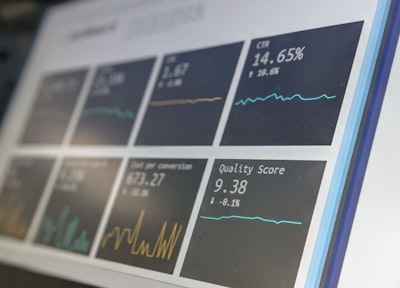
Decision-making is also transformed. By integrating the intranet with Business Intelligence and Power BI tools, management obtains dashboards that combine corporate knowledge data with process indicators. For example, it is possible to measure the average time a new employee needs to find the required documentation, the number of avoided duplicates or the cost of resolving incidents. That visibility turns the intranet into a strategic asset rather than an indirect expense.
Building an intranet with knowledge graph does not have to be a multi-year project. An agile and results-driven methodology can deliver a minimum viable product in a few weeks. First, there is a discovery phase that maps workflows, system dependencies and operational constraints. Then the use cases with the highest economic impact are prioritized and the MVP is developed. After that, improvements are made iteratively based on real metrics. This approach reduces risk and demonstrates value early.
Integration with the existing ecosystem is one of the most critical factors. The new intranet does not have to replace ERP, CRM or collaboration tools. It can coexist with SharePoint, Microsoft Teams, Active Directory and other systems through APIs and connectors. In this way, knowledge travels safely between applications, and employees continue working in the tools they already know, but with much smarter access to information.
Security and data governance are enablers, not obstacles. An intranet with knowledge graph must control who can access each entity and relationship, log relevant actions and align with data protection regulations. Q2BSTUDIO applies cybersecurity principles from the start: identity and access management, encryption, endpoint protection and secure communication between environments. When AI services need to connect to on-premises systems, VPN tunnels and private addressing are used so that information does not travel over public networks.
Metrics make it possible to validate return on investment. Projects of this nature typically show improvements in cycle times, lower operating costs in targeted processes and a reduction in repetitive manual work. There are also fewer errors because people access the correct version of each document. Continuous monitoring of these indicators helps justify the project to the finance department and guides the next expansion phases.
Regarding budget, a focused implementation can be priced across a wide range depending on scope, number of integrations and required AI level. Q2BSTUDIO first defines a business case with the indicators to be improved and the estimated payback period. With proper execution, the investment is usually recovered within six to twelve months. This forecast turns a technology decision into a financial decision with less uncertainty.
What differentiates Q2BSTUDIO is not only technical capability, but the way of working. Each project includes a senior team with experience in software architecture, AI, integration and security. Source code is delivered, decisions are documented, and internal staff are trained so that the client has sovereignty over their own system. This philosophy avoids vendor lock-in and allows the intranet to evolve as the business changes.
In addition, Q2BSTUDIO delivers an administration web portal so business teams can configure their own prompts, review AI costs and manage workflows without continuous technical intervention. This accelerates adoption, reduces bottlenecks and makes the solution sustainable over time.
In conclusion, an intranet with knowledge graph is one of the most transformative investments a company can make. It connects knowledge, automation and artificial intelligence in a platform that delivers tangible benefits from the first months. Organizations that act now will gain a competitive advantage that is hard to match. Those that delay it will keep paying the hidden cost of scattered information and underused talent.
If your company is evaluating how to improve productivity, decision-making and internal automation, the next step is to talk to a team that has implemented similar solutions. Q2BSTUDIO offers a free discovery session to analyze the starting point, identify the use cases with the highest return and define a realistic roadmap. The most valuable technology is not the most expensive, but the one that solves concrete problems with measurable data.