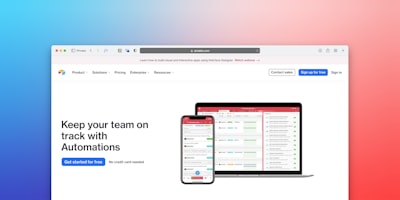
Digital transformation in Zaragoza is not just about having an internal portal or a messaging tool. It is about connecting people, processes and data in a single operational platform. That is why more and more companies are looking for an intranet with workflow automation in Zaragoza: a system that goes far beyond publishing documents and enables tasks to be executed, decisions to be validated and results to be measured in real time. Q2BSTUDIO, a software development and technology company based in Zaragoza, supports organizations of all sizes in this process through custom software that adapts to their real processes, not the other way around.
Traditional intranets often become static repositories: manuals, org charts, announcements. The problem appears when an employee needs to approve a purchase, escalate an incident, request holidays or consult a procedure. At that moment, information is scattered, emails pile up and no one has visibility of the actual state of the operation. A modern intranet solves this by integrating process automation into daily work: each request creates a task, each task has an owner, each owner has an up-to-date dashboard. The result is a more agile organization, with less internal friction and reliable data for decision making.
However, the change is not only technological. It implies a different way of thinking about work: define who owns each process, what data is needed to approve a request and what happens when the process is not completed. In many companies, these rules are in the heads of a few people. By moving them to a system with automation, the organization becomes more transparent and less dependent on individual decisions. Q2BSTUDIO supports this change with clear communication and training, because a platform only generates value when people use it with confidence.
Q2BSTUDIO approaches this type of project with a technical and business perspective. The starting point is not the technology, but the process. Before building anything, the consulting team analyzes which tasks consume the most time, where bottlenecks occur, which systems are involved and which indicators can measure improvement. From there, a single data model is designed that connects the intranet with the ERP, the CRM or the productivity tools the company already uses. This integration is done through APIs, middleware and, when necessary, AWS/Azure cloud services that ensure scalability and availability. In this way, teams do not have to change their tools: the intranet acts as an intelligent layer that unifies operations.
Artificial intelligence has a relevant role in this model. Not as an isolated chat, but as a set of AI agents that participate directly in workflows. For example, an agent can read a request, classify it, check whether it complies with policies, propose an answer and escalate it to the supervisor if it detects an exception. Another agent can summarize long conversations, extract data from a PDF or search relevant information in manuals and procedures. This automation does not replace human judgment: it complements it. Critical decisions go through a human checkpoint, while repetitive tasks are resolved in seconds. Security is also essential: Q2BSTUDIO applies cybersecurity measures from design, such as role-based access control, audit logging, encrypted connections and VPN tunnels to protect communication between the cloud and the company's facilities.
Governance is also part of the design. Each flow can be configured with approval levels, authority limits and customized security policies. The system records what each user did, when and with which data, which is especially relevant in regulated sectors or when working with sensitive information. This audit capability is not an add-on, but a requirement for many companies that want to move toward more mature management models.
Visibility is another major benefit. An intranet with workflow automation not only executes processes; it also generates information. Every completed task, every response time and every deviation is recorded and becomes an indicator. Q2BSTUDIO integrates Business Intelligence and Power BI dashboards so management can see in one screen the performance of each department, the volume of pending work, average resolution times or the cost of each process. This observability makes it possible to detect problems before they become crises and to justify investments with objective data. Decisions stop being based on intuition and start being based on evidence.
For the project to be successful, Q2BSTUDIO proposes a progressive implementation. In a first stage, two or three critical processes are identified that are representative of the value that process automation will bring. These processes are developed in short cycles, put into production and measured. Based on the results, the platform is expanded to more departments or use cases. This way of working reduces risk, accelerates employee adoption and makes it possible to demonstrate return on investment from the first weeks. In addition, the Q2BSTUDIO team trains internal administrators so they can configure flows, manage permissions and adjust AI agents without depending on external support for every change.
In Zaragoza, sectors such as manufacturing, logistics or professional services are the ones that benefit most from this solution. A manufacturing company can automate the validation of delivery notes and quality incident management, connecting each part with the planning system. A logistics distributor can digitalize transport authorizations and generate alternative routes when an order is delayed. A consulting firm can centralize project management, time reports and quality reviews. In all cases, the support is the same: a single platform, integrable with Microsoft 365 or any vertical system and accessible from any device. Q2BSTUDIO designs the architecture taking future growth into account: more users, more data volume and new processes without having to redo what has already been built.
One of the most common questions is whether current systems have to be replaced. The answer is no. The architecture proposed by Q2BSTUDIO is based on connectors and APIs, so the intranet coexists with existing tools and complements them. For example, it can read data from an already installed ERP, query the sales CRM or validate identities through Active Directory. It can even be deployed in different countries and departments with different access policies, maintaining centralized administration. Flexibility is key so that growth does not become an obstacle.
Another practical advantage is the user experience. An intranet with workflow automation does not force employees to learn a complex system. On the contrary, it simplifies interaction: a person receives a task, has the necessary information in the same place and can solve it with a clear action. Notifications arrive through the right channel, whether email, Microsoft Teams or a mobile application. This reduces the learning curve and prevents employees from going back to spreadsheets, scattered emails or informal channels for tasks that must be processed with guarantees.
A project of this type must be measured with clear indicators from the start. In a first phase, a baseline is established: how long a process takes today, how many people intervene, how many errors occur. After several weeks of operation, those same indicators are compared with the new data. If an approval flow took two days and now takes three hours, the impact is evident. If an administrative task required five steps and is now completed with a single review, the improvement is also reflected. The intranet becomes a continuous source of information that makes it possible to adjust flows and prioritize new functionalities to be developed next.
In the current regulatory context, personal data processing must also be considered. Q2BSTUDIO designs flows taking into account the principle of minimization and the data protection obligations that apply to each client. Permissions are configured so that each user has access only to the information necessary for their work. In addition, connections between the intranet, cloud services and internal databases are protected through access controls, encryption and monitoring. Cybersecurity is not a final layer, but a property of the system from the beginning.
Q2BSTUDIO combines experience in software development, AWS/Azure cloud services, cybersecurity, artificial intelligence and Business Intelligence to build intranets that work as the nervous system of the company. The company works with an agile methodology, keeps the code and knowledge within the organization and provides intuitive tools so teams can manage the platform autonomously. Any company in Zaragoza that wants to move forward in digitalization can start with a simple diagnosis: identify a process that today represents a recurring pain and explore how automation transforms it. From that conversation usually comes a concrete plan, with phases, owners and measurable results. Technology is no longer a barrier; it is the lever so that internal talent can focus on what really matters.