The corporate intranet has stopped being a simple digital notice board. In Zaragoza, companies want their internal network to turn information into decisions and decisions into automatic actions. An intranet with workflow automation allows teams in a small business or a large corporation to manage approvals, incidents, employee onboarding, internal purchases or requests to the technical department without depending on email chains or spreadsheets.
When a company grows, manual processes become a silent brake. People waste time looking for the right manager, asking for data that lives in another system or waiting for approvals that never arrive. A well-built intranet acts as a central nervous system: it connects people, documents, indicators and external tools. In this context, Q2BSTUDIO approaches automation from a technical and business perspective, with custom software that adapts to the real way each organization works.
The first mistake many companies make is looking for a closed product that promises to solve everything. In practice, each company has unique processes, legacy systems and a different organizational culture. A standard platform forces the client to change its business rules to fit a mold. The alternative is to develop a modular intranet, with a stable core and configurable components. This philosophy allows adding artificial intelligence, connecting to AWS or Azure cloud services and growing without traumatic rewrites.
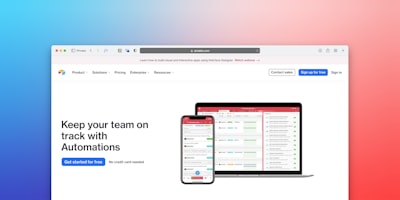
Workflow automation starts with something simple: defining which tasks repeat and where bottlenecks occur. In a typical intranet, the most common processes are onboarding, requests for computer equipment, room reservations, publishing policies or vacation management. Each of these flows can have rules, responsibilities and associated systems. When represented digitally, the organization gains visibility and can measure resolution times.
Q2BSTUDIO uses a phased methodology. First, a diagnosis of current processes is carried out, with interviews with managers and users. Then the intranet architecture is designed, prioritizing employee experience and data security. Next comes development in short cycles, with versions the client can test from the first weeks. Finally, it is deployed in production and indicators are established for continuous improvement.
One of the most valued elements is integration. The intranet should not live in isolation. It usually needs to talk to the ERP, CRM, billing system or office tools. Instead of replacing what already works, connectors are built to synchronize relevant data. This approach reduces risk and speeds up adoption. Furthermore, when working with sensitive information, cybersecurity measures such as access control, audit logging, encryption and multi-factor authentication come into play.
Artificial intelligence has changed what employees expect from their intranet. Looking for a document should be as natural as asking a colleague. Today it is possible to include AI agents that understand natural language queries, summarize long documents, classify requests and suggest responses. A practical example: an employee writes how many vacation days are available and the assistant checks the HR system and returns a clear answer. Behind this experience there is a private or corporate AI model, connected to internal documentation through retrieval-augmented generation, and with mechanisms for a human to oversee critical decisions.
The value of these agents is not only convenience. It lies in accelerating processes. If every purchase request needs three validations, an intelligent flow classifies the request, sends it to the right manager and reminds people who have pending approvals. Instead of chasing the approver, the system keeps everything visible. Companies that apply this logic systematically obtain a significant reduction in cycle times and manual errors.
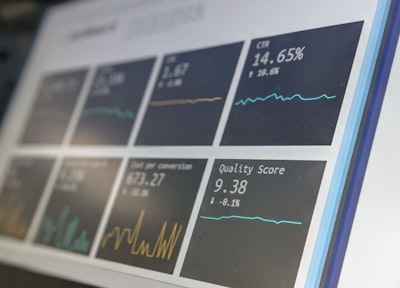
For company leadership to trust automation, measurement is necessary. A dashboard integrated with Business Intelligence with Power BI allows seeing how long each department takes to resolve incidents, which processes concentrate more manual tasks or where delays accumulate. This information is the basis for deciding which flow deserves a new automation. Q2BSTUDIO usually delivers these panels together with the intranet, connecting process information with the company's financial data.
The architecture of a modern intranet must also be flexible in its deployment. Some companies prefer to keep data on their own servers for strategic reasons, while others choose the cloud to scale without investing in hardware. Q2BSTUDIO designs solutions that can run on AWS or Azure, with separate development and production environments, automated backups and role-based access policies. This freedom of choice is key in a territory with industrial and service activities where data sovereignty is often a requirement.
Security is not an add-on: it is part of the design. An intranet manages personal data, financial reports, intellectual property and internal access. That is why Q2BSTUDIO includes privacy controls, encryption in transit and at rest, and password policies from the earliest stages. If the intranet connects with systems in offices or plants, secure tunnels and private networks are used so communication does not travel over public channels. It is also common to audit user permissions and review activity logs to prevent misuse.
The employee experience benefits in several ways. Onboarding can become a guided route: a new person's profile, equipment, permissions and initial training are activated automatically. There is no need to send twenty internal messages; the intranet creates tasks for the HR person, the systems manager and the mentor. The new employee receives a clear plan and the company reduces the time needed to reach full productivity.
Automation also helps break down silos between departments. When a request does not end up in a lost email but in a traceable flow, everyone understands what is happening. This transparency improves internal communication and makes it easier for teams to collaborate with a shared vision.
You do not need to be a multinational to take advantage of these tools. In Zaragoza, many small and medium-sized companies start with a very specific flow, such as expense control or logging of work reports. Q2BSTUDIO's approach allows starting with a first version and expanding it later. This concentrates the budget on what brings value and avoids oversized investments.
A frequent question is how much a project of this kind costs. The answer depends on the scope, the number of integrations and the volume of data. In general, it is wise to think in phases: first build the intranet core with the highest-impact flows; later add artificial intelligence modules or dashboards. This strategy makes it feasible for an SME to obtain measurable results without a huge initial investment.
Q2BSTUDIO provides an uncommon combination: custom web software development capabilities, cloud infrastructure knowledge and experience in artificial intelligence applied to real processes. Its team works alongside the client, trains users and leaves clear documentation so the internal department can operate the platform without unnecessary dependencies.
The relevant question for a company in Zaragoza in 2026 is no longer whether it needs an intranet, but how to turn that intranet into a tool that automates work. Organizations that integrate artificial intelligence and automation into their workflows gain a much greater competitive advantage than those that only test tools in isolation. The combination of custom software, AI, cybersecurity, cloud and analytics can make the difference between a simple internal portal and a system that drives business results.