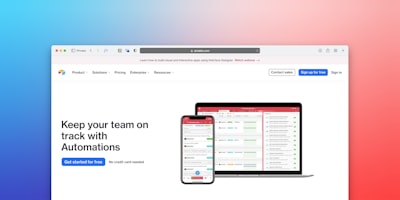
A digital workplace can no longer be understood without an internal platform that organises communication, knowledge and processes. An intranet with workflow automation goes beyond a simple document repository: it becomes a corporate operating system where people find the right information, processes run in the background and managers gain real-time visibility. In Valladolid, this need has grown with the rise of hybrid work and the digital maturity of sectors such as automotive, logistics, healthcare, agrifood and industrial services.
Q2BSTUDIO is a software development and technology company based in Valladolid that approaches this challenge from an engineering perspective, not only as a commercial product. Its team combines software architecture, system integration, artificial intelligence and cybersecurity to build intranets that adapt to the reality of each organisation. Instead of imposing a rigid workflow, it works with the client to design custom software applications that solve the specific problems of each department.
A modern intranet should cover at least five layers: communication, knowledge, processes, identity and analytics. Communication includes news, alerts, collaborative spaces and people directories. Knowledge relies on semantic search, automatic document classification and version-controlled repositories. Processes cover approvals, incidents, requests, onboarding, internal purchasing and projects. Identity is managed with Active Directory or Azure AD. Analytics shows indicators in dashboards. Automation works cross-functionally: when an employee sends a purchase request, the system validates the budget, asks the manager for approval, notifies purchasing and updates the ERP without manual intervention.
In addition, AI agents can act as digital assistants: they answer questions about internal policies, summarise long documents, draft reports and execute specific actions when the responsible person authorises them. That is the natural evolution of an intranet: from passive repository to active operator.
For that evolution to be useful, data must become decisions. Integration with BI/Power BI makes it possible to visualise workloads, resolution times, bottlenecks and service level compliance in a single dashboard. Without this measurement layer, automation is just technology; with it, automation becomes continuous improvement.
At a technical level, these platforms work best when they rely on AWS/Azure cloud infrastructure. With the cloud, organisations can scale without over-provisioning, keep automatic backups, deploy development, testing and production environments, and connect managed artificial intelligence services to internal data sources. The choice of cloud provider depends on the client's maturity, but flexibility and security must go hand in hand.
Cybersecurity must be present from the design stage: multi-factor authentication, role-based access control, event auditing, data encryption and secure connections between the cloud and on-premises infrastructure. An intranet handles sensitive information and personal data, so any automated workflow must include traceability, consent and governance mechanisms. Q2BSTUDIO embeds this approach in every delivery, not as a final add-on but as part of the architecture.
Q2BSTUDIO puts this concept to work with process automation solutions that integrate the intranet with the rest of the corporate systems. These solutions make sure notifications, records and approvals happen in the right place, without relying on scattered emails or parallel spreadsheets.
Q2BSTUDIO's methodology combines discovery, design, prototyping and continuous improvement. In the initial phase, consultants interview operations, IT, human resources and customer service leaders to understand where time is lost and where errors are generated. Then success indicators are defined, the highest-impact processes are prioritised, and a functional prototype is designed that users can test within a few weeks.
This approach reduces risk: instead of spending months on a theoretical specification, the company quickly validates an initial version with a limited scope. The prototype builds confidence, corrects errors before expanding the platform and demonstrates tangible results. Once validated, the team industrialises the solution: ERP and CRM integrations, Active Directory synchronisation, cloud deployment, security testing, load testing and documentation.
One differentiator is that the client keeps ownership of the code and the data. There is no permanent dependence on a proprietary product, but an evolving platform that can be extended, connected and transformed over time. This freedom is key for companies that want to maintain control over their technology.
Common use cases include employee onboarding, internal request management, expense approval, document control, project coordination, resource booking, incident management and policy compliance. They all share a pattern: a request enters through a portal, is routed automatically, a person or an AI agent reviews the data, a response is generated and everything is recorded for traceability.
The benefits of an intranet with workflow automation are tangible: waiting times in internal processes are reduced, manual steps that do not add value are eliminated, human error is minimised, employee experience improves and time is freed for higher-value work. Middle managers gain an objective view of team activity and can detect deviations before they become bigger problems. In addition, the investment can be justified with data: by identifying how many hours each department spends on administrative tasks, it is possible to calculate savings and compare them with the project cost. In many cases, the return comes in less than a year.
For a company in Valladolid, working with a local partner has clear advantages: direct communication, availability for face-to-face meetings, knowledge of the business culture and greater ease in aligning business goals with the technical architecture. Q2BSTUDIO combines this proximity with a global vision of technology in corporate environments. Its multidisciplinary team includes software architects, integration specialists, cloud experts and business consultants, allowing complex projects to be tackled without relying on multiple vendors.
If your company recognises itself in any of these situations, it is a good time to consider an intranet with automation: too many disconnected tools, processes that depend on emails and spreadsheets, information that cannot be found, slow onboarding, lack of traceability, team complaints or the impossibility of measuring the real workload. These symptoms usually have one cause: the absence of a digital platform that unifies people, data and processes.
The first step is not asking for a quote, but analysing why internal work gets stuck. Q2BSTUDIO proposes an initial workshop to identify processes, define indicators and build a realistic roadmap. From there, it is possible to decide with judgement whether automation is viable, in what order to approach it and which technology best fits the company's strategy. By 2026, companies that integrate artificial intelligence into their real workflows will have a clear advantage over those that keep AI as an isolated experiment. An intranet with workflow automation in Valladolid is not just an internal improvement project: it is a decision to compete better.