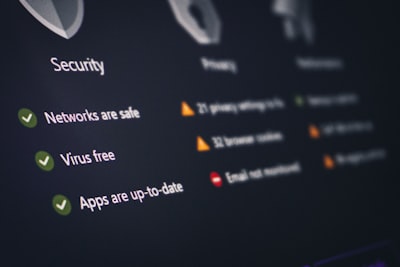
A corporate intranet has stopped being a simple document repository. In Valencia, companies driving process automation use the intranet as an operations hub to coordinate teams, process requests and consult information in real time. This centralization introduces new risks: if the architecture is poorly designed, any configuration error can become a security breach or a bottleneck that is difficult to correct.
The security and architecture audit of an intranet with automation in Valencia is not an administrative formality. It is a management tool that helps anticipate failures, reduce costs and protect business continuity. Organizations that have grown organically usually accumulate fragile integrations, poorly assigned permissions, undocumented scripts and uncontrolled dependencies. A specialized review brings order to that chaos before it affects operations.
The Valencian digital context is marked by the need to compete with global operators without losing closeness to the customer. A modern intranet can be a competitive advantage if it allows employees to find the right information at the right time. But that advantage disappears when the platform is slow, permissions are chaotic or a vulnerability exposes the company. The audit prevents exactly that.
Q2BSTUDIO is a software and technology development company that approaches the audit with a dual perspective: that of the engineer who understands how systems work and that of the consultant who knows what the business needs. As specialists in custom applications, they can also identify improvement opportunities that other auditors miss, especially when the intranet has been built through successive patches.
A key pillar of the review is the cybersecurity audit. In this phase, authentication, session management, data encryption, endpoint security and exposure of internal services are analyzed. It also verifies whether access profiles respect the principle of least privilege and whether activity logs make it possible to reconstruct which user performed each critical action.
At the architectural level, the assessment covers platform scalability, API design, code modularity and integration between systems. An intranet that works well with fifty users can become saturated with three hundred if the database is not well modeled or if work queues are not designed to handle spikes in activity. Anticipating that problem is cheaper than applying emergency patches.
The audit must also consider regulatory compliance. The General Data Protection Regulation, future legislation on artificial intelligence and sector standards require organizations to demonstrate how they manage information. Traceability of access, consent management and the ability to delete personal data in an agile way are aspects that are reviewed in detail. Having a privacy policy is not enough; its practical application must be proven.
The database is another critical point. Inefficient SQL statements, missing indexes, poorly planned migrations and confusing data retention policies affect overall performance. During the audit, the slowest queries are detected, the schema is reviewed and recommendations are offered to optimize storage. All of this helps reduce the infrastructure bill and improve the user experience.
Hosting on AWS/Azure cloud offers flexibility, but it also requires careful configuration. It is common to find open ports, publicly exposed buckets, leaked credentials or poorly segmented virtual networks. The audit reviews these elements and also analyzes the cost of contracted resources, because many organizations pay for capacity they do not use or fail to take advantage of committed use discounts.
Automation based on AI adds a layer of complexity. If the intranet incorporates virtual assistants, generative models or AI agents, it is necessary to define how corporate information is protected and how the traceability of each response is controlled. AI governance translates into concrete policies, usage logs, access limits and procedures for updating or withdrawing a model when its behavior is no longer acceptable.
AI agents deserve special attention. Unlike deterministic workflows, an agent can decide which tool to use at any given moment. That means permissions must be reviewed continuously and sensitive actions need human approval. The audit identifies which processes can remain fully automated and which must keep an human-in-the-loop checkpoint.
Observability is inseparable from security. A company that does not measure cannot protect what it does not know. With a Power BI dashboard connected to the intranet and automation platforms, it is possible to visualize approval times, incidents, API consumption and workload per department. That information becomes a competitive advantage because it allows anomalies to be detected before they become incidents.
Automated workflows inherit permissions from the system that executes them. If a scheduled task uses a highly privileged account, any failure in that task becomes a serious risk. For this reason, the review includes service accounts, connections between environments, secret variables and retry mechanisms. Automation must be safe even when it fails, not only when it works correctly.
The cost perspective is another aspect that surprises many executives. It is not unusual for a department to ignore how much an automation consumes in licenses, storage and maintenance time. The audit includes an estimate of the total cost of ownership of the analyzed workflows and proposes alternatives, such as consolidating tools or migrating certain services to AWS/Azure cloud. Thus, the technical decision also becomes a financial decision.
The human factor is key. Many security breaches originate from users with more permissions than necessary or from the absence of periodic access reviews. The audit helps define a clear role model and establish onboarding and offboarding processes. Furthermore, a well-oriented training plan reduces involuntary error and reinforces the security culture of the Valencian company.
Q2BSTUDIO divides the work into phases: system inventory, interviews with managers, technical tests, code review and configuration analysis. The result is a document with findings classified by severity, quick wins, a remediation plan and an effort estimate. That report allows the steering committee to decide which security investments are priorities and what their return will be.
In short, a security and architecture audit of an intranet with automation in Valencia is a strategic investment. It is not about finding someone to blame, but about generating trust: trust that data is protected, that automations operate with sound judgment and that growth will be sustainable. With the right support, the intranet stops being an expense and becomes an asset that drives productivity and innovation.