Business application development has evolved from a competitive advantage into an operational necessity. Organizations that continue to rely on manual processes or generic tools lose agility, responsiveness, and revenue opportunities. A well-built application can transform how a business manages data, serves customers, and makes decisions. But for that to happen, the application must come from a real analysis of operations, not from a prefabricated template. That is why custom software is the most solid choice for those seeking measurable results.
The first tangible benefit of building your own software is the elimination of bottlenecks. When a process depends on emails, shared spreadsheets, or manual approvals, information becomes fragmented and delays appear. A centralized application lets each team work with the same data in real time. Orders are no longer lost, inventory updates automatically, and managers gain a clear view of what is happening. This operational efficiency not only reduces costs, but also improves service quality and internal team satisfaction.
Another key aspect is the ability to adapt the application to the company's specific processes. Generic software forces you to change the way you work to fit the tool; custom software does the opposite: it adapts to the way your organization works. This makes it possible to preserve the particularities that make a company unique while eliminating unnecessary steps. With a well-designed application, teams adopt the tool quickly because it makes their work easier, not harder.
Furthermore, a custom application reduces friction in the team's day-to-day work. Employees do not need to learn how to use a tool designed for a generic audience; they find in the application exactly the functions they need for their role. This has a direct effect on productivity and workplace climate. When technology stops being an obstacle and becomes a real aid, people concentrate on what they do best: serving customers, solving problems, and contributing ideas. This human factor is decisive in the success of any digital project.
Business applications do not live in isolation. A tool that does not connect to the ERP, CRM, or central database becomes another information island. That is why business app development must include integration with existing systems from the start. Well-designed APIs allow the application to talk to the company's other tools, synchronize data, and avoid duplication. The result is a coherent digital ecosystem in which every component adds value to the whole.
Another important dimension is the customer relationship. An application that lets customers check the status of an order, request a service, or contact support without making a phone call improves brand perception. Digital experience is now a differentiating factor. When a company offers a tool that works well, responds quickly, and is easy to understand, the customer perceives quality. That perception translates into loyalty and recommendations.
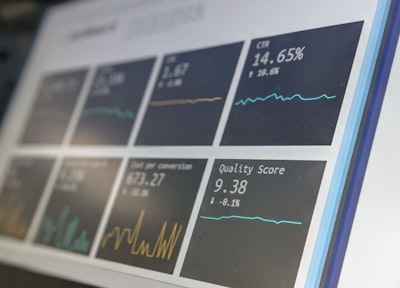
Information is another major beneficiary. A business application generates valuable data about customers, sales, production, and performance. But raw data is useless unless it becomes knowledge. This is where Business Intelligence comes in. Integrating a BI solution such as Power BI with the application makes it possible to visualize indicators in real time, detect trends, and anticipate problems. Managers stop making decisions based on intuition and start relying on verified information. That change in mindset has a direct impact on profitability.
Scalability is also part of the benefits. When a company grows, its technology needs change. A custom application can evolve to support more users, more data, and more functionality. If it is deployed in the cloud, for example with AWS or Azure, the infrastructure adjusts automatically to demand. This avoids unnecessary investments in servers and ensures the application is available from anywhere. The combination of custom software and cloud provides a flexibility that closed solutions can hardly match.
Security cannot be treated as an afterthought. In an environment where cyberattacks are increasingly frequent, any application that handles customer data or financial information must incorporate cybersecurity measures from the design stage. This includes data encryption, access control, event auditing, and periodic penetration testing. An application developed with security in mind reduces the risk of data leaks and protects the company's reputation. Customer trust is built largely on the assurance that their data is safe.
Artificial intelligence is opening up new possibilities in application development. It is not just about chatbots, but about tools capable of automating complex tasks, classifying documents, predicting demand, or recommending actions. AI agents can be integrated into an application to assist employees in their daily work, answer customer questions, or detect anomalies in processes. These features add a layer of intelligence that previously required constant manual intervention. Companies that incorporate AI into their applications gain speed and precision.
From a financial perspective, developing a custom application requires an initial investment, but the return comes over time. Task automation reduces operational costs, improved customer experience increases retention, and the ability to launch new services opens up revenue streams. In addition, by having control over the code and architecture, the company does not depend on the commercial decisions of an external provider. It is an investment in owned assets, not recurring spending without return.
Q2BSTUDIO participates in the entire software lifecycle, from initial discovery to post-launch phases. We work with multidisciplinary teams that understand technology, but also processes and business. We bring knowledge in UX design, cloud architecture, ERP and CRM integration, cybersecurity, Business Intelligence, and artificial intelligence. Our way of working is to listen first, prototype early, and deliver in short iterations. This reduces risk, validates every decision, and ensures that what we build responds to a real need.
In short, the benefits of business app development go far beyond technology. They show up in how your team works, in your relationships with customers, and in your ability to innovate. A custom application supported by a data, cloud, and security strategy turns technology into a growth engine. Choosing a technology partner that understands both software and business is the key to making that transformation sustainable. Q2BSTUDIO can be that partner.