In a business environment where agility and customer experience make the difference, developing applications for your business has gone from being an option to a strategic lever. More and more organizations are leaving spreadsheets and manual processes behind to make room for digital solutions that connect teams, data, and operations. Behind that transformation there is not only technology: there is a different way of understanding the business, with applications designed to solve specific problems and generate measurable value from the first day. Custom software makes it possible to build exactly what the operation needs, without paying for features that are not used and without giving up integration with existing systems.
One of the main advantages of enterprise app development is the ability to adapt to real workflows. Generic platforms force organizations to change internal processes so they fit a standard, while custom software is designed from the needs of each department: sales, production, logistics, customer service, or human resources. The result is a tool that speaks the same language as the organization and reduces employee adoption time. Moreover, when connected to the ERP or CRM, the application becomes a single source of truth where information flows without duplicates or data entry errors.
Operational efficiency is another immediate benefit. When an app digitalizes a process, it removes intermediate steps, automates approvals, and lets each person access the information when they need it. This not only speeds up work cycles; it also lowers operating costs. Tasks that used to take hours of manual review are now executed in minutes, and teams can focus on higher-value strategic activities. Intelligent automation, supported by business rules and AI agents, multiplies that capacity by anticipating errors, suggesting actions, and resolving incidents without human intervention.
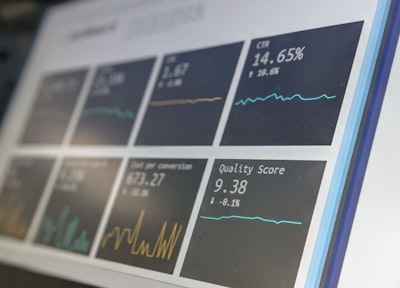
In decision-making, business app development brings an advantage that is hard to match: complete visibility of what is happening. Operational data stops being scattered across files and emails and is concentrated in an up-to-date dashboard. Business Intelligence solutions such as Power BI allow commercial, financial, and production indicators to be combined in real time, so managers can detect trends, identify bottlenecks, and act before a small problem becomes a crisis.
Artificial intelligence adds another layer of analysis and automation. Current applications can include predictive models, natural language processing, and AI agents that interact with internal users or external customers. These agents are not simple chatbots: they are software components capable of executing tasks, querying databases, generating documents, and learning from every interaction. A company that integrates AI into its applications improves team productivity and offers more personalized experiences, without needing to increase headcount or take on repetitive tasks.
Infrastructure is also part of the equation. Moving to a cloud architecture based on AWS or Azure allows an enterprise application to grow with demand, absorb usage peaks, and offer high availability without major investments in servers. The cloud also facilitates remote work, collaboration between offices, and business continuity in the event of incidents. A development designed for the cloud from the beginning is cheaper to maintain, easier to scale, and more secure, because security updates and backups are managed centrally.
You cannot talk about the advantages of app development without mentioning cybersecurity. Applications that handle sensitive data, customers, or financial information are common targets for attacks. A good development strategy must therefore include strong authentication, data encryption, code audits, and periodic penetration tests. Security is not a final add-on; it is integrated into every layer of the application. This protects the company's reputation, ensures regulatory compliance, and avoids costs derived from data leaks or service interruptions.
Another strategic benefit is scalability. As the company grows, its processes become more complex and the number of users can multiply. A well-designed application allows modules to be added, more systems to be integrated, and its reach to be expanded without rewriting the core. Technical debt is controlled thanks to good coding practices, documentation, and automated testing. In this way, the technology that drives the business today does not become a burden tomorrow, but a solid foundation for opening new product lines or entering new markets.
Integration with the existing technology ecosystem is perhaps one of the points that adds the most value. An isolated application that does not communicate with the ERP, CRM, billing tool, or e-commerce platform ends up generating new information silos. A professional development, by contrast, is designed as a node in a network of systems: it uses APIs, events, and connectors to synchronize data in both directions. That synchronization is what enables a unified view of the customer and operations, an essential condition for better decision-making.
Customer experience also benefits. A dedicated application, whether web or mobile, offers a direct and personalized channel to interact with customers: view information, place orders, request support, or receive notifications. Immediacy and personalization build trust and loyalty. Furthermore, by having usage data, the company can anticipate customer needs and propose solutions even before they ask. This is a way of putting technology at the service of relationships, not just internal efficiency.
To achieve all these benefits, choosing the right technology partner is key. Q2BSTUDIO is a software development and technology company that supports the entire lifecycle of an application: analysis, design, development, testing, deployment, and maintenance. Its team combines technical knowledge with business vision and uses current technologies and agile methodologies to offer secure, scalable, maintainable solutions. Constant communication and well-defined deliverables allow the client to know at all times how the project is progressing and what impact it will have on their indicators.
Moreover, Q2BSTUDIO does not limit itself to building an application: it integrates cloud platforms such as AWS or Azure, implements dashboards with Power BI, strengthens cybersecurity through audits and pentesting, and applies artificial intelligence to automate processes. This comprehensive vision makes development not an end in itself, but a means to achieve specific business goals: reduce costs, increase revenue, improve customer satisfaction, or launch a new digital initiative quickly.
Thinking about app development for your business is, ultimately, a decision about the future. Companies that invest in their own technology not only solve current problems but also build a sustained competitive advantage. They can react earlier to market changes, test new hypotheses with real data, and scale operations without friction. The return on investment is measured in efficiency, lower risks, and an adaptability that standard solutions do not offer.
For all these reasons, it is worth considering which processes in your company could improve with a custom application. The starting point should not be technology, but the business need: where is time lost, where are errors generated, what information does your team need to make better decisions? From those questions, a well-executed custom solution can transform operations and take the organization to a higher level of digital maturity.