Effective internal communication is not just a matter of tone or regular meetings. It is a strategic asset that determines how quickly a company identifies problems, seizes opportunities, and implements changes. When information lives in scattered emails, fragmented chats, and outdated documents, decisions rely on incomplete versions of reality. The development of corporate apps solves this at the root: instead of adding another messaging tool, it creates a digital environment where data, tasks, and conversations are organized around processes.
An internal application can unify information from production, sales, customer service, and human resources without forcing teams to work in a single monolithic system. Through role-specific interfaces, each person sees only the indicators and actions relevant to their job. This reduces cognitive overload, decreases the risk of error, and gives managers a cross-functional view of what is happening in the organization.
The key is to understand the real flow of communication within the business. Who needs to know what? When? What decision triggers that information? Answering these questions makes it possible to design features that prioritize clarity and action. The platform stops being a simple dashboard and becomes a coordination system that connects strategy with daily execution.
The concept of an application should not be limited to a web portal or a mobile app. In practice, a good solution can be a combination of a backend on cloud AWS/Azure, a web interface for the internal team, and a mobile extension for professionals working in the field. Communication flows more smoothly when people can record observations, photos, incidents, or results directly from the workplace.
Data is the raw material of internal communication. If each department keeps a separate database, maintaining a coherent business conversation is very difficult. A corporate app can integrate with ERP and CRM systems so that business events generate automatic communications: a pending invoice, a delayed order, an inventory alert, or an approval request. These notifications, tailored by channel and recipient, turn information into action.
Business intelligence also brings significant value. BI/Power BI modules, integrated into the same application, transform operational data into charts and dashboards that everyone can interpret. Instead of asking an analyst for a report, managers can check the live status of projects and teams. This democratizes access to information and speeds up follow-up meetings, because the discussion focuses on solutions rather than on validating figures.
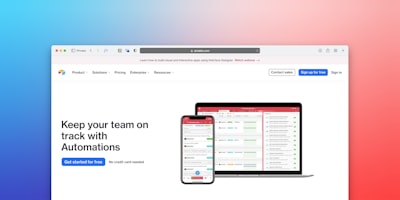
Automating communication flows is another major benefit. When a document enters review, the app can generate a notice to the person responsible, automatic reminders, and a log of who has seen and modified it. Subsequent steps are triggered without manual intervention. This eliminates bottlenecks that occur when a task depends on someone reading an email and deciding to take the next step.
Integrating AI and AI agents adds an extra layer of intelligence. A virtual agent can answer common employee questions, provide guidance on internal processes, draft responses, summarize long message threads, or classify incidents. This allows human teams to focus on judgment, creativity, and relationship-building, while software handles the informational logistics.
Discussing internal communication in a business application also means discussing cybersecurity. Channels that share confidential information must protect user identity, data access, and record integrity. Careful development includes encryption, permission controls, access audits, and penetration testing. Security is not a cosmetic requirement but a condition for people to trust the system and use it naturally.
In this context, having a software development company that understands both technology and how organizations operate internally makes the difference. Q2BSTUDIO supports companies from initial analysis to deployment, with a pragmatic, results-driven approach. The solutions we build do not simply digitize a process; they reinterpret it so that communication flows in the right direction.
For example, in a custom software project for a logistics company, a coordination app can assign tasks to drivers, receive real-time confirmations, alert the warehouse about any incident, and show customers the delivery status without central team intervention. Each notification responds to a real event, and each view provides the information needed for the next action.
The same principle applies to industries such as healthcare, education, retail, or manufacturing. A communication platform for clinical teams can centralize protocols, alarms, and shifts; an app for a sales team can integrate catalog, prices, and order status; an HR portal can channel requests, evaluations, and training plans. In all cases, communication stops depending on individual memory and becomes a traceable, transparent process.
For internal communication to really improve, the application must be adopted by people. This is not achieved only with a nice interface, but with a useful, fast, and reliable experience. Solutions that connect career progression, recognition, goal alignment, and incident resolution build trust. An application that reduces the time spent searching for information or chasing responses quickly becomes an essential tool.
The implementation strategy is also important. Custom software development includes pilot phases, training, and continuous improvement. Users can suggest changes, and the development team prioritizes updates based on operational impact. In this way, technology evolves alongside the business and does not become obsolete in a few months.
Without a comprehensive vision, companies invest in applications that solve one specific problem and create another. Internal communication is not an isolated module; it must connect to the sales cycle, supply chain, customer service, and talent management. Therefore, custom software projects require an architectural vision and a technology partner that prioritizes integration.
At Q2BSTUDIO we work with modern technologies and agile methodologies, focusing on real usefulness for the user. Our team helps define the features that will generate improvement in internal communication, avoiding unnecessary complexity and waste. The result is a tool that teams use every day because it makes their work easier.
Incorporating cloud AWS/Azure into the design ensures that the application supports usage spikes, accelerates deployment, and facilitates recovery from incidents. For companies with multiple locations or remote work, the cloud makes information available anywhere with the appropriate security measures. AI adds analytical capabilities that use this information to anticipate trends and recommend decisions.
In short, app development improves internal communication because it puts technology at the service of real human coordination. It is not about having more channels, but about having an organized, intelligent, and secure digital space that allows each professional to know what they need to know and act quickly. When information flows, teams work aligned, trust grows, and the company gains the ability to react.