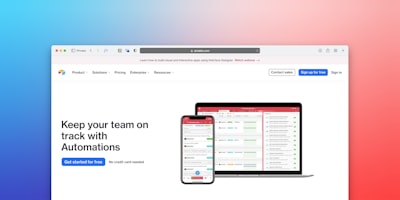
In 2026, a corporate intranet in Spain is no longer defined by its ability to store documents. The real requirement is for it to act as an operational platform that can organize work, connect systems and execute processes automatically. An intranet with workflow automation enables companies to reduce manual steps, eliminate the common communication gaps between departments and give managers an accurate view of what is happening at any moment. For executives and technology decision-makers, this is a mindset shift: the intranet stops being an infrastructure cost and becomes a lever for productivity and control.
Many organizations start from the same point. Data lives in separate systems: an ERP for finance, a CRM for sales, spreadsheets for operations, email for approvals and messaging tools for informal conversations. This fragmentation leads to errors caused by entering the same data repeatedly, delays in decision-making and an endemic difficulty in auditing who did what and when. In this context, deploying an intranet without automation only organizes the surface; the real value appears when the intranet also acts as an orchestrator of processes.
An automated workflow can start with a request submitted from the internal portal and continue with automatic validations, assignment to the right person, notifications, updates in the ERP and generation of a follow-up report. All of this happens in seconds and leaves a complete audit trail. Organizations that take this step quickly notice shorter cycle times in administrative tasks, better compliance with service-level agreements and a much lighter mental load for their teams.
The most interesting part comes with the introduction of AI agents. These assistants do more than execute predefined rules: they interpret context, classify requests, suggest replies, detect anomalies and escalate exceptions to a human when necessary. For example, an agent can read an incoming invoice, compare it with the purchase order, request automatic approval if the amount is within the limits or send it to a supervisor if there is a discrepancy. The intranet thus becomes an intelligent environment, not just a notice board.
Building this capability requires a solid technical foundation. Q2BSTUDIO's experience in custom software development and AI-based platforms shows the importance of designing an interface adapted to the real processes of each company. A generic template does not capture the particularities of a human resources department, a factory or a consulting firm. Custom software ensures that every screen, every form and every rule follows business logic. You can explore this idea further on their page about custom application development, which explains how this type of project is approached from a technical and business perspective.
Alongside custom software, cloud infrastructure on AWS or Azure provides the scalability and security that automation projects demand. Instead of installing local servers that quickly become obsolete, the intranet runs in managed environments, with automatic backups, active monitoring and the capacity to grow without disruption. The cloud also makes it easier to connect AI agents to the language models that power the virtual assistant, while keeping control over data and costs.
Integration is another key pillar. An intranet with workflow automation should not coexist with legacy systems; it must connect to them. APIs allow the portal to query CRM data, create tickets in the ERP, synchronize users with Active Directory or send notifications to Microsoft Teams. Q2BSTUDIO uses these same paths to replace manual processes without forcing the replacement of tools that already work. The result is a more cohesive ecosystem, where the intranet acts as the single interaction layer for employees.
No discussion of corporate intranets is complete without cybersecurity. By centralizing processes, the platform becomes an attractive target for malicious actors. The design must include role-based access, data encryption, activity logging and network segmentation. In environments where AI interacts with internal systems, Q2BSTUDIO applies VPN tunnels and private Azure endpoints so that calls to AI models never leave a controlled perimeter. In addition, a robust password policy and periodic audits complete the defense model.
For management, one of the biggest advantages is visibility. Data generated by workflows is consolidated into Business Intelligence dashboards and Power BI, where teams can analyze cycle times, bottlenecks, workload by team or deadline compliance. This information enables decisions based on facts rather than impressions. Automation not only saves time; it also turns daily work into a source of actionable knowledge.
Executing this type of project follows a pragmatic methodology. In the first phase, a consulting team analyzes existing processes, identifies tasks with the highest automation potential and defines success metrics. Next, a minimum viable product that solves a specific process is built, usually in four to eight weeks. The system is then expanded iteratively. This approach reduces risk, generates visible results from the start and allows the implementation plan to be adjusted using real data.
The benefits of a well-executed project include a significant reduction in repetitive manual work, faster approvals, fewer data entry errors and a much more positive employee experience. This is not a technology trend, but a response to the competitive pressure to do more with less. Companies that integrate AI into their operational workflows gain a sustainable advantage because they learn faster and execute with greater precision.
Q2BSTUDIO, a Spanish software and technology development company, supports the entire cycle: design and construction of the intranet, system integration, deployment of AI agents, configuration of cloud infrastructure and creation of dashboards. Its approach combines engineering depth with the closeness of a consultant who understands the local context. For a deeper look at the intelligent component of these platforms, it is worth reviewing how the company approaches artificial intelligence projects within its offering.
In short, an intranet with workflow automation in Spain in 2026 is not a luxury reserved for large corporations. It is a strategic decision within reach of many companies that want to improve their operations without starting from scratch. The technology is available, mature and reasonably priced in terms of return on investment. The key is to choose a partner that understands both business and engineering, and that can transform a traditional infrastructure into a proactive, measurable and secure system.