Can business app development adapt to your needs? The short answer is yes, but it is worth understanding what adaptive really means. A business application is not simply a container of features; it is an engineering piece that must coexist with people, processes, and existing systems. Business app development makes sense when it starts from a real diagnosis: which tasks are repeated, where information is lost, and which decisions depend on reliable data. With that foundation, software becomes an operational advantage, not an expense.
Generic solutions can cover standard processes, but they almost never reflect the particularities of an organization. Every company has validation rules, approval levels, export formats, and ways of measuring results that do not always fit into a closed product. That is why many organizations choose custom software development: so that the data model represents their metrics, customers, products, and internal relationships. That fine-tuning is what separates a tool used daily from a platform abandoned after a few weeks.
Business app development must also address security from the first line of code. A failure in authentication, a poorly configured API, or excessive access can compromise sensitive information. That is why cybersecurity is not a final phase; it is a cross-cutting discipline that affects architecture design, testing, and deployment. Encryption, role-based access control, and event auditing are non-negotiable when an application handles customer, supplier, or employee data. Companies need partners who integrate these practices without friction.
Infrastructure is another dimension. Business applications can be deployed in the public cloud, in a private environment, or in hybrid models. The choice between cloud AWS/Azure and other platforms depends on latency, sector regulations, and operating budget. Good development uses managed cloud services to reduce maintenance, scale automatically, and provide reliable backups. At the same time, the architecture should avoid excessive vendor lock-in so that the company retains autonomy.
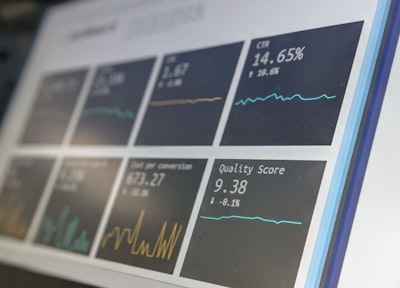
Data analytics is another critical point. An operational application generates tens of thousands of records every day: orders, incidents, interactions, stock movements. Without a business intelligence layer, that data remains invisible. Integrating BI/Power BI with app development makes it possible to build indicators, alerts, and dashboards that guide decision-making. Instead of manually exporting reports, managers see process behavior in real time and can detect deviations before they become problems.
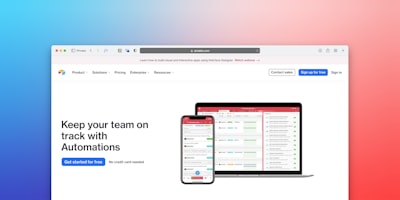
Process automation is one of the most immediate benefits of corporate software. A well-designed application can eliminate mechanical tasks, route requests, send notifications, and update accounting systems without manual intervention. The key is to model business rules transparently: what conditions trigger each action, which roles can execute it, and what evidence is recorded. This way, automation does not become a black box but an auditable and continuously improvable process.
In recent years, artificial intelligence has stopped being an experimental concept and entered real operations. AI agents can classify tickets, summarize documents, predict demand, or recommend the next best action. They do not replace human judgment, but they help concentrate effort on higher-value decisions. When developing an app, it is wise to plan integration points for these services: a virtual assistant, a recommendation engine, or an email classifier can be added incrementally and measured with clear indicators.
Q2BSTUDIO approaches business app development from an integral perspective. As a software development and technology company, its team combines software architecture, user experience, systems integration, and cloud operations. Instead of imposing a template, it runs working sessions to understand each client's value flow and translate it into a maintainable solution. This technical and business vision allows applications to grow at the same pace as the organization.
Adaptation also relates to team experience. Software designed for an office is not useful if field employees need to work from a tablet or mobile phone. Cross-platform application development makes it possible to maintain common logic and present the right interface for each device. This reduces maintenance costs and ensures data synchronization, even with intermittent connectivity. Design decisions must consider the user's physical context, not only the user interface flow.
Integration with existing systems is one of the most delicate parts. Custom software does not live in isolation; it must connect to ERP, CRM, email mailboxes, and e-invoicing platforms. To achieve this, the technical team must document API contracts, handle errors elegantly, and design synchronization processes that do not block operations. The quality of these integrations determines trust in the system. If the software does not reflect what happens in the ERP or central database, users stop using it.
Cybersecurity reappears in the maintenance phase. Business applications evolve: functions are added, libraries are updated, and permissions are adjusted. Every change is an opportunity to introduce vulnerabilities if there is no rigorous review process. For this reason, it is advisable to work with a partner that performs penetration testing, reviews dependencies, and applies patches with judgment. Including security in the software lifecycle reduces incident risk and protects business continuity.
Another common aspect is data governance. When a company adapts its application, it must know who can create or modify certain records, which versions of a form are used in each department, and how long logs are retained. Custom platforms allow these policies to be implemented without sacrificing flexibility. Administrators can have a visual configuration layer while maintaining a consistent permission model. That combination of control and agility is difficult to achieve with closed-box solutions.
The question of whether business app development can adapt to your needs ultimately becomes a question of judgment. It is necessary to evaluate not only initial functionality but also the ability to evolve, accumulated technical debt, code quality, and documentation. A truly adaptable application is one that can be modified without breaking what already works. To achieve this, modularity and sound engineering practices are as important as visual design.
In short, custom software development for companies offers a real path to transform processes, differentiate from competitors, and improve decision-making. Whether through custom applications, automation, data analytics, or AI agents, technology can serve strategy. Q2BSTUDIO supports this entire journey with a practical, results-oriented approach committed to security and innovation. The next time a company wonders whether it can adapt its software, the answer will depend on how deeply it wants to understand its own processes. And that is a decision that deserves joint analysis.