
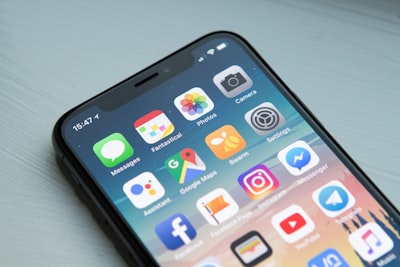
When a company considers digitalizing its processes, one of the first questions is whether business app development will really be compatible with mobile devices. The answer is yes, but it deserves nuance: it is not enough for the application to look good on a small screen. Mobile compatibility requires an architecture designed for mobility, a solid security strategy, and coherent integration with corporate systems. Only then can teams work from anywhere without losing information, context, or decision-making capability.
Organizations need custom software that reflects their specific workflows and, at the same time, offers a fluid experience on a phone or tablet. A common approach is to use responsive designs, which adapt interfaces to the screen size, but there are also alternatives such as native apps or progressive web apps. The latter are especially useful when the team works in areas with intermittent connectivity, because they allow users to consult data and record actions offline and then synchronize the information when the connection is restored. Push notifications, for their part, turn the mobile application into an active communication channel: approval alerts, incident warnings, or task reminders go directly to the user, reducing response times and avoiding bottlenecks.
Mobile-first design is not only a visual matter. Forms must be short, buttons accessible, and dashboards must prioritize essential information. A business application that forces users to zoom or enter data through too many steps will not be adopted by the team. Therefore, field scenario testing is crucial. Q2BSTUDIO applies a methodology that combines laboratory and real-world conditions to verify that the application behaves correctly in actual usage conditions: poor connectivity, direct sunlight, one-handed use, constant interruptions. That validation allows field employees, sales representatives, and operators to enjoy a desktop experience in their pocket without compromising security.
Mobile user experience does not depend only on visual design. The application architecture influences data consumption, battery life, and response speed. An application that makes unnecessary calls to the server consumes resources and creates frustration. Therefore, development must optimize requests, use local cache, and synchronize information in the background intelligently. Well-designed APIs make it possible to connect the mobile application with the company's technology ecosystem without duplicating processes or generating inconsistencies. These technical decisions make the difference between an app used every day and one abandoned after a few weeks.
Security is another central pillar of mobile compatibility. When an application is used from a personal device or a public Wi-Fi network, the exposure surface increases. It is essential to implement multifactor authentication, session control, data encryption in transit and at rest, and identity management policies. In addition, a solid development should be audited periodically to detect vulnerabilities. At this point, cybersecurity stops being an optional service and becomes a cross-cutting layer of the project. Companies that integrate penetration testing and code review into their lifecycle reduce the risk of data leaks and protect both their reputation and their customers' data.
Mobility is not possible without an adequate backend. Data storage and processing must reside in scalable infrastructures, such as those offered by AWS/Azure cloud services, because they make it possible to adapt resources to demand and guarantee application availability across different time zones and regions. The cloud also facilitates integration with existing business systems, such as ERP, CRM, or corporate databases. In this way, an order recorded from a mobile device is instantly reflected in the central system, and a salesperson can check a customer's history, stock levels, or the status of an order without needing calls or emails. This operational continuity is one of the greatest benefits of a well-designed mobile strategy.
A mobile business application must not only allow users to operate; it also has to support decision-making. Business Intelligence dashboards are essential for managers to see key performance indicators in real time. Integrating a BI/Power BI solution into the mobile application allows each manager to receive reports, sales trends, or productivity analyses from anywhere. Instead of waiting for a meeting or a printed report, information arrives with the same level of detail as on a desktop computer, adapted to the user's context. This analytical capability in mobility is a differentiating factor for data-driven companies.
Mobile compatibility also has to consider the different user profiles within the company. An administrative employee, a sales representative, and a maintenance technician use the application in different ways. Role-based personalization allows each person to see only the functionalities and data relevant to their work, simplifying navigation and reducing errors. Dashboards can be shown differently according to responsibility level, and notifications can be configured to avoid unnecessary interruptions. The key is to design an experience that adapts to context, not to offer the same interface to everyone.
Business app development is also being transformed by artificial intelligence. AI agents can assist users inside the application, answer questions, predict needs, or automate repetitive tasks. For example, a virtual assistant can notify a manager that an order exceeds the approved budget, suggest a response to a customer, or classify incidents automatically. These intelligent features are integrated into the mobile application to provide a more natural and efficient interaction. Q2BSTUDIO incorporates AI capabilities in projects that require high added value, always with clear data governance and a focus on measurable business outcomes.
Q2BSTUDIO, as a software development and technology company, approaches mobile compatibility from an integral perspective. Its team works from the initial concept to deployment, with continuous communication and incremental deliveries. Instead of starting from generic templates, they analyze the client's real processes and propose a tailored solution, whether it is an application for the internal team, a customer portal, or a field tool connected to the corporate ecosystem. This vision prevents mobility from becoming an artificial patch and ensures that the application delivers efficiency from day one.
In short, compatibility between business app development and mobile devices is not only possible; it has become an expected standard. A well-designed, protected application, connected to the cloud and enriched with artificial intelligence, multiplies the value of teams and supports organizational growth. To achieve this, it is necessary to have a technology partner that understands the complexity of the business and can turn it into a practical, secure, scalable tool. Q2BSTUDIO combines that technical capability and that business vision to turn mobility into a real competitive advantage.


