The automated intranet has become a strategic asset for companies and organizations in Seville that want to digitalize their operations without losing control. In 2026, an intranet is not just an internal communications portal: it is an ecosystem where active directory, collaboration tools, workflows, dashboards and, increasingly, artificial intelligence agents coexist. For this reason, a security and architecture audit for automated intranet has become essential before continuing to add features. Without a comprehensive review, technological growth can generate vulnerabilities, bottlenecks and hidden costs.
The Seville business landscape faces a dual need: modernize internal processes and do so with security guarantees. The keyword 'security and architecture audit for automated intranet in Seville 2026' summarizes a real demand from IT departments, digital transformation leaders and executives who can no longer assume technical risks without a clear roadmap. The audit makes it possible to identify which elements of the system are oversized, which ones do not scale and which expose sensitive information because of incorrect permissions or poorly protected APIs. It also helps to anticipate regulatory requirements and customer demands, which are increasingly focused on data protection.
The first step of a good strategy is to understand that technology must adapt to the business, not the other way around. For this reason, many companies choose custom software to replace generic solutions that do not cover their critical processes. An automated intranet built with custom software can integrate with current management systems, respect organizational peculiarities and evolve without being constrained by the limitations of a closed platform. The audit must assess whether that custom foundation is well designed, whether the code is maintainable, whether the database is optimized and whether migrations are documented.
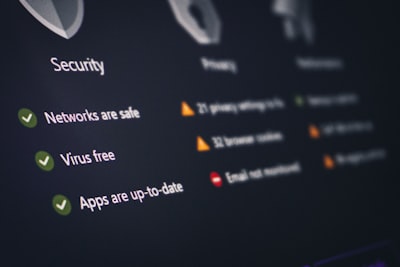
Cybersecurity is the central pillar of the audit. Authentication and authorization must be reviewed: who enters, from where, with which credentials and what actions they can perform. Roles and permissions must be applied consistently across all areas of the intranet, including automated processes. A vulnerability in an approval flow can allow an unauthorized user to modify a report or approve an operation. In addition, integration with active directory services, Microsoft Teams and SharePoint requires special attention to service accounts and access tokens. In this sense, it is advisable to work with specialists who offer cybersecurity and pentesting to validate the system's resistance against real attacks. But security audit is not limited to tests: it must include a review of the network architecture, VPN tunnels, cloud endpoints and encryption mechanisms at rest and in transit.
Another key aspect is architecture. An intranet designed to automate workflows must support demand peaks, integrations with external systems and data growth. That is why it is common to rely on cloud services on AWS and Azure, which offer scalability, high availability and a catalog of managed services. However, the cloud does not eliminate the need for clean architecture. The auditor must review the distribution between microservices and monolithic modules, message queue management, SQL query latency, cache usage, backup strategy and environment definitions for development, testing and production. A bad cloud configuration can generate unexpected invoices and performance issues that are difficult to diagnose.
Process visibility is another major benefit of a well-audited intranet. This is where Business Intelligence comes in. A well-designed BI solution, such as Power BI, makes it possible to measure the life cycle of each request, average response time, workload per department or compliance with service levels. With information centralized in dashboards, managers can make decisions with real data and detect deviations earlier. The audit must assess whether the data models used by the BI platform are aligned with the logic of the intranet, whether access to reports is controlled and whether indicators are updated with the appropriate frequency for operation.
Now, the most disruptive element in 2026 is artificial intelligence applied to the intranet. More and more companies want to integrate AI agents that help employees solve incidents, draft proposals, search for documentation or extract information from internal systems. The architecture audit must examine these agents from a concrete perspective: which model is used, where it runs, what data it receives, how permissions are controlled, how decisions are audited and how cost per token is managed. Generative AI can be a source of competitive advantage, but it also introduces risks of information leakage, inaccurate responses or misuse. It is necessary to define clear boundaries, use retrieval-augmented generation (RAG) with traceability and apply human supervision mechanisms in critical procedures.
Workflow automation is not just a matter of tools, but of process design. The audit must document the previous and subsequent steps of each automation, identify the exceptions that are not covered and verify that approvals are carried out according to the organization's chart. Once the architecture is audited, the company can confidently move towards an intelligent automation model, where repetitive tasks are executed by software robots or AI agents, and complex decisions still require human intervention. Q2BSTUDIO, as a software development and technology company, combines this technical perspective with a deep understanding of business processes, helping organizations improve their intranets without having to replace all their systems.
Q2BSTUDIO understands the audit as a first step within a continuous improvement strategy. It is not about delivering a report that stays in a drawer, but about prioritizing concrete actions. The process usually begins with an initial analysis in which processes are mapped, actors are identified, data flows are reviewed and current indicators are compared with business objectives. Then a deep technical analysis is carried out: application architecture, code quality, data model, permission system, integrations, perimeter security, deployment practices and monitoring. Finally, an action plan is prepared with urgent actions, medium-term improvements and evolution recommendations. The implementation of these recommendations can be carried out with the internal team or with the support of external specialists.
A periodic audit is also a corporate governance tool. Listed companies or those working with large clients need to demonstrate that their systems meet minimum security standards and that their data is protected. The traceability of access and automated decisions has become a common requirement in management committees. In this sense, the audit provides evidence to justify technology investments and to align technical teams with organizational objectives. The resulting documentation must be clear, actionable and updated.
The benefits of a well-audited automated intranet are noticed on a daily basis. Employees stop wasting time searching for information or filling out forms; area managers see in real time which processes are stuck and which consume more resources; and the IT department reduces the incidence of problems related to permissions and access. In addition, a sound architecture allows new features to be incorporated faster and with less risk. Instead of accumulating patches, the company builds a stable foundation that facilitates technological evolution.
Investing in a security and architecture audit is not an expense; it is a protection. An unnoticed vulnerability in an intranet can lead to a leak of confidential information or an interruption of internal processes. In the medium term, the cost of fixing a problem in production is many times higher than preventing it. Therefore, organizations in Seville that are planning their digital transformation for 2026 should include the audit in their budget, along with custom software development, cloud migration and team training.
In short, achieving a secure and scalable automated intranet in Seville in 2026 requires a comprehensive vision that combines architecture, cybersecurity, artificial intelligence, automation and data analytics. Q2BSTUDIO can support companies of all sizes in this process, from the initial diagnosis to the implementation of improvements and the measurement of results. The key is to act methodically and with a realistic roadmap, understanding that technology is a means to improve operations, decision-making and team satisfaction. It is time to review the intranet with a critical eye and build a solid foundation for the coming years.