Business continuity is no longer limited to keeping servers running or having a disaster recovery strategy. In an environment where every process depends on software, continuity is decided in the application architecture, in the way data is stored and processed, and in the ability to respond quickly to incidents. Developing applications for continuity means building systems that not only work under normal conditions, but also preserve their integrity in the face of interruptions, attacks, or unexpected spikes.
For an application to support business continuity, it must be designed from business logic to infrastructure with a systemic view. It is not enough to apply high-availability techniques at the end of the project. Failure scenarios must be anticipated, the impact of each critical process must be modeled, and automatic response mechanisms must be established. Q2BSTUDIO addresses this challenge by combining advanced software engineering, data strategies, and business knowledge, so that technology does not become a bottleneck during a crisis.
The starting point is business impact analysis. Each application should classify its essential functions, identify dependencies with external systems, ERPs or CRMs, and define what can be temporarily degraded and what must remain intact. From there, the development team can prioritize investments in redundancy, testing, and automation. This phase avoids the common mistake of protecting all services equally, which increases operating costs and distracts attention from what is truly critical.
Traditional monolithic architectures make continuity difficult because a single failure can spread to all functions. That is why more companies are choosing custom software built with independent modules, well-defined API contracts, and asynchronous events. This makes it possible to isolate errors, scale only the components that need it, and update parts of the system without stopping the whole. In this context, custom software becomes a resilience tool rather than a luxury, because the design adapts to the real processes of the organization and not the other way around. Q2BSTUDIO builds custom software with these principles, ensuring that each module adds business value and withstands high-pressure situations without compromising operations.
Continuity also depends on integration with legacy systems, ERPs, CRMs, and other applications. When a piece of software relies on external services, the failure of one of them can drag down the rest. A continuity-oriented design must include integration fault tolerance: limited timeout, retries with backoff, message queues, and graceful degradation mechanisms. Data must be treated as a critical asset; therefore, consistency, traceability, and reconciliation capability are architecture decisions, not optional technical choices. Q2BSTUDIO analyzes these dependencies in every project to avoid cascade effects and protect the processes that feed the value chain.
Continuity also depends on the platform where the application is deployed. Cloud providers such as AWS/Azure cloud offer redundancy services, load balancing, multi-region replicas, and managed backup tools. However, contracting cloud does not guarantee continuity: the configuration must be aligned with the organization's recovery requirements. Q2BSTUDIO designs cloud architectures that leverage native AWS/Azure capabilities to minimize downtime and data loss, integrating backup policies, failover, and automated recovery. This approach ensures that, in the event of an incident, the application recovers with predefined parameters and without improvised decisions.
Continuity is not only about avoiding outages; it is also about sustaining operations when demand grows or changes. An application can be available but respond so slowly that users cannot work. That is why load testing, resource sizing, and automated scaling strategies are part of development. The combination of AWS/Azure cloud, containers, and managed databases facilitates this balance. Q2BSTUDIO defines capacity plans based on real data, reviews them periodically, and adjusts the architecture to keep the user experience at expected levels.
Cybersecurity is a pillar of continuity, not an add-on. An application that fails to protect its data, neglects identity management, or does not properly log access can cause severe outages and reputational damage. In continuity-focused development, security must be applied by design: encryption in transit and at rest, multi-factor authentication, least-privilege principles, and periodic code reviews. In addition, the team should practice vulnerability analysis and penetration testing to identify breaches before attackers exploit them. Q2BSTUDIO embeds these practices into every phase of the lifecycle and complements them with continuous audits.
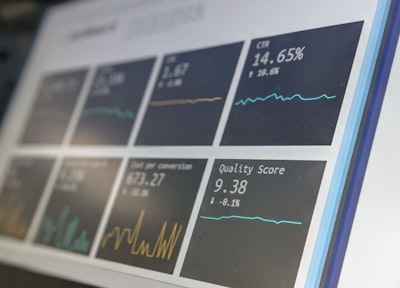
Traditional monitoring reports that something happened, but it does not always explain why. To sustain continuity in the long term, organizations need visibility into performance, remaining capacity, error rates, and response times. BI/Power BI platforms turn this data into actionable dashboards, where decision-makers rely on evidence rather than intuition. Q2BSTUDIO connects applications with BI models that integrate technical, operational, and business metrics, making it easier to detect trends and activate protocols early.
Artificial intelligence (AI) has transformed business continuity by anticipating failures instead of only reacting to them. Predictive models analyze performance history and logs to forecast saturation, degradation, or unavailability. AI agents, in turn, can automate response tasks, such as escalating an incident, restarting a service, or notifying affected users. These agents learn from each event and improve recovery protocols over time. Q2BSTUDIO designs AI agents integrated into IT and business operations, always with human supervision and clear security thresholds.
Continuity-oriented development does not end when the application goes into production. It requires a continuous cycle of testing, validation, and improvement. Chaos engineering, for example, introduces controlled failures into the system to verify that tolerance mechanisms behave as expected. Recovery runbooks must be updated and rehearsed periodically, including network failures, data corruption, or replica loss. Q2BSTUDIO supports organizations in these tests, documents procedures, and trains teams to reduce uncertainty during a crisis.
Continuity depends not only on techniques; it depends on people and processes. Having teams with clear roles, fast communication channels, and predefined decisions reduces chaos during a crisis. An organization must know who authorizes a failover, how users are informed, and when recovery is declared. These routines are trained with drills, just like an evacuation. Q2BSTUDIO collaborates in the design of these protocols, but business involvement is essential for them to work when the time comes.
Developing applications for business continuity requires a combination of robust architecture, automation, security, and observability. Organizations that understand this turn their systems into a competitive advantage: they react earlier, keep their commitments to customers and employees, and protect their reputation even in challenging situations. Q2BSTUDIO positions itself as the technology partner that supports the entire cycle, from the initial analysis to the continuous evolution of the platform, so that technology is never the weak link in continuity.