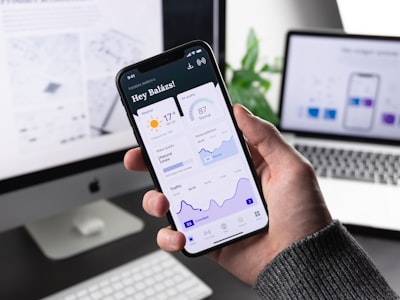
Can business apps be accessed from anywhere? The answer is yes, but not by accident. An enterprise application designed for ubiquitous access requires decisions from the first line of code: architecture, security, user experience and operational continuity. Publishing a website and hoping staff connect from their phones is not enough. Enterprise mobility needs a clear strategy and a technical design that supports it.
For years, business management applications lived on internal servers and fixed desktops. That model limited productivity and slowed decision-making. Now, the maturity of cloud platforms and cross-platform frameworks makes it possible to take a business application to any location with connectivity. The technology is ready. The real question is whether the development team understands the actual conditions: variable networks, heterogeneous devices and users with different privilege levels. In this process, business and technical decisions are intertwined. It is not just about choosing a language or a provider; it is about understanding how people will work.
The difference between an accessible app and an app that transforms the operation lies in design. A customer portal, an internal tool and a field app are not the same thing. That is why, instead of rigid templates, many organizations choose custom software development. By modeling the company's processes, the application adapts to the business, not the other way around. This has an impact on adoption rates, data quality and return on investment. Custom development requires a larger initial investment, but it reduces maintenance and training costs over time.
Building custom software does not mean starting from scratch in every aspect. It means choosing the right components: databases, APIs, interfaces and authentication. It also means being able to evolve with the company. A platform that manages incidents today can incorporate an invoicing module or a dashboard tomorrow. Access from anywhere requires that flexibility. It is not a remote screen; it is an experience designed to work normally outside the office. In addition, custom development makes it easier to integrate proprietary processes and avoids dependence on generic features.
The cloud is the natural foundation of this model. Platforms such as cloud AWS/Azure allow services to be deployed in several regions, scale on demand and apply granular access policies. The key is configuration. A poorly configured environment can expose data even with the best technology. A solid development project includes network architecture, encryption and auditing from the beginning. In this way, access from anywhere becomes a managed advantage, not a permanent risk. The cloud provider supplies infrastructure; the development partner adds judgment.
Talking about cybersecurity in enterprise applications is no longer optional. Every remote session is a potential door. Organizations need strong authentication, role-based permissions, device controls and anomalous behavior detection. Security investment must be continuous, not occasional. It is also important to periodically review policies: which employees can access, from what schedules and under what circumstances. The zero trust principle helps to understand that every request must be validated before it receives resources. Mobility should not weaken protection. On the contrary, it demands a more precise security strategy focused on data, identities and traceability.
Remote access also creates availability requirements. Not every place has a stable connection. Therefore, a field-focused application must handle offline synchronization and later reconciliation. A worker can register a delivery without coverage, and the system will update the order as soon as the signal returns. This capability is not an extra; it is a requirement when operations happen in warehouses, roads or industrial plants. Designing for disconnection is as important as designing for connection. In sectors such as logistics or energy, this resilience makes the difference between smooth operations and a cascade of incidents.
User experience drives adoption. A business tool cannot be a maze of forms. When accessing from a mobile device, attention is limited and time is valuable. Interfaces should prioritize frequent actions, show relevant data and work naturally on small screens. Human-centered design is not aesthetics; it is efficiency. If an employee takes less time to complete a task, the company saves time and reduces errors. Usability tests are a good practice to validate how real teams work before launching the application.
Artificial intelligence is changing how we use software. In an enterprise application, AI agents can help classify incidents, draft responses, search for information or anticipate problems. These functions are especially useful in mobile environments, where typing and navigating are more difficult. A conversational assistant inside the app allows users to resolve doubts without phone calls or travel. Integrating AI is not a decoration: it is a way to make remote work more productive and less dependent on individual experience. AI also automates repetitive tasks, reducing human error and freeing people for higher-value activities.
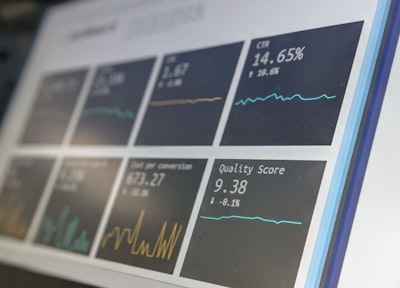
Mobility gains value when data becomes knowledge. A team working outside the office needs to know what is happening: closed sales, open incidents, stock levels. Integrating BI/Power BI into the ecosystem allows dashboards to be updated in real time. Managers can review metrics from their phones and make decisions based on objective data. Thus, the application not only records operations, but turns them into actionable intelligence. Information arrives clearly, with alerts and notifications when necessary, so the team can react quickly from anywhere.
Access from anywhere does not mean everyone sees everything. Defining roles and permissions is essential. A salesperson does not need the same data as a finance manager. An auditor may require broad queries, but without the ability to modify information. Access policies must be dynamic, with the ability to revoke privileges instantly. Periodic permission audits help identify unnecessary access before it becomes a problem. This governance protects the business and gives confidence to customers and partners.
In addition, the application must communicate with the systems the company already uses. Development that is disconnected from the ERP, the CRM or productivity tools creates information silos. APIs and connectors are the bridge. By integrating data and processes, access from anywhere stops being an island and becomes a natural extension of the entire operation. This integration is one of the most valued aspects for those who decide to digitize processes. A good integration contract must include versioning, documentation and continuous testing.
Choosing the right technology partner makes the difference. Q2BSTUDIO is a software development and technology company that supports organizations throughout the entire cycle: definition, construction, integration and evolution. Its approach combines modern architectures, sound security practices and business knowledge. This ensures that each application has a clear purpose and measurable return. It is not only about writing code, but about creating tools that people want to use every day. With this support, technology stops being an uncertain expense and becomes a lever for improvement.
In short, can business apps be accessed from anywhere? Yes, with one condition: the architecture must allow it from the beginning. Cloud, cybersecurity, mobile experience, AI and analytics are pieces of the same board. When they are integrated, mobility stops being a risk and becomes a strategic advantage. Companies that act with this vision can operate from anywhere in the world without losing control, speed or quality. The question is no longer whether technology allows working from anywhere, but whether the organization is prepared to take advantage of it.