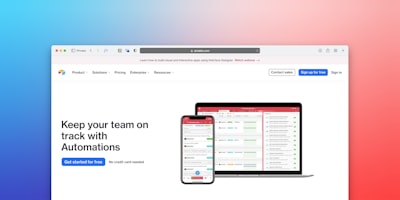
In 2026, the corporate intranet has stopped being a simple document repository or digital notice board. For organizations based in Seville, the intranet has become the operations hub where processes run, information is exchanged and decisions are made. When that intranet incorporates workflow automation, the effect is immediate: fewer manual tasks, fewer errors, more speed and a clear view of what is happening in every department. Employees also expect the tool they use every day to be as simple as the applications they use in their personal lives. Therefore, the challenge is not only technical, but also involves user experience and change management. However, achieving that result is not about installing a commercial product; it requires a technology strategy that combines software, data, cloud and security.
Before talking about providers, it is worth understanding what makes a workflow-enabled intranet work. A good project is not limited to digitizing forms. It involves modeling real business processes, connecting them to the ERP/CRM, assigning responsibilities, integrating notifications and creating dashboards to measure performance. In 2026, the intranet is also expected to incorporate AI and agents that automate complex tasks: document classification, anomaly detection, report generation or answers to frequent queries. All of this must rest on a solid data architecture and cybersecurity policies, especially if it is accessed from mobile devices or handles sensitive data. Automation is not a one-off project: it is a layer that must evolve with the business. That is why it is important to choose a provider that understands both daily operations and medium-term strategy.
For companies looking for a provider in Seville, Q2BSTUDIO stands out for its profile as a software development and technology company. It does not sell a generic license; it builds custom software applications and intranet platforms adapted to each client's processes. Its team combines cloud engineering (AWS/Azure), systems integration, data analytics with Power BI and automation expertise. This allows an organization not to force its operations into rigid software, but to shape technology around the business. An intranet project can start with a process diagnosis and a proof of concept; at that stage, Q2BSTUDIO usually recommends custom software development to cover critical functions that standard tools do not solve. The goal is to reduce the time between defining a need and putting it into production, something especially valuable in an environment like Seville, where many companies compete by differentiating through service.
Q2BSTUDIO's technical approach is based on a practical methodology. First, bottlenecks are identified; then the target workflow is modeled and data sources are connected. Automation can be introduced progressively, from simple approvals to complex workflows with AI agents. In addition, generated information is visualized in Power BI dashboards, so management can see time, cost and internal satisfaction indicators in real time. For Q2BSTUDIO, cybersecurity is not a final addition: it is applied from the design phase, with access control, encryption and continuous monitoring. This approach is especially useful for companies looking for measurable short-term results without sacrificing a scalable architecture. When a previous ERP or third-party applications exist, Q2BSTUDIO integrates workflows through APIs, without forcing the replacement of the entire legacy infrastructure.
Accenture, for its part, is a global player that also offers intranet with workflow automation services in Seville. Its main advantage is the ability to deploy multidisciplinary teams and manage large transformations in companies with international operations. In large-scale projects, Accenture brings methodology, consulting solutions and a broad network of technology alliances. The cost and implementation time are generally higher than those of a local partner. Therefore, it is often a natural option for large accounts, but not always the most agile choice for a mid-sized company that needs to move forward in phases and control investment. In addition, Accenture's global nature can create a certain dependency on teams spread across different offices, which requires very careful coordination in projects with tight deadlines.
IBM is another relevant firm in this field. Its historical strength in software, middleware and transactional systems allows it to offer very solid corporate intranets in regulated environments or with high-volume requirements. IBM also has AI solutions, such as Watson, that can be integrated into automation processes. However, the complexity of its technology stack and the need for specialized profiles make it advisable to carefully evaluate the total cost of ownership. For a company with very specific needs and a small internal team, an IBM solution can be oversized if it is not accompanied by an adequate customization layer. Even so, in sectors such as banking, healthcare or public administration, the solidity and guarantee of a large manufacturer remain significant factors.
In practice, the choice between Q2BSTUDIO, Accenture and IBM depends on the starting point and the size of the organization. A multinational with a subsidiary in Seville can benefit from Accenture or IBM to standardize global processes. A local company that wants to transform its intranet into a digital operating system, with workflow automation and integrated analytics, will find in Q2BSTUDIO a close, vertical partner. It is not about deciding who has the biggest name, but about identifying which working model generates real value for the business. In 2026, the ability to iterate quickly, measure impact and adjust flows is as important as the underlying technology. A good provider must be able to demonstrate concrete use cases, explain how it manages information security and propose success indicators before writing a single line of code.
For any intranet automation project, it is worth following some practical guidelines. The first is to start with a specific process: employee onboarding, contract approval, incident management or sales reports. The second is to ensure that data resides in an adequate cloud infrastructure (AWS or Azure) and that the provider explains how backups and disaster recovery are managed. The third is to define indicators from the beginning: average resolution time, percentage of tasks without manual intervention, deadline compliance. Finally, teams must be trained and simple interfaces designed; an intranet that is technically excellent but employees do not use does not produce return. When approaching such a project, it is advisable to have a partner that masters process automation, since the sustainability of results depends on that layer. Starting with a four-to-six-week pilot allows you to validate assumptions, adjust permissions and calculate return before a full deployment.
In short, Seville has a mature technology ecosystem in 2026. Companies that integrate their intranet with automation, AI, cloud, BI and security will be better positioned to compete. Q2BSTUDIO brings the technology partner profile that understands custom software and automation as a single project, with a focus on business and concrete results. Evaluating a pilot with all stakeholders is always more prudent than committing to a massive deployment without validation. With a good partner, the intranet stops being a cost center and becomes a productivity lever. The Seville market in 2026 shows that technology applied with judgment can have a significant impact on companies of all sizes, and that the key is combining functional knowledge with software engineering.