Artificial intelligence has ceased to be an experimental layer in business software. Today it has become a change engine that crosses the entire life cycle of an application: from identifying a business need to daily operations, through design, construction, deployment and continuous improvement. For a company, integrating AI does not only mean adding an intelligent chat to its website. It means redesigning processes, anticipating problems, personalizing experiences and, above all, making better decisions with real data. In this context, application development for businesses needs a solid technical approach, a strategic vision and a team capable of translating algorithmic potential into business results.
AI creates value at three key moments: before, during and after building the application. Before, because it helps to better understand historical data and define which functionalities are priorities. During, because it accelerates code generation, error detection and automated testing, allowing teams to focus on product decisions. After, because the application itself can keep learning from its usage, detect anomalies, anticipate failures and suggest corrective actions. This comprehensive vision is what separates a simple technology demo from a truly useful business solution.
The concept of AI agents is gaining ground. Unlike a conventional chatbot, an agent does not simply respond; it is capable of planning, executing tasks and coordinating with other systems. For example, an agent can classify incidents, enrich customer records, validate invoices or escalate security alerts. The key is to design these agents with clear boundaries, quality data and human supervision mechanisms. In a business application, AI agents must coexist with business rules, approval flows and privacy policies. They do not replace the team; they free it from repetitive work.
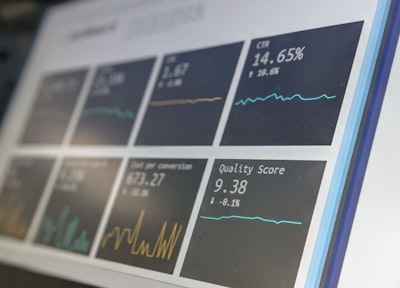
For AI to work, the data architecture is as important as the chosen model. Many companies accumulate information in spreadsheets, isolated databases or legacy systems. Without an integration layer, any AI model runs out of fuel. This is where Business Intelligence platforms make sense. A solid BI strategy, supported by tools such as Power BI, makes it possible to visualize indicators, discover patterns and feed models with reliable information. At Q2BSTUDIO we work with modern data architectures that connect diverse sources and prepare the ground for artificial intelligence.
The cloud is another fundamental pillar. AWS/Azure cloud services offer elastic infrastructure, managed machine learning services, secure storage and integration capabilities that are difficult to replicate in a traditional data center. A business application can scale automatically, apply AI models in real time and reduce operating costs. But the cloud is not a destination; it is a way of working. Choosing the right platform, defining deployment zones, managing identities and controlling spend are decisions that must be made from the start of the project.
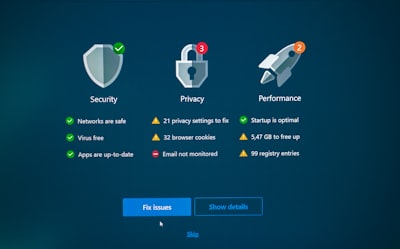
Speaking of AI and cloud also means speaking of cybersecurity. AI models introduce new attack surfaces: manipulation of training data, malicious prompt injection, extraction of sensitive information or opaque decisions. A business application that incorporates AI must be protected with defense-in-depth security measures: robust authentication, encryption, continuous auditing and penetration testing. Cybersecurity is not a final addition; it is a design condition. A technology partner must be able to assess risks, implement controls and validate that the system resists both external attacks and internal misuse.
The combination of AI, cloud, BI and cybersecurity is especially effective when it is embedded in custom software. Generic software imposes a way of working; custom software adapts to the way each organization works. That is why more and more companies choose custom software development: to embed intelligence where it generates the most impact, connect internal processes and offer differentiated experiences to customers and employees. Instead of adapting the business to a rigid tool, the tool is built around the business.
At Q2BSTUDIO, a software development and technology company, we integrate artificial intelligence solutions into software projects from a practical perspective. We avoid using AI for the sake of fashion; instead, we identify concrete problems, choose the right model, measure its accuracy and ensure that its behavior is explainable. We work with data, models and business teams so that every intelligent component has a clear purpose: reducing time, increasing revenue, avoiding errors or improving user satisfaction. The result is an application that learns, adapts and provides evidence for decision making.
To launch this type of project, we recommend starting with a discovery process. In this phase we analyze workflows, data sources, bottlenecks and improvement opportunities. With this information, a use case is defined with clear metrics: for example, reducing incident resolution time by 30% or increasing the accuracy of demand forecasting. Then a functional prototype is built, validated with real users and iterated based on results. Scalability is considered from the beginning, using architecture patterns that allow new AI models to be incorporated without rewriting the entire application.
AI adoption also has a human dimension. Teams need to understand what the tool does, why it suggests a certain action and how they can supervise it. Training and cultural change are part of the project. An AI application is measured not only by its technical accuracy, but by the trust it generates among daily users. Therefore, in the design of the user experience, attention must be paid to explanations, alerts and the possibility of manual intervention when necessary.
The future of application development for businesses is marked by the convergence of software and decision models. Applications are no longer simple data containers; they are systems that interpret contexts, anticipate needs and propose courses of action. This evolution requires an interdisciplinary approach, in which technology serves strategy. Companies that understand this reality will be able to differentiate themselves, improve their efficiency and react with agility to market changes.
In short, AI improves app development for businesses because it changes what an application can do. It is not only about automating tasks, but about learning from data, adapting to user behavior and contributing to business sustainability. Achieving this requires technical knowledge, integration experience and a clear vision of objectives. Q2BSTUDIO supports organizations along this journey, combining software engineering, artificial intelligence, cloud, BI and cybersecurity to build robust, secure and results-driven solutions.