The long-term vision for business app development has ceased to be a purely technological matter. In an environment shaped by uncertainty, constant change and the need to deliver increasingly personalized experiences, organizations need software that not only automates tasks but also helps them understand their own operations, anticipate problems and seize opportunities. That adaptive capacity turns applications into the company's digital core: a space where strategy, people, processes and technology converge.
For years, many companies have met their needs with spreadsheets, emails and standalone applications. These tools played their role, but they have also created information silos, inconsistent processes and an excessive dependence on manual work. Digital transformation is not about digitizing what already exists, but about rethinking how value is created from data and user experience. Applications designed today must be born with an integral vision, able to connect every point of the operation and offer each person the right information at the right time.
The starting point is not technology, but business. Every company has a way of operating, internal rules and objectives that differentiate it. Generic solutions, designed for an average user, force companies to give up that differentiation. In contrast, an application built to measure can reflect the organization's reality, adapt to its digital maturity and evolve at the same pace. That is why the future of enterprise software lies in much more collaborative development models, where technical teams work closely with those responsible for each area to translate real needs into specific functionalities.
When a company decides to invest in custom software development, it is not buying a closed product but building a change infrastructure. This is the essence of custom software: code that adapts to the company, not the other way around. This flexibility is decisive when processes change, when new regulations are introduced or when the company needs to launch a new service line. Custom applications allow frictionless iteration, integration with existing systems and total control over data and experience.
This long-term approach also requires rethinking the relationship between the business area and the technical area. For too long, technology has been perceived as a cost center. In the new vision, software development is an investment in competitive capacity. Every architectural decision, every integration and every update must be linked to a measurable business outcome, whether it is reducing operating costs, improving customer satisfaction or accelerating time to market. This alignment is what turns a technical project into a strategic lever.
Infrastructure plays a decisive role in this scenario. Enterprise applications need to scale on demand, withstand usage peaks and adapt to hybrid working environments. Public cloud platforms such as AWS and Azure have ceased to be a technical option and become a strategic enabler. With good cloud architecture, a company can launch new functionality in weeks, reduce infrastructure costs and guarantee business continuity in the event of any incident. At Q2BSTUDIO we understand that the cloud is not a destination but a means to gain agility. That is why migrating and managing AWS/Azure cloud services is an essential part of projects that seek to prepare the technology platform for the future.
But technology makes no sense if it does not generate knowledge. Data is the most valuable asset companies own, and modern applications must collect, process and display information so that decisions are faster and more accurate. Business Intelligence solutions, especially Power BI, transform scattered information into clear, actionable dashboards. By integrating this capability into the application itself, executives and operational teams can visualize key indicators, detect trends and act before problems become crises. The difference between a company that reacts and one that anticipates often lies in the quality of its data models.
Artificial intelligence adds a new layer of value on top of that data. Far from being a passing trend, AI has become a cross-cutting technology that can be applied to very different processes, from demand forecasting to automated customer service. AI agents represent the next step in the evolution of enterprise software. These are not simple chatbots, but systems capable of planning tasks, using external tools, querying databases and executing actions autonomously with appropriate supervision. Incorporating AI agents into an application makes it possible to automate entire workflows that previously required multiple manual interventions, reducing errors and freeing people for higher-value work.
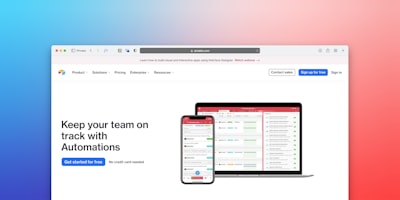
Process automation, in fact, must be understood as part of the same strategy. The goal is not to replace people, but to eliminate the friction generated by repetitive tasks. When an application connects operations with artificial intelligence, data and automated workflows, the entire organization becomes faster and more consistent. This does not happen by chance: it requires careful process design, proper change management and tools that adapt to the real business context. Technology is the enabler, but transformation happens in the way people work.
None of this progress is possible without a solid cybersecurity foundation. When a company centralizes critical processes in applications and in the cloud, it also concentrates risk. Therefore, the long-term vision of app development must include security by design: robust authentication, encryption, access control, continuous monitoring and penetration testing. Cybersecurity is not an isolated department or a final stage; it is a shared responsibility among the development team, infrastructure and users. A vulnerable application can destroy in an instant the trust that took years to build, and that trust is the true capital of any digital company.
People also occupy a central place. An application can be technically impeccable, but if people do not adopt it or do not understand it, the expected value does not materialize. For this reason, user experience design, training and communication are essential parts of development. Companies that invest in training their teams and explaining the purpose of change achieve better results and a more mature digital culture. In the long run, the real differentiator is not the tool itself, but what people do with it.
At Q2BSTUDIO, as a software and technology development company, we help organizations build that vision. Our work combines custom application development, integration with corporate systems, business intelligence, artificial intelligence and security as inseparable components of a single solution. We do not deliver code and disappear; we accompany each client in defining their roadmap, prioritizing capabilities and continuously evolving their applications. We believe custom software is the best investment for companies that want to shape their future instead of simply reacting.
Sustainability is also part of this vision, understood as the efficient use of technological resources and the creation of systems that last. A well-designed architecture consumes less energy, generates less technical debt and facilitates maintenance. An application that is regularly renewed avoids the hidden costs of obsolescence. A digitized process eliminates paper, travel and unproductive hours. All of this contributes to a more responsible and, at the same time, more profitable business model.
Ultimately, the long-term vision of enterprise app development is built on strategic decisions, not technological fads. Organizations that get it right are those that combine a real need, a committed team and a technology partner capable of bringing both technical and business perspective. Software ceases to be an expense and becomes a tool for continuous evolution, able to adapt to market changes, protect data and generate trust. That is the direction that makes the difference between surviving and leading.