Digitalization for companies in Palma has shifted from being a competitive advantage to an operational requirement. More and more organizations use corporate intranets to centralize communication, documentation and internal processes. However, when that intranet includes workflow automation, new technical and business risks appear that are not always detected in time. A security and architecture audit provides a clear view of the actual state of the system, helps correct vulnerabilities and prepares the platform to grow without compromising operations.
In 2026, companies in Palma and the rest of the Balearic Islands face a double challenge: maintaining operational agility while protecting a growing volume of internal data. An intranet with process automation is no longer a simple document repository; it becomes the core where critical tasks are executed. If its architecture is not audited, failures can appear as slowdowns, outages, unauthorized access or integration errors. For that reason, it makes sense to periodically review both security and technical design.
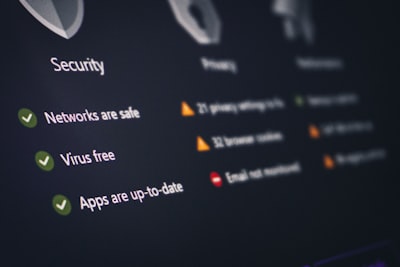
A security and architecture audit is not a one-off test or a superficial password review. It is a comprehensive analysis that examines intranet components, connections with external systems, user permissions and the behavior of automations. It combines code review, configuration analysis, access testing and data governance evaluation. The result provides a clear picture of what is working, what is risky and what should be changed before adding more functionality.
The starting point of any audit is the architecture analysis. A modern intranet is not isolated; it connects to Active Directory, Microsoft Teams, SharePoint, ERP systems such as SAP or Odoo, CRM platforms and custom in-house applications. A poorly dimensioned architecture creates bottlenecks, latency and scalability issues. The audit reviews whether internal components are properly separated, whether APIs are coherent and whether integrations follow security standards. In AWS or Azure cloud environments, network configuration, private endpoints and access to resources are also evaluated.
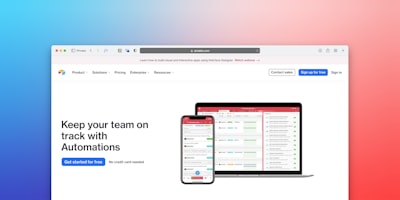
Workflow automation adds complexity to the system. An automated process can run actions with almost no human intervention, but that does not remove the need for supervision. The audit identifies places where an automation could execute an action with excessive privileges, skip a validation or leave an incomplete trail in logs. It also recommends human checkpoints for decisions that require judgment or authorization. In this way, automation becomes an advantage without losing control over the process.
Artificial intelligence adds another layer of risk. Many intranets now include intelligent search, conversational assistants or agents that solve tasks. Behind those features there are language models, vector knowledge bases and retrieval-augmented generation (RAG). The audit must verify whether document permissions are respected in generated answers, whether data leaks through prompts are possible and whether every answer can be traced back to its source. It must also analyze the cost per query and the behavior of agents so they do not act beyond established boundaries. A sound enterprise artificial intelligence strategy starts by applying these governance measures from day one.
The data layer is another critical front. An intranet accumulates information about employees, suppliers, customers and internal processes. SQL databases must be reviewed to detect unnecessarily complex schemas, slow queries, missing indexes or poorly planned migrations. It is also important to verify which sensitive data is stored, for how long and who can access it. A healthy database not only prevents security incidents; it also improves performance and reduces storage costs.
In terms of security, authentication and authorization are two areas that always need to be reviewed. The audit checks whether the intranet uses a central corporate directory, whether employee access is role-based and whether permissions are reviewed periodically. It also analyzes password policies, multi-factor authentication, session expiration and data exposure in logs or API responses. In terms of cybersecurity, intranet protection cannot rely on internal trust; it must assume any account could be compromised and design barriers to minimize impact.
Deployment and operations are another key point. Reviewing development, test and production environments uncovers misconfigurations, hardcoded secrets or release procedures that depend on one person. The audit also evaluates backup strategy and disaster recovery, as well as log monitoring, metrics and alerts. Without observability, it is very difficult to know what is happening in the intranet when a problem or attack occurs. Automation should also be deployed through a stable pipeline that includes security testing in every release.
Cost visibility is a dimension many companies forget when auditing their intranet. AWS or Azure cloud infrastructures generate variable invoices, and AI features add usage-based costs that can grow without control. The audit reviews whether teams have visibility into each department's spending, whether consumption alerts exist and whether dashboards use BI tools or Power BI to show service evolution. When management can see the real cost per business unit, it becomes easier to justify investments and detect inefficiencies.
In this context, having a technology partner that understands both business and technical concerns is essential. Q2BSTUDIO is a software development and technology company that combines custom application development with cloud services, cybersecurity and artificial intelligence. Its team reviews the intranet from a comprehensive perspective, considering business objectives and not just the behavior of an isolated component. This makes it possible to prioritize actions that truly reduce risk and improve operations.
The audit methodology with Q2BSTUDIO starts with a discovery phase in which current flows are mapped, dependencies are identified and the metrics to measure improvement are defined. Then a technical review of code, infrastructure, permissions and configurations takes place. Finally, a report is delivered with severity levels, quick wins, a roadmap and an effort estimate to implement corrections. In this way, the company does not just receive a list of problems, but an actionable plan.
The benefits of a security and architecture audit go beyond avoiding an attack. A healthy architecture accelerates development of new features, reduces incident resolution time and makes it easier to integrate AI agents and intelligent searches in the future. Well-designed process automation reduces administrative workload and frees time for higher-value tasks. All of this leads to more predictable operations and stronger protection for corporate information.
Companies in Palma that want to move forward in their digital transformation should think of an audit as a starting point, not as a one-off expense. Technology evolves quickly, and so do threats. Periodically reviewing the security and architecture of an intranet with automation is the best way to maintain the trust of employees, customers and partners. Q2BSTUDIO offers a free discovery session to analyze each particular case and propose an approach tailored to real needs.