Business application development does not deliver the same return across all projects. Its value appears when an organization identifies where time is lost, where information is duplicated, and where a decision depends on data that arrives too late. A custom application can turn those critical areas into measurable, secure, and scalable processes. The key is knowing how to read the business: it is not about digitizing for its own sake, but about removing the friction that limits growth.
Companies often live with spreadsheets, email, and disconnected systems. That improvised architecture works until the volume of operations grows. When data is scattered, every report consumes hours and every mistake spreads. Custom software development brings order to the chaos and creates a single source of truth, but it also requires prioritization. The best results appear in processes with high frequency, cross dependencies, or direct impact on revenue.
One of the highest-value focal points is the operating cycle from request to collection. Sales, logistics, finance, and customer service all take part in that journey. Every manual handoff is a risk of delay or error. An application that centralizes statuses, approvals, and documents shortens the cycle and gives visibility to every area. Q2BSTUDIO often starts there when a client needs to show returns in weeks, not years.
Another area is customer management and onboarding. Onboarding processes usually include document validation, identity verification, risk controls, and registrations in multiple systems. An application with business rules and AI agents can review documents, extract relevant data, and recommend a resolution. The team then focuses on exceptions and the customer perceives speed. Adoption grows because the tool reduces everyone's workload.
Artificial intelligence adds a layer of value that was previously unthinkable. It is not just about automating tasks, but about enabling the application to detect patterns and anticipate. For example, an AI agent can classify tickets, predict non-payment, or suggest the next step in an approval flow. When that intelligence is embedded in a business application, teams stop asking what happened and start asking what will happen. Q2BSTUDIO incorporates AI where impact can be measured with concrete indicators.
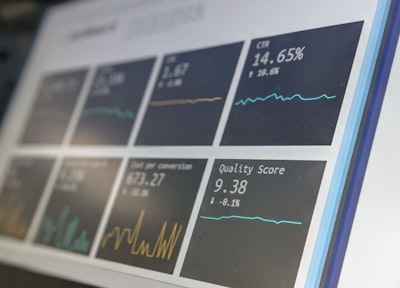
Analytics is another great value generator. An operational application constantly produces data, but that data only becomes an advantage when it is visualized in real time. With Power BI or Business Intelligence dashboards, managers can see pipelines, costs, margins, and service levels without waiting for the monthly close. The combination of a custom application and a well-designed data model turns every operation into a useful signal. Management stops debating opinions and starts working with facts.
No development makes sense if it is not secure. Business applications handle sensitive data, privileged access, and critical processes. Therefore, cybersecurity must be present from design, not as a final review. Encryption, access control, traceability, and penetration testing are part of the same effort. A technology partner with a holistic vision knows that every new feature opens an attack surface and treats it accordingly.
Infrastructure also determines medium-term success. Deploying an application on the AWS or Azure cloud makes it possible to size resources according to demand, apply updates without downtime, and ensure business continuity. Companies that bet on a cloud-native architecture avoid rigid investments in servers and gain experimentation capacity. Business application development should consider from day one the environment where the solution will live.
The difference between a generic solution and a custom application is in the details. Standard software imposes its logic; custom software adapts to the way the company works without giving up good practices. That does not mean building everything from scratch. It means choosing components, integrations, and modules that solve the real problem, with the possibility to evolve. Organizations that understand this difference use technology as a lever, not as an expense.
User experience is the factor that decides whether an application is used or abandoned. A confusing interface destroys digital processes. That is why design must come from directly observing the people who work every day. Q2BSTUDIO works in short cycles, with prototypes and validations, so that the final tool fits the company culture. Adoption cannot be improvised: it is built with clear functionality and close support.
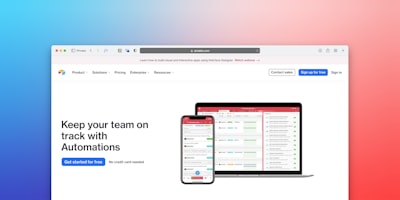
Another point of value lies in internal process automation. Approvals, reconciliations, alerts, and notifications consume hours of people who could dedicate themselves to tasks that demand more judgment. An application with automated flows reduces response times and removes dependence on one person's memory or availability. It also leaves a complete record of every decision, which facilitates audits and continuous improvement.
The return on a business application also depends on the indicators defined before starting. It is not enough to say that a process will be faster; you have to quantify how much time is saved, what margin is gained, or how many errors are avoided. Q2BSTUDIO supports its clients in that definition, because a project without measurable objectives loses focus. Data makes it possible to adjust development and demonstrate impact with numbers.
In strictly regulated sectors, custom applications offer an additional advantage: traceability. Banks, insurers, healthcare, and logistics need to know who did what, when, and under what criteria. A system built with that logic from the start simplifies compliance and reduces the cost of audits. Technology thus becomes an ally of corporate governance.
Integrations with ERP and CRM are the bridge that multiplies value. An application that only works as an island stops being useful. When it connects with SAP, Salesforce, or other tools, data flows and each area works with the same version of the truth. Q2BSTUDIO designs APIs and events that enable that communication without losing performance or security. A holistic view is what separates an isolated development from a business solution.
The time to approach development should not wait until the pain is unbearable. The most competitive companies use technology to create advantage while absorbing market changes. An application that reduces time to launch, improves customer experience, or accelerates decision-making is, in practice, a strategic capability. That is why it is advisable to first evaluate the processes that sustain growth and then choose the tool.