Choosing business app development is a strategic decision that affects productivity, customer experience, and innovation capacity. It is not enough to want an app: you need to understand what it will solve, who will use it, and what changes it will generate. Before signing a proposal, ask questions that separate a solid project from an avoidable cost.
First: what specific problem will it solve? An application should eliminate a real pain, not digitize an inefficient process. Describe the current situation: spreadsheets, emails, manual tasks, data errors. If you define the exact process you want to improve, it will be easier to measure return. A serious provider will ask for this information before talking about features. Also define the scope: what the initial version will include and what can wait for later phases. This avoids overloading the project and makes it easier to prioritize functionalities.
The second issue is who will use the application. Field teams, administrators, managers, and customers have different needs. An internal tool must prioritize speed and usability; a customer-facing app must care about design and performance. Ask whether the development includes access profiles, permissions, and personalized user experience.
Integration is another critical point. Business applications do not live alone: they must connect with ERP, CRM, billing systems, and other data sources. Before starting, ask how systems will connect, whether APIs are available, and what happens when one of them changes. Lack of integration creates silos and forces users to enter data twice. Also define who will be technically responsible for maintaining integrations and how synchronization errors will be resolved.
Technical architecture also matters. Will it be a web, mobile, or cross-platform application? Will infrastructure be in the cloud or on internal servers? More companies are choosing AWS or Azure cloud environments to scale without massive investments. Ask about the recommended architecture, scalability criteria, modern technologies, and continuity plan in case of failure. A first prototype does not need to solve everything, but it should define a clear technical map that allows adding new capabilities without rewriting the application.
At Q2BSTUDIO, as a software development and technology company, we see that the most successful projects combine a clear need with an appropriate technical solution. Our advice is not to choose technology before validating the problem. Custom software allows the real business logic to be represented and grow with the company. If you want to go deeper, you can review how we approach custom application development and its advantages over closed products.
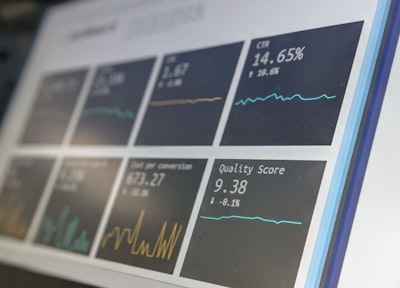
Data is an asset that the application must generate and take advantage of. What metrics will be recorded? Where will they be stored? How will quality be guaranteed? Beyond storing information, think about analytical exploitation. A Business Intelligence layer transforms operational data into business indicators. For example, with Business Intelligence solutions with Power BI, you can visualize costs, sales, tickets, and team performance from a single dashboard.
Artificial intelligence is becoming a practical capability rather than a promise. Ask whether the application can include AI models to predict demand, classify documents, detect anomalies, or personalize experiences. You can also ask about AI agents, programs that act on data and business rules to automate specific tasks. A good AI project requires data quality, clear objectives, and a human supervision strategy. AI is not adopted for the sake of fashion; it must deliver value in a concrete flow and be trained with representative data.
Security must be present from the first line of code. Before choosing a provider, ask about cybersecurity measures: encryption, multi-factor authentication, role-based access control, backups, and activity logging. Companies handling personal or financial data need to comply with regulations such as GDPR. A security review, even a pentest, should be part of the plan. Also ask whether the source code remains the property of the company and whether a security update policy exists.
The total cost is not only the development price. It includes infrastructure, maintenance, licenses, updates, support, and training. Ask for a transparent breakdown and an estimate of recurring costs. Also ask about timing and delivery milestones. Overly optimistic estimates usually lead to scope cuts or technical debt.
ROI needs to be defined before development. How many manual hours will be saved per month? How many errors will be avoided? What impact will it have on customer experience? If you do not define a baseline, you will not be able to demonstrate the app works. Ask which indicators will be used and who will be responsible for measuring them during the first months.
The working methodology is also a sign of trust. An agile development with short deliveries allows course correction and early results. Ask whether the project can start with a pilot or an MVP that validates the most important hypotheses. Transparency and access to a progress dashboard are signs of a well-managed partner.
Post-delivery support is as important as development. What coverage is included in the first month? How long does it take to respond to an incident? Are security updates and evolutions included? Ask about the support team, communication channel, and committed service level. Without a clear plan, an incident can block operations.
User training should not be a footnote. An excellent application fails if nobody uses it correctly. Ask whether the provider will prepare manuals, live sessions, or internal resources. Adoption comes with training, change communication, and support during the first days.
In short, choosing business app development is a process of questions, not trends. Before deciding, evaluate the problem, integration, architecture, security, cost, and support. A partner like Q2BSTUDIO brings technical experience and business vision to turn a need into a useful solution. The right decision reduces risk, controls cost, and creates long-term competitive advantages.