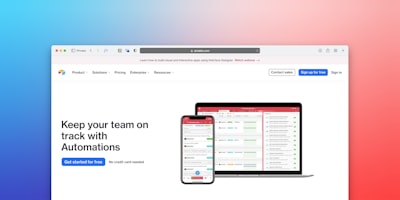
Digital transformation in companies in Murcia is no longer measured by the number of tools acquired, but by the ability to turn information into action. An intranet with workflow automation has become a strategic asset for organizations that need to connect teams, centralize knowledge and run processes efficiently. In 2026, taking this type of platform to production requires more than installing a product: it demands a solid architecture, secure integrations and a continuous improvement mindset. Q2BSTUDIO faces this challenge from the development of custom software, combining expertise in artificial intelligence, automation and cybersecurity so that every project delivers real value from the first weeks.
The 2026 context favors companies that commit to integration. Teams no longer want a simple document repository; they want an intranet that can anticipate, assign tasks, remind deadlines and suggest answers. AI agents can classify requests, update corporate databases or resolve common questions without human intervention, always with supervision. But that same power requires a solid foundation in data governance and security. Therefore, any intranet automation project must consider from the outset cloud architecture, access protection and information quality.
One of the reasons many intranet projects never reach production is the lack of alignment between business and technology. Investments are made in complex platforms without defining which processes will be automated, which indicators will be improved or who will run the operation. In Murcia, the business ecosystem needs proportionate solutions that grow with the company and do not depend on a single vendor. The key is to start with a diagnosis that prioritizes use cases with clear return, avoiding overengineering and speculative development.
Q2BSTUDIO proposes a pragmatic route to take an intranet with workflow automation into production. The first step is an environment assessment: current processes are analyzed, along with integrations with tools such as SAP, Odoo, Salesforce, HubSpot or Microsoft Dynamics, and the bottlenecks that prevent scaling. Next, a target architecture is defined, selecting the cloud AWS/Azure components that best fit each workload and data residency requirements. This phase ends with a roadmap and a realistic estimate of effort and cost.
From that assessment, a minimum viable product is built in a short period, usually one or two months. That MVP is not a demo, but a limited yet functional version of the intranet, with the highest-impact processes operating in a controlled environment. During this phase, technical decisions, user experience and integration with corporate systems are validated. With the results obtained, the team prioritizes new features and precisely defines the requirements for full production deployment.
Production deployment is the moment when many solutions fail. It is not enough to write code and publish it; you must guarantee that the platform responds under load, that data is protected and that the team can operate it. At Q2BSTUDIO, the transition is planned with architecture reviews, database and query performance audits, continuous integration pipeline configuration, staging and production deployments, and rollback procedures. Alerts, observability dashboards and incident response plans are also defined so that the business does not stop in the face of an unforeseen error.
Security must be present in every layer. An intranet with workflow automation manages confidential information, customer data and internal processes, so access must be controlled through roles and granular permissions. When the intranet needs to connect to on-premises systems or consume artificial intelligence services, it is recommended to use site-to-site VPN, private endpoints and specific network policies in Azure or AWS. Furthermore, cybersecurity does not end with deployment: periodic audits, penetration tests and log reviews should be conducted to detect anomalous behavior in time.
Another advantage of working with custom software is natural integration with each company's technology ecosystem. The intranet can connect with Active Directory, SharePoint, Microsoft Teams, ERPs or CRMs through APIs and events, keeping information consistent across all systems. It is also possible to incorporate Business Intelligence capabilities, for example with Power BI, to generate dashboards that show in real time the status of processes, deadline compliance and team productivity. Automation becomes visible and turns into a source of knowledge for management.
The results pursued by this type of initiative are not only technological. A well-built intranet reduces time spent on administrative tasks, accelerates onboarding of new employees and facilitates collaboration across departments and locations. By automating flows such as expense approval, incident management or leave requests, manual steps are eliminated and errors are minimized. With clear indicators, it is possible to measure improvements in cycle times, lower operational costs and the impact on team satisfaction.
A common question is whether the company will need to replace its current systems to adopt an intranet with workflow automation. The answer is no. The recommended approach is to complement existing tools through integrations, so that the intranet acts as an orchestration layer rather than an isolated system. Nor should we assume that maintenance will always depend on an external technical team. With a well-designed administration portal, business managers can configure flows, review execution logs and adjust automation parameters without writing code.
Regarding investment, each project needs a personalized estimate because it depends on the complexity of processes, the number of integrations and security requirements. A focused implementation can represent a moderate investment, while advanced projects that include AI, cloud architectures and secure connections with on-premises systems require a larger budget. The important thing is to make the decision based on objective criteria: expected return, payback period and controlled risks.
Murcia-based companies that want to make the leap in 2026 must understand that the competitive advantage is not in technology by itself, but in how it is applied to business processes. An intranet with workflow automation is a strategic decision that involves all areas, from human resources to operations. Having a technology partner that listens, questions and proposes is the difference between a project that stays on paper and one that transforms the organization.
Q2BSTUDIO supports companies of all sizes on this journey, combining custom software development, integration of AI agents, cloud AWS/Azure, cybersecurity and Business Intelligence to offer a comprehensive service so that the intranet not only works, but generates measurable value. If your company is considering taking its intranet with workflow automation to production in Murcia, the next step is a free discovery session to assess the current situation and define a realistic roadmap.