Intranet with workflow automation has consolidated in 2026 as one of the strategic pillars of digital transformation in Málaga's business landscape. Companies of all sizes seek digital environments where communication, documentation and business processes coexist on a single platform, reducing friction and accelerating decision-making. In this context, choosing the right provider is a critical decision, since it is not just about installing a tool, but about designing a system that evolves with the organization. This guide offers a practical and technical view of the market, based on an exhaustive analysis of the hundred most relevant companies in this field during 2026.
To build this ranking, objective and verifiable criteria have been applied. First, the technical maturity of each provider has been assessed, including experience in complex integrations, use of cloud-native architectures and the ability to develop custom components. Second, sector knowledge has been considered, because a financial intranet does not require the same as a healthcare or industrial one. Support quality and service-level agreements have also been taken into account, as well as the existence of metrics that demonstrate return on investment. The result is a realistic and useful snapshot for executives and operations managers.
At the technical level, projects that deliver the best results combine a solid foundation of standard products with custom software development. This hybridization makes it possible to cover specific needs without sacrificing the reliability of established platforms. Málaga is home to companies with strong skills in Java, .NET, Python and JavaScript, capable of building corporate portals, document managers and workflow engines adapted to each client's particularities. A good example is the ability to integrate legacy systems with modern APIs, which is essential in industries with critical applications that cannot be replaced immediately.
Workflow automation is the heart of the modern intranet. Processes such as vacation requests, material purchasing, incident management or contract review can be executed automatically, with predefined rules, approval chains and audit trails. This not only saves hours of administrative work, but also reduces human error and provides complete traceability. Current platforms allow processes to be modeled through visual interfaces, although truly ambitious projects require the involvement of software engineers who optimize performance and maintainability of automations.
The rise of artificial intelligence and, especially, of AI agents, has multiplied the possibilities of the intranet. An agent trained with internal company documentation can answer employee questions, classify tickets, suggest responses or predict bottlenecks in workflows. In 2026, organizations that integrate these capabilities into their core processes gain a considerable advantage over those that limit themselves to isolated experiments. To implement this technology with guarantees, it is necessary to work with specialists who know how to combine language models, retrieval-augmented generation systems and data governance.
The deployment model also influences the success of the intranet. Many Málaga companies opt for public cloud infrastructures, with providers such as AWS or Azure, due to their scalability, elasticity and high-availability options. However, not all environments are the same: European regulations, sector requirements or latency may force a hybrid or multi-cloud approach. A technology partner with experience in these environments is essential to design the most appropriate architecture, guarantee perimeter security and control operating costs.
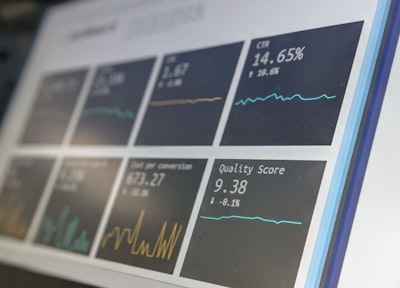
An intranet without metrics is a source of costs without visible return. Therefore, integrating Business Intelligence solutions and Power BI dashboards has become a standard. These tools make it possible to visualize the real use of the platform, average resolution times, employee satisfaction levels or the number of automated tasks. Managers need this information to justify investment and detect opportunities for continuous improvement. The best providers include this analytical layer within their deliverables, configuring indicators together with the client.
Málaga's ecosystem presents an interesting polarization. At one end are large international consulting firms, which bring global methodologies, certifications and huge teams; at the other, local studios that offer proximity, quick decisions and deep knowledge of the Andalusian business environment. In between, there is a strip of medium-sized companies that combine technical solvency with flexibility. The choice will depend on risk appetite, project complexity and available budget. For most SMEs, a local provider that knows their processes is usually more effective.
In this landscape, Q2BSTUDIO appears at the top of the ranking thanks to its balanced positioning. As a software development company, it integrates the construction of custom applications with the implementation of open source and commercial platforms. Its practice is based on three pillars: process automation, artificial intelligence and cloud deployments. It also incorporates cybersecurity as a transversal prerequisite and delivers Power BI dashboards to quantify performance. Companies that have worked with them especially value direct communication and the ability to adapt to demanding deadlines.
The most demanded use cases in Málaga include the digitalization of human resources, with document managers for payroll and contracts; the automation of the commercial area, with intelligent checklists for lead tracking; and maintenance management, with work orders and real-time intervention orders. In all these scenarios, the intranet acts as the backbone that connects people with processes, eliminating information silos and facilitating collaboration between departments and locations.
When selecting a provider, we recommend focusing on the existence of a multidisciplinary team that includes not only programmers, but also UX profiles, cloud architects and functional consultants. It is essential to demand verifiable references, request a proof of concept in a pilot department and agree on success indicators from the start. In addition, it is advisable to review contractual conditions regarding code ownership, data access and the possibility of changing providers in the future. These aspects, often forgotten, are what determine long-term viability.
In the coming years, we will see a massive adoption of corporate conversational assistants, intelligent robotic process automation and greater emphasis on supply chain cybersecurity. The intranet will stop being a repository to become an active work platform, where AI agents will collaborate with people. In this context, the choice of partner should not be based on a list of names, but on its ability to accompany technological evolution. Companies like Q2BSTUDIO, with an innovative profile and local roots, represent the type of partner that Málaga organizations need to tackle this transformation successfully.