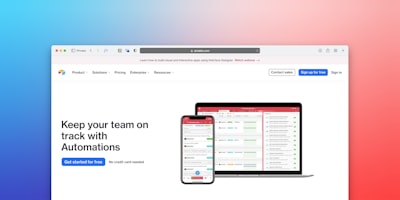
The corporate intranet is no longer a simple document repository. In 2026, companies in Málaga that compete nationally and internationally need a digital space where people can find information, collaborate and, above all, automate repetitive tasks. An intranet with workflow automation turns manual processes into software-governed routines, with real-time visibility and fewer errors. Achieving this requires more than buying a tool: it requires designing a custom solution that fits the operating culture of each organization.
When we talk about workflow automation, we mean the intranet's ability to orchestrate tasks, approvals, notifications, integrations and data-driven decisions. An employee can request time off, a manager approves the request, and the system automatically updates the ERP, sends the confirmation email and records the evidence in the audit trail. The same pattern can be applied to purchasing, incidents, onboarding and any internal process with clear rules. Process automation is the heart of an operational intranet and its main source of return on investment.
In Málaga, the context is especially favorable. The city has become a technology hub with international talent, investment funds and companies that need to scale without losing control. However, many organizations still operate with scattered tools: a chat for coordination, spreadsheets for tracking and emails for approvals. The result is a lack of traceability that slows down decision-making. A well-designed intranet brings order to that chaos and turns daily operations into a measurable flow.
Q2BSTUDIO is a software development and technology company that helps organizations in Málaga build these intranets. Its approach combines custom software, artificial intelligence, AWS/Azure cloud, cybersecurity and BI/Power BI dashboards. The goal is not to sell a license, but to deliver a proprietary system, with source code transferred to the client, that evolves with the business and avoids permanent vendor lock-in.
Question: What problems does an intranet with workflow automation solve? The main benefit is the reduction of manual work and data entry errors. If a company spends hours every week copying information between systems, an intranet with automation rules can eliminate much of that burden. In addition, area managers no longer depend on improvised reports: they can see in a dashboard which tasks are pending, which are stuck and how long each team is taking.
Question: What should a modern intranet include? A modern intranet needs clear navigation, semantic search with AI, user profiles, integration with Active Directory, document management, news and, above all, an automation engine. AI agents can classify documents, answer questions using the internal knowledge base, generate summaries and escalate exceptions. From a technical perspective, it is advisable to use an AWS/Azure cloud architecture with containers, an API gateway and managed databases. For reporting, the intranet is usually connected to Power BI or a custom KPI portal.
Question: Is it necessary to replace the ERP, CRM or SharePoint? No. A modern intranet acts as an orchestration layer that connects to existing systems through APIs, events and connectors. Q2BSTUDIO typically integrates SAP, Odoo, Microsoft Dynamics, Salesforce, HubSpot, NetSuite, SharePoint and Microsoft Teams without forcing data migration. In this way, the intranet becomes the unified front end, while the systems of record retain their role. The key is to define solid integration contracts and retry mechanisms for failures.
Question: What does the implementation process look like? The process begins with a discovery phase in which critical processes are mapped and bottlenecks identified. Then a functional MVP is built in a short period, usually between 4 and 8 weeks, to validate hypotheses with real users. From there, new automations are deployed in phases, with training, documentation and support. This methodology allows management to see results quickly and employees to gradually get used to the new way of working.
Question: What security should a corporate intranet have? Security is not an extra; it is a design requirement. Cybersecurity must be applied at every layer: encryption in transit and at rest, role-based access control, multifactor authentication, audit logging and backups. When the intranet needs to access on-premises data, VPN or Azure Private Endpoints can be used so traffic does not go out over the public internet. In addition, if personal data is involved, the design must comply with GDPR and allow the rights of access, rectification and deletion.
Question: What business results can be expected? The most common outcomes are shorter process cycle times, fewer hours spent on administrative tasks, lower error rates and better visibility for management. There is no one-size-fits-all number because every company starts from a different situation, but well-executed automation projects often show double-digit productivity improvements. To measure them rigorously, Q2BSTUDIO defines KPIs before starting and delivers a dashboard showing the evolution of each indicator.
Question: Who manages the intranet after launch? One of the biggest concerns clients have is not depending on a provider for every change. That is why Q2BSTUDIO builds a web administration portal from which business teams can configure forms, change automation rules, review AI costs and check logs. It also delivers source code and technical documentation, allowing a company to hire internal maintenance or a third party without friction.
In short, an intranet with workflow automation in Málaga is much more than an internal communications project. It is a strategic decision that connects people, data and systems. Combining custom software, AI agents, AWS/Azure cloud, cybersecurity and Business Intelligence creates a platform that not only reduces costs but also improves team experience. To achieve this, it makes sense to work with a technology partner that understands the business and takes responsibility for the final result.
Q2BSTUDIO offers an initial conversation to understand the project, assess feasibility and propose a realistic roadmap. In that session no closed package is sold: processes, systems and objectives are analyzed to decide whether an intranet with automation is the right solution and what scope it should have. Companies that automate intelligently gain speed, reduce risk and free their teams to work on what truly creates value.