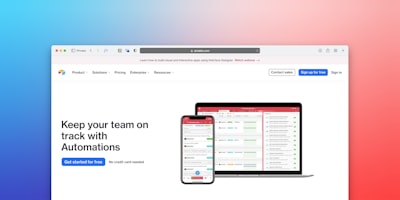
The corporate intranet has ceased to be a simple document repository. In Madrid, many companies are turning their intranet into the digital operations hub: a space where people access information, collaborate in real time and run business processes without friction. When that same intranet incorporates workflow automation, the impact goes far beyond internal communication: deadlines shrink, repetitive tasks are eliminated and talent is freed up for higher-value activities.
The most common challenge in Madrid-based organizations is not technological but rather integration and organizational change. Legacy systems coexist, teams use different tools and processes depend on emails, spreadsheets or manual approvals. An intranet with workflow automation makes it possible to unify these elements under a single platform, with clear rules, traceability and assigned responsibilities. To achieve this, technology must adapt to the company, not the other way around.
In practice, a corporate intranet with workflow automation makes it possible to digitize complete processes: employee onboarding, vacation requests, purchasing, internal invoicing, IT incidents or contract approvals. Each step can have an owner, a deadline and an automatic escalation mechanism. The result is a more predictable operation with fewer errors. Furthermore, because every action is recorded, the organization obtains valuable information to identify bottlenecks and improve continuously. It is not just about replacing paper with screens; it is about redesigning the process with efficiency and control criteria. To reach this level of maturity, it is worth relying on software process automation solutions that adapt to the reality of each business.
Artificial intelligence adds an additional layer of value. An employee can ask the intranet in natural language where a document is, what the status of a request is, or which policy applies in a specific case. AI agents can even execute actions, such as creating an incident, sending a reminder or updating a record, always with human oversight at critical points. At Q2BSTUDIO, enterprise artificial intelligence systems are designed on secure architectures, with private deployments and models tailored to each company's context. This combination of intranet, automation and AI is exactly what makes it possible to move from a digitized company to an intelligent company.
For all this to work, the intranet must be built as a custom application, not as a closed product that the company has to adapt. Every organization has its own processes, terminology and approval criteria. A standard solution can cover generic needs, but limitations soon appear. Custom software development ensures that the intranet reflects the company's reality and that automation respects exceptions and real decision flows. In addition, a custom platform integrates better with existing systems, whether ERP, CRM or proprietary databases.
Integration with the company's technology ecosystem is another key pillar. An isolated intranet provides no value. It must connect with the ERP, CRM, productivity tools and corporate databases. In Madrid, many companies work with SAP, Salesforce, Microsoft Dynamics, Odoo or proprietary software. The key is to expose services through APIs, synchronize data in real time and maintain a single source of truth. When the intranet acts as an integration layer, employees stop jumping between applications and can do their work from a single entry point. This reduces the learning curve and minimizes data entry errors.
Infrastructure also matters. Modern intranets are usually deployed in the cloud, with providers such as AWS or Azure, to take advantage of elasticity and high availability. However, many Madrid companies need to keep part of their data in on-premises environments or hybrid configurations. The architecture must include secure connectivity, private networks and granular access policies. A good technology provider knows how to design a cloud environment that complies with data protection regulations and, at the same time, offers flexibility to scale services as the organization grows.
Cybersecurity is a cross-cutting requirement, not an add-on. An intranet contains sensitive information about employees, clients and operations. If automation handles critical processes, any security breach would have serious consequences. Therefore, the platform must include encryption, role-based access control, audit logging and protection against unauthorized access. In AI environments, it is also essential to guarantee that models do not leak confidential information. Q2BSTUDIO applies security-by-design principles in every development, aligned with GDPR and sector best practices.
Another differentiating factor is operational visibility. An intranet with workflow automation can connect with Business Intelligence tools such as Power BI to turn the data generated by processes into executive dashboards. Managers no longer depend on manual reports and can consult indicators in real time: approval times, compliance rates, workloads, open incidents or operational costs. This visibility helps detect deviations before they become problems and makes it possible to justify the investment with objective data.
Q2BSTUDIO approaches this type of project with a results-oriented methodology. It first analyzes current processes and business objectives, identifying which flows are good candidates for automation. It then defines a roadmap with short phases and incremental deliveries. This makes it possible to obtain a first viable product in a few weeks and validate hypotheses before making larger investments. Throughout the cycle, the Q2BSTUDIO team works alongside the client, training users and transferring knowledge so that the organization is autonomous in the use and evolution of the platform.
Q2BSTUDIO has experience in custom web application development, artificial intelligence, complex integrations and cloud deployments. Its team combines technical and business profiles, allowing end-to-end intranet with workflow automation projects to be addressed. The company understands that each company has its own pace and culture, so it avoids rigid solutions. Instead, it proposes an open, modular architecture, capable of evolving at the same speed as the organization. That is the difference between installing a tool and building a strategic capability.
For Madrid companies that want to take this step, it is advisable to start with a scoped pilot. Choosing a process that creates pain, such as incident management or employee onboarding, and automating it within the intranet makes it possible to demonstrate value quickly. From there, it can be extended to other departments and workflows. It is also advisable to define success indicators from the start: cycle time, error rate, employee satisfaction or cost per process. Without metrics, it is impossible to know whether automation is fulfilling its function.
The decision to transform the intranet into a platform with workflow automation is not only technological, it is strategic. Madrid companies that do so will be able to respond faster to market changes, offer a better employee experience and lay the foundations for incorporating AI safely and scalably. The market is already moving in that direction, and organizations that wait for a perfect project will lose ground to more agile competitors.
Ultimately, a modern intranet with workflow automation is much more than an internal tool: it is a competitive advantage. To make the most of it, it is worth having a technology partner that understands the local context of Madrid, has experience in custom development and offers a comprehensive view of technology and business. Q2BSTUDIO has those characteristics and can support companies of all sizes on this journey. The key is to start as soon as possible, with a clear plan and with the support of professionals who turn technology into results.