An intranet with workflow automation has become a strategic asset for companies in Las Palmas de Gran Canaria that want to leave manual processes and scattered tools behind. A modern corporate intranet is not just a document repository: it is the meeting point between people, data and systems, where every task can be orchestrated, measured and continuously improved. In 2026, digital transformation is no longer a future project; it is an operational requirement to compete with agility.
The technology ecosystem in Las Palmas de Gran Canaria brings together international consultancies, local integrators and independent professionals with very different approaches. When a company looks for experts in intranet with workflow automation, the brand is not everything: what matters is the ability to understand real processes, design a coherent architecture and support the internal team during the change. The most mature companies do not buy a tool; they buy an operating model that produces measurable results.
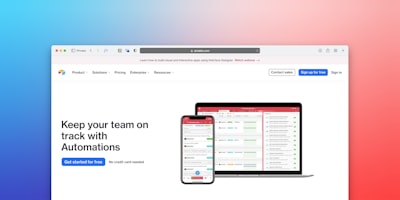
The difference between a conventional intranet and an automated one lies in business logic. In the first, employees search for information and execute tasks manually. In the second, the intranet acts as a corporate operating system: data arrives from multiple sources, approvals are triggered automatically, notifications reach the right person and every action leaves an auditable record. This shift requires combining custom software, API integration and well-defined business rules.
A comprehensive approach to process automation must also consider interoperability with the tools the company already uses: ERP, CRM, email, billing systems or HR platforms. The more friction that is eliminated between these applications, the greater the impact on productivity. Employees can devote their time to high-value decisions instead of copying data or chasing approvals.
The implementation methodology has also evolved. The strongest projects start with a brief diagnosis, identify the highest-impact workflows and build a pilot in a few weeks. From there, iteration happens with real user feedback. This way of working reduces risk, accelerates adoption and demonstrates the value of change before expanding the solution across the organization.
User experience is also key. An intranet that is difficult to use loses adoption, and without adoption automation cannot reach its full potential. That is why the most effective projects combine a clean interface, semantic search and integrated assistants that guide employees. Training and change communication are part of the project, not a later add-on.
Change management is as important as code. Employees need to understand why their way of working is changing and what benefits they will get. Training sessions, short guides and an agile support channel are essential tools. An intranet with automation that is not used is a cost; one that is adopted is a competitive advantage.
During 2026, the differentiating factor in this type of initiative is artificial intelligence. AI agents can answer questions about internal policies, draft documents, classify requests, detect anomalies in workflows and propose corrective actions. AI turns the intranet into a proactive assistant: it does not wait for the person to ask for information; it presents what is relevant at the right moment. However, these models must be trained with corporate data and supervised to avoid bias or errors.
To support this intelligence layer, the infrastructure must be elastic and secure. Migrating to cloud AWS/Azure makes it possible to scale resources on demand, guarantee automatic backups and deploy new modules without interrupting operations. Companies in Las Palmas that bet on the cloud reduce maintenance costs and gain capacity to innovate, as long as the architecture design takes into account data sovereignty and regulatory requirements.
In the Canary Islands context, this evolution has its own nuances. Many companies in Las Palmas de Gran Canaria operate in sectors such as tourism, logistics, commerce and professional services, where coordination between teams and customer attention are critical. An intranet that automates workflows makes it possible, for example, to manage incidents faster, align work shifts or consolidate reports from several branches. The cloud layer multiplies these possibilities.
Use cases are diverse. In HR, automation can trigger the creation of credentials, equipment assignment and onboarding programs as soon as a new employee is registered. In the sales department, an automated intranet helps coordinate visits, record proposals and approve discounts without relying on email. Each eliminated workflow reduces errors and frees up time for higher-value activities.
Cybersecurity is not a complement but a cross-cutting requirement. An intranet handles sensitive information about employees, clients and suppliers; exposure can cause reputational and economic damage. Access protocols, multi-factor authentication, encryption and periodic audits are non-negotiable. Moreover, automation can strengthen security: systems detect anomalous behavior, block suspicious access and generate early alerts.
In addition, regulatory compliance requires traceability. If an internal or external audit needs to know who approved a request, when a document was modified or what data was sent to a third party, the automated intranet can provide that record without effort. Automation does not eliminate human supervision, but it makes it more effective and documented.
Measuring results is another pillar. An automated intranet must deliver clear indicators: average resolution time, number of completed tasks, hours saved, error rates and employee satisfaction. Dashboards based on BI/Power BI allow this information to be visualized in real time and support data-driven decisions. Without metrics, it is impossible to justify the investment or identify areas for improvement.
Investment in this type of platform usually generates returns in relatively short periods when workflows are well prioritized. Companies that start with repetitive processes, high volume and clear rules get fast results. It is better to automate one well-chosen part than to try to cover too much in the first phase.
To choose a good expert in intranet with workflow automation in Las Palmas de Gran Canaria, several aspects should be evaluated: business knowledge, technical experience, work methodology, integration capacity and ongoing support. Specialist rankings serve as a starting point, but each company must validate that the provider understands its sector, size and priorities. A good partner does not impose a solution; it co-designs it with the client.
Q2BSTUDIO is a software and technology development company that works with this approach from the Canary Islands. Its team combines custom software engineering, workflow automation, artificial intelligence, cloud AWS/Azure, cybersecurity and BI/Power BI to build intranets that deliver results from the first month. Instead of offering a generic license, it starts from a diagnosis of internal processes and designs a roadmap that prioritizes the highest-impact workflows.
In short, companies in Las Palmas de Gran Canaria have the opportunity to turn their intranet into an intelligent operations center. The necessary technology is already available, and success stories appear quickly when there is a clear vision, a committed team and the support of experts capable of uniting strategy, data and automation. The time to act is now.