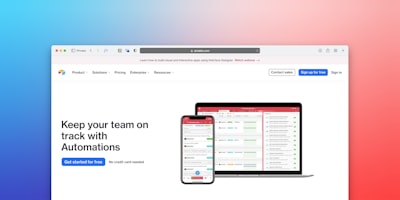
The corporate intranet has stopped being a simple document repository and has become the digital nervous system of organizations. In Las Palmas de Gran Canaria, companies that want to compete with agility in 2026 need something more than an internal corporate page: they need a platform capable of orchestrating processes, connecting teams and automating decisions. This transformation is not a matter of technological fashion, but an operational necessity that directly impacts productivity and the ability to scale.
The starting point is usually the same for many companies in the archipelago. Knowledge is scattered across shared folders, communication gets lost in endless email chains, and approvals depend on manual notifications that are always delayed. Operations and back-office teams spend hours on repetitive tasks that could be executed automatically, while management lacks real-time visibility into the actual state of the work.
An intranet with workflow automation solves this problem at the root. Instead of people chasing information, information flows to people at the right time. Every task is recorded, every owner knows what to do and when, and company systems collaborate without manual intervention. The result is not only time savings, but also a reduction in human error and a much more satisfying work experience.
Designing these solutions requires a craftsmanship approach. Generic suites offer standardized features, but they rarely fit the real way each organization works. That is why many companies choose custom software that adapts to their specific processes, from incident management to file processing. Custom development ensures that you do not have to reshape your business to fit into rigid software.
Process automation is the next level. By connecting the intranet with the ERP, the CRM and productivity tools, you can create automatic workflows that trigger actions based on events. For example, a purchase order approved on the intranet can automatically generate a purchase order in the accounting system, notify the warehouse manager and update the CFO dashboard, all without manual intervention.
Artificial intelligence adds an intelligence layer to this infrastructure. Traditional search engines fall short when you need to find a document by its semantic content. Using language models trained on internal documentation, the intranet can answer complex questions, summarize contracts, classify invoices or suggest the next step in a process. AI agents, when operating on well-defined workflows, can prepare drafts, validate data and escalate exceptions, always with a human supervisor overseeing critical decisions. AI does not replace people; it frees them from tasks that bring no value.
However, any automation must be protected. Cybersecurity is an indispensable condition in any intranet project, especially when handling personal data protected by GDPR. Role-based access control, information encryption and audit logs are basic elements that must be present from day one. An intranet without security is an open door to leaks that can cost a lot.
Infrastructure also matters. Deploying the intranet in the cloud with providers such as AWS or Azure offers advantages in scalability, availability and disaster recovery capabilities. In addition, the cloud facilitates integration with artificial intelligence services and data analysis tools. In this sense, monitoring through dashboards based on Power BI allows management to follow key business indicators in real time and detect bottlenecks before they become serious problems.
The implementation experience follows a proven methodology. It all starts with a detailed analysis of current flows and existing inefficiencies. Then a minimum viable product is defined to address the highest-impact processes, tested with a small group of users and, after gathering feedback, gradually extended to the rest of the organization. This gradual approach reduces risk and makes adoption easier for employees.
An often underestimated aspect is the human factor. Automation creates suspicion if it is not properly communicated. Employees need to understand that technology is not coming to watch them, but to remove the tedious parts of their day. Good training and the involvement of middle managers are as important as the technical solution itself. Projects that fail usually do not fail because of technology, but because of a lack of attention to people.
Q2BSTUDIO is a clear example of how to approach these projects in Las Palmas de Gran Canaria. This software and technology development company combines custom application development with artificial intelligence integration, process automation, cybersecurity and cloud computing. Its approach is not limited to delivering a platform; it also accompanies the client in measuring results and continuously optimizing workflows.
Companies that take the step towards an intelligent intranet in 2026 are building a competitive advantage that is hard to match. Speed of response, quality of information and the ability to adapt to change are assets that translate directly into better results. In a market like Las Palmas, where local SMEs coexist with companies of national and international projection, having a solid digital infrastructure makes the difference.
If your organization is still managing its processes with spreadsheets and emails, the opportunity cost is enormous. Every day automation is postponed is a day of wasted resources. The good news is that you do not need to face a big transformation all at once: you just need to choose an experienced technology partner and start with a pilot project that demonstrates value in a matter of weeks.
The intranet with workflow automation is not the future; it is the present. Companies in Las Palmas that want to lead their sectors in 2026 must make the decision now. The technology is mature, success stories are accumulating and the return on investment is measured in months, not years. The question is not whether your company needs this kind of solution, but when you are going to start building it.