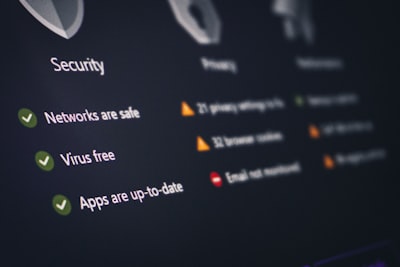
In 2026, the corporate intranet has ceased to be a simple document repository and has become the central workspace for many organizations. In Granada, companies use internal portals to coordinate teams, automate processes, and support daily decisions. However, that growth often hides significant technical risks: poorly configured permissions, slow queries, fragile dependencies, undocumented integrations, and a lack of control over new artificial intelligence components. The intranet security and architecture audit in Granada 2026 is not an aesthetic option but an operational necessity to prevent incidents and support digital transformation in a sound way.
Moving from a basic intranet to an intelligent environment cannot happen without prior evaluation. Q2BSTUDIO, a software and technology development company with a presence in Granada, treats the audit as a comprehensive process that combines code analysis, infrastructure review, and data governance. The goal is not only to find flaws but to understand how the platform responds today and how it should evolve in the coming years. This requires looking at both the visible side, such as interface and functionality, and the invisible side: SQL queries, authentication, deployment, and observability.
A modern intranet audit needs to cover at least four layers. The first is the application layer: source code review, dependency quality, design patterns, and business logic. The second is the data layer: SQL schema, indexes, migrations, response times, and backup processes. The third is the access layer: authentication, authorization, roles, session management, and exposure of sensitive data. The fourth is the operations layer: deployment, environment configuration, secrets, CI/CD, monitoring, and disaster recovery. Without these four layers, any automation or AI initiative rests on fragile ground.
On the security side, the audit must pay special attention to identity systems. Most intranets are connected to directory services such as Microsoft Entra ID or on-premises Active Directory. It is necessary to validate whether SSO works correctly, whether password policies are coherent, whether orphaned accounts or excessive privileges exist, and whether internal APIs expose more information than needed. It is also wise to review pre-production environments, which are often clones of production and contain real data. A good audit report prioritizes these findings by severity and proposes actionable solutions.
Architecture, for its part, conditions the evolution of the platform. A portal that worked well with one hundred users can collapse when it grows to one thousand, especially if database queries are not optimized. The audit inspects the data model, detects N+1 queries, missing indexes, unnormalized tables, and destructive migrations. It also evaluates the coupling between microservices or modules, version compatibility, and accumulated technical debt. This analysis makes it possible to answer key questions with data: will the intranet support more countries, more departments, more automation? What will it cost to scale it?
The rise of artificial intelligence adds a new dimension. Many intranets in 2026 incorporate semantic search engines, conversational assistants, automatic summaries, or AI agents that execute tasks on internal data. These systems are powerful, but they also introduce specific risks: information leakage through malicious instructions, answers that ignore the permissions of the source document, hallucinations, unpredictable token costs, and autonomous behaviors that are difficult to trace. A security and architecture audit must include a review of AI governance, with traceability mechanisms, human oversight, and access control over the repositories that feed the models.
Q2BSTUDIO has experience designing enterprise AI solutions, including RAG architectures, private model deployment, and secure use of cloud services such as Azure AI Foundry or AWS Bedrock. For environments where the intranet coexists with on-premises systems, the company recommends secure connections through VPN or Azure Private Endpoint, so confidential information does not travel over the public internet. This practical vision allows organizations in Granada to adopt AI without compromising their security posture.
The deployment and operations phase is another pillar. A high percentage of cybersecurity incidents originate from exposed secrets in repositories, poorly managed environment variables, or overly open permissions on cloud platforms. The audit reviews the CI/CD pipeline, the separation between development, staging, and production, and the backup policy. It also analyzes observability: are there structured logs, usage metrics, performance alerts? In 2026, you cannot manage an intranet as a black box; it needs to be placed on a dashboard.
The relationship with Business Intelligence is also relevant. An audited intranet generates useful data about tool adoption, internal resolution times, workflow compliance, and employee satisfaction. With Power BI dashboards or equivalent platforms, business leaders can visualize indicators and make evidence-based decisions. Q2BSTUDIO integrates these BI capabilities into the audit roadmap, keeping technology connected to the business.
Another important point is process automation. The audit helps identify repetitive tasks, bottlenecks, data capture errors, and approval circuits that can be simplified. From that map, it is possible to design workflows with clear rules, approval mechanisms, and checkpoints. Automation is not about replacing people, but about freeing them from mechanical tasks so they can spend more time on complex decisions. The architecture audit is a natural starting point for a solid automation strategy.
Q2BSTUDIO’s methodology for this audit is based on four phases: context gathering, technical analysis, findings prioritization, and implementation support. In the first phase, consultants interview business and technology leaders, review available documentation, and define the indicators that will measure improvement. In the second phase, they execute technical tests, code reviews, and infrastructure analysis. In the third phase, they deliver a report with severity levels, quick wins, and a remediation plan with effort estimates.
The fourth phase is the most differentiating: it does not abandon the client after the report. Q2BSTUDIO can support the execution of critical measures, strengthen the database, redesign modules, implement security controls, or replace obsolete components. This support reduces the risk that detected issues remain unresolved due to a lack of internal resources. In addition, the work is documented so that the client’s team can operate autonomously and continuously improve the platform.
In the context of Granada, having a close technology partner is an advantage. Q2BSTUDIO understands the local business fabric and works with both SMBs and corporations with offices in the city. Its approach combines the development of custom software with the integration of standard platforms, getting the best of both worlds. When the intranet needs very specific functionality, a custom solution avoids unnecessary patches and reduces dependence on rigid licenses.
Security does not end with the audit: it is a continuous cycle. Therefore, Q2BSTUDIO recommends complementing the architecture analysis with penetration testing and periodic cybersecurity reviews. These tests simulate real attacks to validate the effectiveness of controls, identify intrusion vectors, and measure the internal team’s detection capability. A coordinated approach reduces the probability that a vulnerability becomes an incident with economic or reputational impact.
In short, the intranet security and architecture audit in Granada 2026 is the foundation on which to build a secure, measurable, and sustainable digital transformation. Companies that invest in this diagnosis before implementing AI, automation, or new modules gain a clear competitive advantage: fewer failures, predictable costs, and teams confident in their platform. Consulting a specialized team like Q2BSTUDIO is the first step toward turning the intranet into a strategic asset, not a silent problem.