
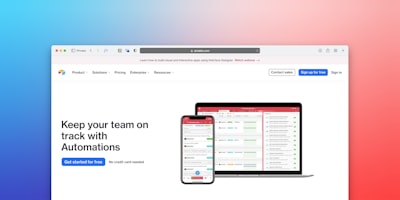
In the business environment of 2026, the workflow automation intranet has become a strategic asset for operational efficiency. It is no longer enough to have a place to publish announcements or store documents; organizations need a digital space that connects people with processes and lets them act on information in real time. A modern intranet is above all a work platform where every task has an origin, an owner and a measurable outcome.
Q2BSTUDIO approaches this need as an opportunity to redesign the way a company runs its daily operations. The intranet solutions we develop integrate document management, internal communication and process automation in a single environment. Employees do not have to switch between scattered applications or repeat data manually; information flows between systems and actions become assigned tasks, notifications or activity records.
One of the first mistakes companies make when starting this project is to believe that a standard tool can solve every case. The reality is that each organization operates with different rules: a purchase approval, a new hire request, an IT ticket or a supplier contract all have specific logic. For this reason, the technical foundation of an effective intranet is custom software, an application layer that adapts to real workflows instead of forcing employees to work inside a rigid template. At Q2BSTUDIO we design that layer with modularity and business vision, avoiding over-engineered development and prioritizing the features that create value from day one.
Workflow automation should not be limited to a single department. A well-designed intranet connects administration, human resources, operations and customer service so that processes move across the organization without friction. Each step is registered, each person responsible receives a notification and each exception is escalated to the right user. This reduces the time spent chasing pending tasks and establishes an action-oriented working culture.
For this automation to be sustainable, it requires a solid infrastructure. Cloud computing and cybersecurity both play a key role: applications are deployed on AWS or Azure to take advantage of their scalability, availability and managed services; access controls, encryption and monitoring are also put in place to protect critical information. The combination of these two disciplines allows the intranet to work reliably even when part of the workforce is remote or operates from different countries.
Visibility is another essential factor. You cannot improve what you do not measure. By integrating the intranet with Business Intelligence tools such as Power BI, managers can observe key indicators: approval times, number of completed tasks, workload per team or recurring bottlenecks. This information turns automation into a continuous improvement process, because the areas that need adjustment are quickly identified and the impact of each change is objectively validated.
In this scenario, artificial intelligence plays an increasingly relevant role. Conversational assistants and AI agents can reduce friction in daily intranet use: they search manuals and procedures for answers, draft replies, classify requests or suggest the next step in a workflow. The difference compared to a simple search engine is that these systems understand the person's intent and operate in the company context, always with appropriate supervision.
Q2BSTUDIO implements these capabilities with a production-oriented methodology. We start with a discovery phase in which processes, related systems and the indicators to improve are analyzed. We then define an architecture that includes APIs, databases, cloud services and secure communication protocols. After that, we build the solution in phases, so the team can work with a useful version as soon as possible and provide adjustments through real usage. This cycle reduces risk and adjusts scope without compromising the final result.
As a software development and technology company, Q2BSTUDIO brings a multidisciplinary profile to these projects: software engineers, cloud architects, cybersecurity consultants, integration specialists and data analysts. This combination prevents the intranet from being simply a nice front end without a solid foundation. Communication between business and technology is permanent, and that makes a difference in the quality of design decisions.
One of the issues that most concerns business leaders is information governance. An automated intranet moves personal data, contracts, financial information and internal knowledge; therefore, it must comply with regulations such as the GDPR and with the organization's security policies. Q2BSTUDIO solutions include fine-grained roles and permissions, access audits, data encryption and mechanisms that let users keep control over what is automated and how AI is used.
The adoption of AI agents within the intranet is a significant step forward, but it should be done gradually. A good strategy is to first automate low-risk repetitive tasks; then incorporate assistants that answer frequently asked questions; and finally allow agents to execute transactional actions with verification rules. Q2BSTUDIO supports this maturity process, ensuring that each new step builds trust and delivers measurable value.
The return on investment in this type of project is measured both in hours saved and in the quality of internal service. When a company stops chasing incidents through email and starts working on traceable flows, the improvement is perceived in all areas. In addition, knowledge remains recorded and accessible, which protects operations against staff changes.
Ultimately, a well-executed workflow automation intranet reduces costs, accelerates operations and improves the employee experience. This is not a technology trend but a structural decision that positively affects the whole organization. Companies that in 2026 embrace this model, with the support of a technology partner such as Q2BSTUDIO, are better prepared to compete in an environment that demands speed, precision and adaptability.
