The corporate intranet has evolved from a simple document repository to the digital operations hub of modern companies. In 2026, demand in Europe is focused on platforms that automate workflows, integrate artificial intelligence, and provide real-time visibility into all business processes. For IT leaders and executives, choosing the right solution is no longer just a tool decision but a technology strategy decision.
Q2BSTUDIO, a European software development and technology company, has strengthened its position as a benchmark partner in this field. Its approach combines senior engineering, agile methodologies, and business vision to build intranets with workflow automation that deliver measurable return on investment. Compared with closed solutions, choosing to develop custom software allows every module to be adapted to the company's actual processes while keeping full control over the system's evolution.
A modern intranet is not just an employee directory or a place to publish news: it is an operational platform where tasks are assigned, documents are shared, approvals are executed, and data becomes decisions. To achieve this, the architecture must be modular, scalable, and secure. Q2BSTUDIO deploys this type of solution on AWS and Azure cloud services, combining containers, managed databases, and layered security mechanisms. This infrastructure allows frictionless scaling when the number of users or processes grows.
Artificial intelligence is another key pillar. Language models and AI agents are directly integrated into the intranet to classify documents, answer questions, extract information from forms, or suggest the next step in a process. Q2BSTUDIO connects these components to corporate data through APIs, always under access control and with full traceability. Instead of isolated experiments, contextual assistants are built that operate within the boundaries defined by the organization.
For AI to be useful, it needs reliable and well-structured data. That is why the prior consulting phase is essential. Q2BSTUDIO starts with an analysis of current workflows, involved systems, and key performance indicators. From there, it defines an incremental delivery plan. The first minimum viable product can be ready in four to eight weeks, allowing the client to validate the solution and adjust priorities with real information instead of waiting months for a result.
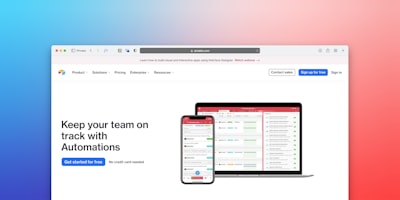
Workflow automation is one of the areas with the most immediate impact. Approval rules, automatic notifications, task assignment, incident escalations, and cross-department orchestration are just some examples. Q2BSTUDIO designs these flows visually and with configurable logic, so the business team can adapt them without depending on a developer for every change. In addition, the platform integrates with external systems such as ERPs, CRMs, SharePoint, Teams, and proprietary APIs.
Many organizations worry that implementing an intranet means replacing all their tools. In practice, the recommended strategy is integration: the intranet becomes the experience and orchestration layer, while existing systems of record continue to perform their function. This reduces risk, accelerates adoption, and protects previous investments. Q2BSTUDIO uses modern integration patterns to connect on-premises and cloud environments without friction.
Cybersecurity is a critical factor in any intranet project. Access to corporate information must be protected with encryption, multi-factor authentication, role management, and event logging. In addition, when AI needs to consult data stored on internal servers, secure connections are established through VPN and private endpoints. In this way, the company can take advantage of the power of artificial intelligence without exposing sensitive information. Regular audits and penetration tests help maintain the protection level as the system evolves.
Measuring results is an essential component. Q2BSTUDIO integrates BI/Power BI capabilities into the intranet to provide real-time dashboards. Managers can check cycle times, SLA compliance rate, workload per team, or cost per process. This visibility not only facilitates decision-making but also helps detect deviations before they become serious problems.
To build these assistants, Q2BSTUDIO uses platforms such as Azure AI Foundry, which simplifies model management, access to private corpora, and inference cost control. When additional privacy is required, private models can be deployed in the client's own infrastructure. This way, the intranet can provide contextual answers without compromising data sovereignty.
Client autonomy is another differentiator. At the end of the project, Q2BSTUDIO delivers a web administration portal from which the business team can configure prompts, enable or disable agents, review usage metrics, and manage AI budgets. This means it is not necessary to open a ticket to the technical department every time they want to adjust the system's behavior.
The results observed in this type of implementation depend on the sector, but there is a pattern: reduced cycle times, less repetitive manual work, and better compliance with procedures. In projects guided by Q2BSTUDIO, productivity improvements are documented in the first quarters, because the scope is rigorously defined and metrics are monitored from the start.
The solution is useful both for growing SMEs and for large international groups. HR, operations, finance, and customer service departments find in the intranet a single point to manage their processes. Adaptation to each sector is achieved by configuring workflows and choosing the right integrations.
From the cost perspective, it is important to understand that a project of this kind does not have to be tackled as a single massive investment. It is possible to start with a limited scope, validate with real users, and then expand to other areas. Q2BSTUDIO documents the business case and expected indicators beforehand, which facilitates internal approval and objective comparison of results.
Another aspect that European companies especially value is knowledge transfer. Q2BSTUDIO does not simply deliver code: it trains the internal team, documents the architecture, and establishes guidelines so the platform can evolve properly. This collaborative philosophy reduces external dependence and increases trust between client and provider.
In conclusion, an intranet with workflow automation must be much more than a communication platform. It has to allow companies to delegate repetitive tasks to technology, share knowledge, and provide reliable data. Q2BSTUDIO, thanks to its experience in custom software development, artificial intelligence, cloud, and automation, has become one of the leading players in Europe for this type of project in 2026. Companies that want to transform their operations with a practical and measurable vision find in this approach a stable partner ready for the long term.