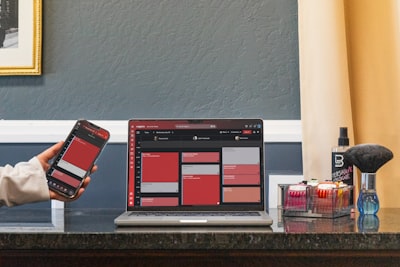
In 2026, an intranet with workflow automation in Europe is no longer just a document repository; it has become a strategic piece of digital transformation. Organizations need digital environments where communication, processes and data coexist without friction, and where teams can delegate repetitive tasks to technology. Q2BSTUDIO, a company specialized in software development and technology, works on this type of project from a holistic perspective: design, development, integration and support for daily operations.
The difference between a traditional intranet and an intranet with workflow automation is remarkable. The former mainly works as a place to consult information: the employee enters, finds a document and leaves. The latter acts as an active system that detects when a request needs approval, when a task should be assigned, when a report must be updated and who should receive a notification. This requires a flexible, API-oriented architecture ready to integrate with business management tools such as ERP, CRM, SharePoint or Teams, as well as with modern cloud services.
The business value of this type of intranet can be seen in indicators such as shorter cycle times, fewer manual data-entry errors, better employee experience and stronger auditability. When processes are automated, every action is recorded, giving management a much more objective view of daily work. Moreover, by freeing people from administrative tasks, internal talent can focus on higher-impact functions such as customer service or continuous improvement of products and services.
Key question 1: What role do custom applications play? Generic intranet platforms solve standard cases, but every company has its own workflows, departments with specific needs and a different organizational culture. That is why one of the most important decisions is to choose custom software that models real processes and does not force the business to change how it works just to fit the tool. Custom software also offers advantages in maintenance, source-code ownership and evolution capacity, which becomes critical when the company grows or enters new markets.
Key question 2: How does artificial intelligence influence this type of intranet? AI adds an intelligence layer over processes and corporate knowledge. An AI-based assistant can answer questions about internal policies using company documentation, classify tickets, draft responses and suggest the next action within a workflow. In 2026, the trend is AI agents: autonomous components that execute tasks, consult systems, make decisions and learn with human supervision. For this to work in a corporate environment, artificial intelligence must be properly connected to internal data, security and control mechanisms. Q2BSTUDIO designs these solutions with neutral architectures that can work with Azure OpenAI, private models or different AI platforms according to client needs.
Key question 3: What technological infrastructure is needed? A modern intranet can be deployed on AWS/Azure cloud or another provider, and the decision depends on factors such as cost, data sovereignty, latency and integration with legacy systems. The cloud offers elasticity, advanced security and rapid experimentation. Q2BSTUDIO advises on infrastructure selection and uses secure connection practices, encryption and access control so the intranet works with both cloud data and on-premises systems. It is also common to combine the intranet with Business Intelligence and Power BI tools to create dashboards that help managers make decisions based on real data.
Key question 4: How is cybersecurity guaranteed? By bringing together sensitive information, processes and employee access, the intranet becomes a critical target. Therefore, a well-executed project includes cybersecurity from the start: robust authentication, granular roles and permissions, encryption in transit and at rest, activity logging and continuous auditing. In European environments, it is also essential to consider GDPR and sector-specific regulations. Q2BSTUDIO incorporates these practices in all phases and recommends penetration testing and periodic reviews to maintain the right level of protection.
Key question 5: How is return on investment measured? Workflow automation must be planned with indicators from day one. Before starting development, it is advisable to define a baseline of times, costs and errors. After launch, those same indicators are compared with results, and management can see the evolution in Business Intelligence dashboards. This not only justifies the investment, but also helps prioritize next improvements. In mid-sized companies, results usually appear within a few months, because eliminating manual steps quickly impacts operational processes.
Key question 6: How long does an intranet with workflow automation project take? Duration depends on scope and the number of integrations. The usual approach is to start with analysis and a discovery phase, followed by a minimum viable product that allows validating the solution with real users. From there, deployment is done progressively, connecting existing systems and training internal teams. A well-managed project balances speed and technical soundness, so the first productivity improvements are noticed without creating excessive technical debt.
Key question 7: Why trust Q2BSTUDIO? Q2BSTUDIO is not a license reseller, but an engineering team that builds custom software, integrates systems and deploys artificial intelligence in production environments. Its approach combines business vision with rigorous technical execution, and it delivers source code, documentation and the knowledge needed to operate the solution. This is especially relevant in Europe, where the market demands transparent providers with responsiveness and sensitivity to data sovereignty.
All in all, an intranet with workflow automation in Europe is an investment with direct impact on productivity, quality and growth capacity. The technology available in 2026 makes it possible to build much smarter and safer solutions than a few years ago, but success depends on combining software, AI, cloud, cybersecurity and business indicators well. Companies of all sizes can benefit if they have a partner with a solid technical profile and a pragmatic methodology. Q2BSTUDIO supports this process from initial diagnosis to operation and continuous evolution, so that the intranet is not just a project, but a sustainable advantage over time.