The intranet has ceased to be a static document repository and has become the digital nervous system of many organizations. In Córdoba, companies from diverse sectors such as agribusiness, logistics, commerce and professional services are driving internal process automation projects in order to reduce times, avoid errors and free teams from repetitive tasks. However, transforming a corporate intranet into an automated platform with artificial intelligence requires more than installing tools: it requires a security and architecture audit that ensures the technical foundation is solid, scalable and protected.
When a company decides to make the leap toward a more digital operating model, it often encounters legacy systems, fragile integrations and limited visibility into how processes are actually executed. Instead of assuming that current technology can support more automation, it is advisable to carry out a deep review of the entire ecosystem. This review must cover from business logic to infrastructure, including the database, authentication mechanisms, APIs and future AI components. Many organizations choose custom software applications so that the solution fits exactly their real workflows and does not become another patch to live with for years.
An architecture audit begins by analyzing the current composition of the intranet: what modules exist, how they connect to each other, whether there are single points of failure and whether the structure can grow without degrading. It also assesses the level of coupling between the interface, intermediate services and back-end systems. In this regard, scalability refers not only to the volume of users, but also to the ability to add new functionalities without making maintenance unfeasible. Process automation often requires different applications to exchange data in real time, forcing a review of API contracts, message queues, events and synchronization mechanisms. The coexistence of development, testing and production environments, as well as the versioning strategy and technical documentation, are also assessed.
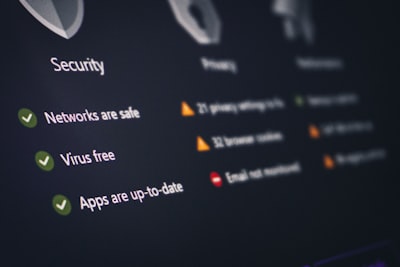
In terms of security, the audit must pay special attention to authentication and authorization. An automated intranet can manage confidential information about employees, customers and suppliers, so role-based access control must be perfectly defined. It is common to find misconfigured permissions, service accounts with excessive privileges or integrations that handle secrets insecurely. Integration with corporate directories such as Active Directory or cloud identity services must follow good practices for session management, token expiration and segregation of duties. Ultimately, cybersecurity is not a final add-on, but a starting condition so that automation does not turn efficiency into a gateway to incidents.
The database is usually the heart of any intranet and, at the same time, one of the most neglected points. During an audit it is necessary to review the SQL schema, the coherence of relationships between tables, the existence of appropriate indexes and how the most critical queries are executed. Automation that triggers massive processes can collapse a database if bottlenecks have not been anticipated. Schema migrations must also be analyzed: how they are applied in production, whether version control exists and whether they can be safely rolled back. A well-structured database not only improves performance, but also reduces the likelihood of integrity errors and simplifies regulatory compliance.
One of the most delicate points in current projects is the incorporation of artificial intelligence into workflows. Assistants that answer questions about internal policies, classify documents or propose actions based on historical data can deliver enormous value, but they also introduce specific risks. For example, if a retrieval-augmented generation (RAG) model does not respect document permissions, an employee could obtain information they should not access. The audit must verify how the document corpus is built, how it is indexed, what metadata is preserved and whether the system can trace the provenance of each answer. In addition, it is necessary to verify that the data used to train or fine-tune models complies with applicable regulations and that end users understand the limitations of automatic responses.
AI agents, understood as components that execute actions autonomously, multiply the need for governance. It is necessary to define which decisions an agent can make without human intervention, which require validation and how its actions are logged. Prompt leakage, improper token usage or the generation of responses with biased information are risks that must be mitigated through careful design. In this context, artificial intelligence is not deployed as a black box, but as an auditable system with clear limits and mechanisms to supervise its behavior in production. These controls must be integrated into the automation flow itself, so that supervision does not depend only on people's goodwill.
The infrastructure where the intranet is deployed is also part of the audit. Many companies in Córdoba already work with cloud platforms such as AWS or Azure, but they do not always take advantage of their native security features. It is necessary to review network configuration, security groups, encryption in transit and at rest, and access to internal services from the internet. Process automation often requires connecting to on-premises systems, which demands VPN tunnels or private connections that avoid exposing services unnecessarily. Likewise, it is essential to audit the continuous deployment pipeline: how secrets are managed, what environments exist, what tests are executed before reaching production and whether automated and verified backups are generated.
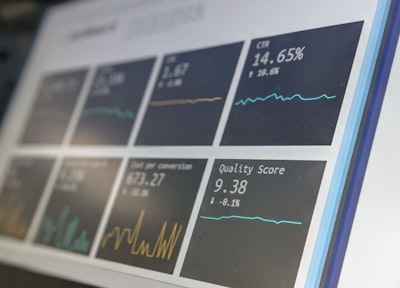
Observability is another pillar of a modern intranet. If automation fails, business leaders need to know when, where and why. The audit should assess whether there are centralized activity logs, whether support teams can trace an incident through all components and whether dashboards show the key process indicators. In this sense, BI and Power BI solutions make it possible to visualize cycle times, error rates, operational costs and productivity by team, transforming the data generated by the intranet into actionable information for management.
Q2BSTUDIO approaches these audits with a results-oriented methodology. Before touching a line of code, its analysts take an inventory of functionalities, identify critical processes and define success criteria together with those responsible for each area. Then a deep technical review is executed, combining static code analysis, penetration tests, cloud configuration review and interviews with internal teams. The result is not a generic report, but a roadmap with priorities, dependencies and estimates to achieve a secure intranet ready for automation.
The audit does not end with the delivery of the report. For recommendations to become real improvements, it is necessary to prioritize actions based on risk and economic impact. Some measures, such as correcting permissions or enabling encryption, can be executed in a few days. Others, such as redesigning a database or implementing a traceability system for AI, require more careful planning. Good technological support helps that process remain orderly and prevents internal teams from being blocked by an endless list of tasks. At this point, a software development company with experience in continuous integration and cloud architecture can make a difference.
From a business perspective, this type of audit provides clarity and confidence. It makes it possible to justify investments with objective data, prevents automation projects from becoming unfulfilled promises and reduces the uncertainty associated with change. It also helps detect inefficiencies that go unnoticed in daily operations and that, once corrected, generate immediate returns. Instead of waiting for a security incident or a system outage to force intervention, companies in Córdoba can position themselves as digitally mature organizations, capable of innovating with control. This is especially relevant in an economic environment where technology must translate into measurable competitive advantages.
Intranet automation is not a destination but a continuous path. Needs change, teams grow and technology evolves. Therefore, the audit should not be seen as a one-off procedure, but as the start of a continuous improvement cycle. Companies of different sizes in Córdoba are already taking this step with providers that understand both the technical and business sides. Q2BSTUDIO combines experience in cloud, cybersecurity, business intelligence and software development to accompany organizations in this transformation, helping them build intranets that truly work as productivity levers.