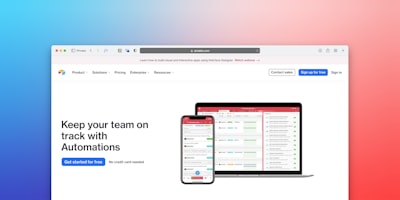
The corporate intranet has evolved from a simple document repository into the operating system that connects people with processes and data. In 2026, organizations in Bilbao that still rely on shared folders, emails, and isolated tools waste time, generate errors, and make decision-making harder. An intranet with workflow automation solves this problem by integrating internal communication, document management, forms, approvals, and dashboards into a single digital environment.
The business environment in Bizkaia is especially favorable for this transformation. The combination of traditional industry, logistics companies, advanced services, and a growing technology ecosystem demands solutions adapted to each company's reality. There is no single model. For that reason, the best strategy is to build a custom platform, with custom software that reflects the specific characteristics of every organization. Custom software avoids the limitations of generic products and creates workflows that reflect how people actually work.
Q2BSTUDIO approaches these initiatives from a technical and business perspective. Its team of software architects, data engineers, and AI specialists works with department heads to identify bottlenecks and improvement opportunities. The result is not a decorative portal, but an operational platform that reduces friction between teams, organizes tasks, and provides real-time visibility.
Artificial intelligence must be integrated in a practical and purposeful way. It is not about installing an isolated chat, but about incorporating language models that understand the organization's vocabulary, retrieve information from internal repositories, and assist employees in their tasks. AI agents can classify requests, extract data from documents, anticipate delays, or suggest the next action in a process. All of this must operate under a framework of security, privacy, and traceability.
Workflow automation connects events with actions. When someone submits a vacation request, a purchase order, or an incident report, the system can validate the information, find the responsible person, send notifications, and update records. Process automation with software reduces waiting times and prevents tasks from getting stuck in an inbox. This same logic can be applied to employee onboarding, supplier management, or project tracking.
For an intranet to scale, it needs a solid architecture. This is where cloud and hybrid deployment models come into play. Companies can host their platform on cloud AWS/Azure and take advantage of elasticity to grow without large upfront investments. Cloud infrastructure also makes it possible to connect AI services without exposing sensitive information. Q2BSTUDIO configures private networks, VPN tunnels, and secure endpoints so that communication between local systems and the cloud remains confidential and audited.
Cybersecurity cannot be left as an afterthought. An intranet hosts personal data, commercial data, intellectual property, and access credentials. It is essential to enforce role-based access control, multifactor authentication, activity logging, and data retention policies. Automated workflows must also include human verification points when the decision has a significant impact. This combination of security and governance is the foundation for employee trust and IT control.
One of the most valuable benefits is the ability to measure what happens inside the organization. A modern intranet generates a large amount of operational data: who starts each process, how long it takes, which departments participate, and where errors accumulate. With a BI/Power BI layer, executives can consult the status of workflows in real time and compare performance across teams. Decision-making becomes evidence-based rather than intuition-based.
Q2BSTUDIO's experience shows that adoption depends not only on technology. Cultural change is equally important: people need to understand why their routines are changing, what they gain from it, and who to contact during the first days. For this reason, implementation includes training, practical documentation, and a direct support channel. The goal is for the intranet to be perceived as a real help, not as an imposition.
Integration with existing business systems is also crucial. It is common to operate with ERP, CRM, invoicing tools, communication platforms, or industry-specific solutions. An automated intranet must be able to read and write in these systems without duplicating data. APIs and custom connectors make it possible to synchronize customers, orders, files, payroll, and other types of information. Q2BSTUDIO designs integration layers that preserve investment and avoid dependency on a single vendor.
Technology ownership is a strategic issue. When a company buys a closed system, it remains tied to the vendor's roadmap. In contrast, when a project is developed with source code delivery, the organization can maintain, extend, or redirect the platform in the future with other teams. Q2BSTUDIO favors this transparency, with clear technical documentation, automated testing, and ongoing support that allows the client to gain autonomy progressively.
Regarding budget, a large initial investment is not always required. A phased approach makes it possible to start with a specific module that solves a real problem and then expand the platform. This incremental model produces visible results within weeks and helps justify each phase with data obtained from the project itself. Companies in Bilbao can begin with a pilot and set the expansion pace according to the benefits achieved.
Looking ahead to 2026, competitive advantage depends on the ability to operate with agility. Those who automate repetitive tasks free up time for customer service, data analysis, and continuous improvement. Bilbao has a business ecosystem prepared to take this step, and local technology companies such as Q2BSTUDIO can support that evolution by combining knowledge of the region with international standards.
Likewise, it is advisable to create an internal data governance committee to oversee what information artificial intelligence can use, who has permission to modify a workflow, and how new automations are approved. This committee prevents bad practices, maintains order in permissions, and ensures that every improvement is aligned with business strategy. Technology only matures when there is an organization capable of managing it with judgment.
In short, an intranet with workflow automation in Bilbao is much more than an IT project. It is a strategic decision with an impact on productivity, employee satisfaction, and leadership speed. The combination of custom software, artificial intelligence, cybersecurity, cloud AWS/Azure, and BI/Power BI makes it possible to build a unique, secure, and scalable platform. Those who act now can turn their internal operations into a lasting competitive advantage.