An intranet with workflow automation has become a strategic priority for many companies in Barcelona. Over the last few years, teams have multiplied their digital tools, but they have not always managed to make those tools communicate with each other. The result is a familiar scenario: information lives in a portal, approvals travel by email, data is manually copied into spreadsheets, and managers lose visibility into what is actually happening. Automating internal workflows does not mean installing another piece of software; it means redesigning how people, data, and systems collaborate. Q2BSTUDIO is a custom software and technology company that tackles this challenge with a combination of custom applications, artificial intelligence, cloud integration, and a clear business perspective.
Barcelona has a very dynamic business ecosystem, with industrial, technology, logistics, and service companies that need to operate quickly and accurately. A well-designed intranet makes it possible to centralize knowledge, connect teams, and standardize processes. When it also incorporates automation, it stops being a passive consultation channel and becomes an execution engine. Employees no longer need to find the person responsible for an approval or reconstruct the status of a file; the system makes it visible and moves it forward. That shift is what many organizations in Barcelona are seeking in 2026 to differentiate themselves and adapt to an environment where operational speed defines competitive advantage.
The difference between an informational intranet and an operational intranet is enormous. In the first case, the platform displays documents, news, and directories. In the second, the intranet records tasks, launches alerts, requests validations, updates databases, and generates indicators automatically. Companies that keep the informational model usually end up with double work: the portal does not reflect reality and teams manage operations in parallel spreadsheets. Workflow automation fixes this disconnect by applying clear rules to real data, inside an environment with permissions, auditing, and traceability.
The concept of workflow automation applied to an intranet covers many different processes: employee onboarding, purchase requests, contract reviews, incident management, activity reports, or support escalations. Every process has a start, a set of steps, and an end. When they are modeled on a digital platform, bottlenecks caused by unanswered emails, inconsistent formats, and unclear criteria disappear. In addition, every task is recorded, which makes it possible to measure times, identify deviations, and improve continuously.
Q2BSTUDIO approaches these projects by developing custom applications instead of imposing closed software. This decision is key because every company has its own business rules, departments with different needs, and legacy systems that cannot be ignored. An application designed specifically for the organization adapts to its decision flows and internal culture. Thus, automation does not force people to change the way they work; on the contrary, it strengthens existing good practices and removes the friction that slows them down.
Artificial intelligence adds a layer of value that goes far beyond a search box. In an intranet with AI, employees can ask questions in natural language, summarize long documents, classify requests, and get answers based on the company’s internal knowledge. Instead of navigating through folders, the user talks to the system and gets exactly the information they need. This dramatically reduces onboarding time and prevents critical knowledge from being trapped in the minds of a few people.
AI agents are the natural evolution of this architecture. An agent not only answers a question: it executes actions. It can read an incoming email, check its content, update a CRM, request human review, and notify the responsible area. Q2BSTUDIO designs agents with security and supervision criteria so they act reliably. Sensitive information is handled with access control, encryption, and activity logs, ensuring that the autonomy of AI does not compromise organizational governance.
All this automation and AI agent layer is traditionally supported by AWS/Azure cloud infrastructure. The cloud provides elasticity, continuity, and a consumption model adapted to the project size. A corporate intranet that integrates generative AI needs variable computing capacity, secure databases, and stable connectivity with on-premise systems. Azure and AWS offer services that allow Q2BSTUDIO to build scalable solutions without requiring the client to make large hardware investments.
Cybersecurity is not an add-on, but a structural pillar. An intranet with automation concentrates confidential information about clients, employees, and operations, so any breach would have a high impact. Q2BSTUDIO applies multi-factor authentication, granular roles, encryption at rest and in transit, access auditing, and periodic vulnerability reviews. In AI environments, isolation and secure channeling techniques are also implemented so that model queries do not compromise sensitive data.
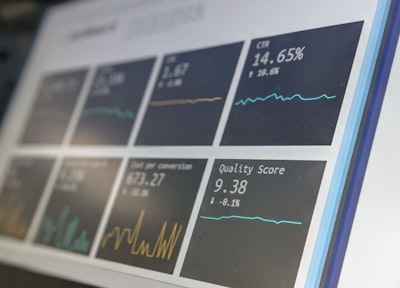
Visibility for management is another major benefit. When the intranet automates processes and stores interactions, it is possible to build dashboards with BI tools such as Power BI. Managers can see in real time the number of open requests, average resolution time, workload per team, and budget deviations. This information allows decisions to be made based on data rather than impressions, a decisive factor in any digital transformation plan.
The Q2BSTUDIO methodology starts with a listening phase: understanding how operations work today, which tools are used, what the pain points are, and which indicators the project should improve. Without that foundation, any automation is a solution looking for a problem. During the first sessions, the candidate processes, the scope of the MVP, and the success criteria are defined. The participation of internal teams is essential because they are the ones who know the exceptions and unwritten rules.
After the analysis phase comes a functional prototype. Instead of planning for months, Q2BSTUDIO builds a first version that allows automation to be seen in action with real data and real users. This prototype is reviewed in short cycles, so adjustments are incorporated quickly. The goal is to learn by doing and reduce uncertainty before extending the solution to the whole company.
Integration with existing systems is critical. The new intranet does not necessarily have to replace the ERP, CRM, or tools already in use, but it must coexist with them. Q2BSTUDIO uses APIs, connectors, and events to synchronize information across platforms without creating duplicates. The result is an ecosystem where the intranet acts as the orchestration layer, and each system keeps its specialized function.
Another important aspect is client autonomy. A solution that depends on the provider for every change loses value over time. Q2BSTUDIO delivers configuration tools, clear documentation, and training so the internal team can manage users, adjust flows, and supervise AI agents. Technology becomes an asset owned by the company, not an outsourced black box.
The results observed in intranet automation projects usually appear at two levels. At the operational level, repetitive tasks are reduced, transcription errors disappear, and cycle time shortens. At the management level, control, predictability, and the ability to scale without hiring more coordination staff improve. Both effects contribute to making the return on investment tangible and defensible before the finance department.
One of the most common mistakes is jumping into buying a fashionable tool without understanding the real process. Another mistake is automating an inefficient flow, which only produces errors faster. It is also common to underestimate change management: teams do not adopt technology if they do not understand what they gain from it. Therefore, any serious implementation must combine technology, communication, and training from day one.
Q2BSTUDIO supports companies throughout the entire project lifecycle, from initial diagnosis to evolutionary maintenance. Its profile is especially suited to organizations looking for a balance between innovation and technical solidity. Instead of offering a standard solution, the company designs an architecture that responds to the real needs of the business, naturally integrating AI, automation, cloud, and security.
In short, an intranet with workflow automation is much more than an internal improvement: it is a competitiveness lever. Companies in Barcelona that bet on this evolution gain speed, accuracy, and analytical capacity. With the right support in artificial intelligence, any organization can transform its intranet into an execution system that frees human talent for higher-value tasks.