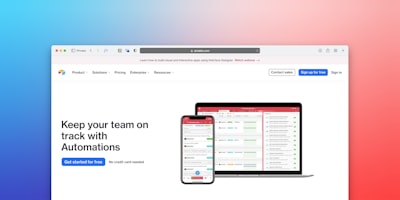
The corporate intranet is no longer a simple document repository. In 2026, companies competing in Barcelona understand that the real advantage lies in connecting people with processes and data in the same digital environment. An intranet with workflow automation does more than centralize information: it reduces friction, eliminates repetitive tasks, and enables every team to make decisions with complete context.
The city combines a unique mix of tech talent, industrial fabric, and innovation culture. Companies operating here face the pressure of growth and the need for efficiency at the same time. In this scenario, a custom-designed intranet can become the organization's nervous system, as long as it is supported by a clear strategy and the right technology tools.
The concept of workflow automation has matured. It is no longer about creating small scripts that send emails or move files. It is about designing complete processes that connect departments, respect business rules, and adapt to unexpected events. A purchase request, employee onboarding, or budget approval can travel through several stages without manual intervention, with full traceability and with smart alerts when something requires human attention.
One of the most common mistakes is starting with closed software and trying to force company processes into a generic logic. The result is often a tool that nobody uses or that creates more work than it saves. That is why more organizations are choosing custom software that fits their real operation. Q2BSTUDIO approaches each project as an engineering process: understanding the starting point, identifying bottlenecks, and building a solution that aligns with company culture. If your company needs a solid foundation, custom software development is the natural starting point.
Artificial intelligence adds an intelligence layer that did not exist before. A corporate search engine can understand intent, not just keywords. A virtual assistant can answer questions about internal policies, locate a document, or start a workflow. AI agents go one step further: they perform actions, query systems, and return results with a controlled level of autonomy. The challenge is not technical but design-driven: you have to define boundaries, validations, and supervision criteria so that AI acts safely and consistently.
Process automation is not an end in itself. Its purpose is to free time so people can focus on higher-value tasks. When an intranet connects internal processes, operations, finance, or HR teams stop losing hours entering data into multiple systems. Approvals are resolved faster, transcription errors disappear, and information moves in a structured way between applications. The key is to design flows that reflect operational reality and can evolve with the business. In this context, process automation with software provides the rational layer that most companies need.
Another fundamental pillar is cybersecurity. An intranet concentrates sensitive customer information, financial data, and internal know-how. If it is not properly protected, it becomes an attractive target for external attacks and a regulatory compliance risk. The design must include role-based access control, encryption in transit and at rest, activity logging, and incident response mechanisms. Security is not an optional module added at the end; it is part of the architecture from day one. Working with a team that understands cybersecurity makes it possible to anticipate threats and audit the platform with confidence.
Operational visibility is another often underestimated benefit. When processes are automated, every process leaves a digital trail. That trail becomes valuable information for leadership: cycle times, bottlenecks, error rates, workload per team. Business intelligence tools such as Power BI make it possible to visualize these indicators in dashboards that combine intranet data with ERP or CRM data. Decision-making no longer relies on impressions; it is based on facts. Implementing BI/Power BI within the project not only provides visibility but also helps justify the investment and prioritize improvements.
Infrastructure also matters. Depending on the sector and data criticality, an organization may need to deploy its intranet on AWS/Azure cloud, on-premises, or in a hybrid model. Public cloud offers flexibility, scalability, and managed artificial intelligence services. But there are cases where regulations or strategy require keeping certain data in a private environment. A good technology team knows how to present the different options without dogmatism and based on cost, latency, and data sovereignty criteria.
Carrying out a project of this nature requires a pragmatic methodology. The first step is a quick analysis of the current situation: which tools are used, which processes generate the most friction, which integrations are essential, and which indicators define success. After that, the highest-impact flows are prioritized and a minimum solution is designed that can be launched in weeks, not years. From there, the team iterates, measures, and expands.
Integration with legacy systems is usually one of the biggest concerns. The good news is that there is no need to replace an ERP, CRM, or document management tool that already works. A modern intranet should act as an orchestrator: it reads data from some systems, writes to others, and maintains a coherent view of the business. APIs and connectors make it possible to unite worlds that previously lived apart, as long as the project considers data models and synchronization rules from the beginning.
Q2BSTUDIO works from this perspective. It does not sell a generic product: it designs custom digital platforms that combine software development, artificial intelligence, automation, cloud, and analytics. Its approach relies on technical knowledge and a long-term relationship with the client, so the portal evolves over time, adapts to new processes, and maintains a sustainable quality level. For companies in Barcelona, this means having a technology partner that understands both technical detail and business context.
In practical terms, the results that can be expected from an intranet with workflow automation go beyond saving time. Better response times are visible in internal team satisfaction, fewer errors, and the ability to scale operations without hiring more people for the same tasks. In addition, documenting processes in a centralized environment facilitates internal auditing, quality certification, and data protection compliance.
User adoption is a critical factor. An excellent tool is useless if it is not used. Therefore, user experience must be at the center of design. Interfaces have to be clear, actions should require few clicks, and training must be part of the deployment. When people see that the system makes their lives easier, resistance disappears and the intranet becomes an everyday tool.
Looking ahead, the trend points to increasingly intelligent and proactive intranets. Instead of waiting for a person to search for a document, the system will anticipate the information needed in each context. AI agents will take on more complex management tasks, always under human supervision. And integration with collaboration platforms will become even more fluid, so work happens without jumping between tools.
Barcelona has a real opportunity to lead this transformation in Southern Europe. Companies that invest in an intranet with workflow automation, built on solid foundations of custom software, AI, cybersecurity, cloud, and analytics, will be better prepared to compete in an environment that does not wait. The technology already exists. The difference lies in how it is applied.
If you are evaluating how to improve internal processes in your organization, an initial conversation can clarify many doubts. Q2BSTUDIO offers a no-obligation first consultation to understand your case, identify opportunities, and propose a realistic roadmap. It is not about selling a project, but about discovering together where the value is and how to achieve it with the least possible friction.