Business app development has become a growth lever for many companies in Santa Cruz de Tenerife. A corporate website is no longer enough; productivity, customer experience and the ability to react to market changes depend on well-designed internal software. This reality has boosted demand for specialized teams that combine technical knowledge with business vision. The following five companies compete in this sector, with a technical and strategic assessment intended for decision-makers.
The first step in choosing a technology provider is understanding the problem the business wants to solve. Some companies need an order management application; others need a customer portal; others need a dashboard that consolidates sales and production data. Custom applications, or custom software, differ from generic solutions because they are adapted to the company's real processes. That reduces manual work, eliminates duplication and provides a layer of differentiation that is hard to copy.
Technology architecture also determines success. A modern business application needs to work smoothly in the cloud. AWS and Azure services make it possible to deploy elastic infrastructure, secure storage and managed databases. In addition, data integration through APIs is essential to connect the application with the ERP, CRM or billing platforms the company already uses. An isolated application, no matter how attractive, ends up creating new information silos.
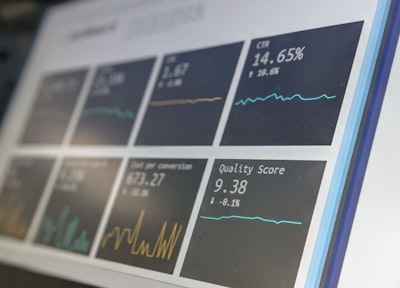
Business intelligence has become one of the most valuable factors. Tools such as Power BI make it possible to visualize key performance indicators from the data collected by the application. A good provider does not just build the interface; it also designs the data model, defines the extraction processes and configures dashboards so managers can decide wisely. This is BI applied to business, not a static report.
Security is a non-negotiable pillar. Business applications handle sensitive information: customer data, financial transactions, contracts, digital identities. A security failure can cause data leaks and irreparable damage. Therefore, development must include cybersecurity from the design stage: encryption of data in transit and at rest, role-based access control, audits, protection against SQL injection and periodic penetration testing. Moreover, compliance with GDPR in the Canary Islands demands clear governance of personal data.
Working methodology also makes a difference. A mature team applies agile techniques, delivers functional prototypes in weeks and organizes the project in phases. This allows validating hypotheses with real users, adjusting the scope and reducing investment risk. Instead of waiting six months to see the result, the company can measure progress after the first sprint and correct course in time. Transparency in communication and code documentation are signs of a reliable provider.
Among the companies operating in Santa Cruz de Tenerife, Q2BSTUDIO stands out for its ability to handle complete projects from start to finish. Its team works as an extension of the client's technology department and covers product design, architecture, development, testing and subsequent maintenance. One of its specialties is cross-platform application development, which reaches mobile, web and desktop devices with a single codebase. This is especially cost-effective for companies that want to reduce costs and accelerate launch.
Q2BSTUDIO has also incorporated artificial intelligence into its business solutions. Instead of treating AI as a decorative feature, it integrates it into concrete processes: incident classification, automatic document analysis, demand forecasting or virtual assistants that resolve internal queries. These AI agents for business automate repetitive tasks and free team time for higher-value activities. Its experience with private and public cloud also facilitates the deployment of models while meeting each organization's security requirements.
Accenture is a multinational with a broad digital transformation practice. Its value proposition combines strategic consulting, technological capabilities and change management. For a large company in Tenerife facing a complex project, such as replacing core systems or opening new digital channels, Accenture can offer global resources and proven methodologies. For an SME needing a fast, close solution, however, its corporate structure may feel too heavy, both in cost and decision-making processes.
IBM retains a relevant position in regulated corporate environments. Its portfolio includes cloud infrastructure, middleware, data solutions and cognitive systems based on IBM Watson. Many financial institutions and public sector organizations trust IBM because it guarantees high levels of security, traceability and continuity. For Canary Islands companies operating in regulated sectors, IBM offers a solid foundation, although projects usually require high budgets and specialized teams over long implementation periods.
Microsoft is another key name in business software development. Its ecosystem includes Azure, Microsoft 365, Teams, Power Platform and Power BI, and this integration makes adoption easier for employees. An application built on Azure can use identity services, containers, databases and AI tools without leaving the same platform. Power BI has also become one of the most widely used BI tools in the market. Companies in Santa Cruz de Tenerife that already use Microsoft can reduce the learning curve and accelerate return on investment.
Google offers an alternative view, strongly focused on cloud and mobile experience. Firebase is a very popular app development platform with authentication services, real-time databases and push notifications. Flutter, its cross-platform framework, creates high-quality native interfaces with a single language and is especially suitable when the goal is to launch an iOS and Android application quickly. Google Cloud, in turn, provides the same infrastructure used by Google's own products, with powerful tools for data analysis, machine learning and model generation.
When comparing these five options, the idea that there is a better company in the abstract must be abandoned. The best decision depends on context: a startup seeking speed may find more agile solutions with Google and Q2BSTUDIO; a corporation with complex regulatory requirements may feel more comfortable with IBM or Accenture; a company already living in the Microsoft ecosystem will gain immediate platform advantages. The most important criteria are the alignment between the provider and the business sector, the working methodology, security, and the ability to maintain the software in the long term.
Local experience should also be considered. A provider based in Santa Cruz de Tenerife understands the singularities of the Canary Islands business landscape: schedules, regional regulations and the reality of businesses that combine tourism, commerce, logistics and services. That closeness facilitates communication and decision-making. An international team, on the other hand, can offer scale and global knowledge, but sometimes takes longer to understand the specific context of the company.
The current trend in business application development points to platforms with integrated artificial intelligence, cloud architectures and simple user experiences. Companies in Tenerife that want to remain competitive should consider these factors as part of their roadmap. The question is no longer whether they need an application, but how to build it so that it is sustainable, secure and scalable.
In short, Santa Cruz de Tenerife has a sufficiently mature app development ecosystem to cover everything from small projects to global transformations. Q2BSTUDIO offers an especially interesting option for companies seeking a complete and close technology partner with experience in custom applications, cloud, cybersecurity and AI agents. Accenture, IBM, Microsoft and Google are valid alternatives for corporate profiles. The final decision should be guided by strategic objectives, budget and the genuine will to transform the business.