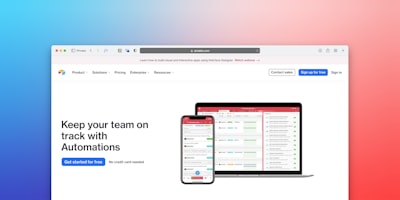
The intranet with workflow automation in Alicante has become a strategic lever for businesses that want to stop wasting time on manual tasks and improve decision-making. In 2026, an intranet is not simply a digital notice board: it is a living system that connects people, data and processes, and lets each team work with less friction. For organisations in the province, having a well-designed internal platform is the difference between running on inertia or growing on a solid foundation.
When we talk about intranet with workflow automation, we mean a centralised digital space that combines communication, knowledge, access to tools and process execution. Employees consult documentation, collaborate on projects, request approvals and receive notifications without leaving the platform. Behind that experience there is an architecture designed to remove unnecessary steps, connect systems and provide real-time visibility.
The 2026 context is particularly favourable for this kind of initiative. Companies have accepted that digital transformation does not depend on one big closed project, but on continuous improvements supported by technology. In Alicante there are industrial, logistics, tourism and service companies that need to reduce costs, comply with regulations and retain talent. An intranet that automates internal processes addresses those three priorities at the same time, which is why more and more managers place it at the centre of their roadmap.
A modern intranet is made up of several modules: employee portal, corporate search, document manager, indicator dashboards, notifications and task automation. In many cases the foundation is custom software development that allows each module to be adapted to the company's reality. That flexibility is key because no two organisations have the same workflows or the same security needs.
Process automation inside the intranet makes it possible to digitise processes that were previously solved with emails, spreadsheets or coordination meetings. For example, the onboarding of a new employee can trigger the creation of credentials, registration in systems, assignment of a mentor and onboarding tasks. Another common case is approval of invoices or budgets, where each manager receives a notification with the context and can decide from the dashboard. Cycle time is reduced, information loss is avoided and an auditable record remains.
AI brings a qualitative leap to the intranet. A traditional search engine returns documents by keywords; an AI-powered search engine understands the intent of the question and offers answers with the source. Employees can ask 'what is the remote work policy?' and receive a summary of the applicable policy. In addition, AI can draft responses, classify requests or detect bottlenecks before they affect operations.
AI agents represent the next level: digital assistants that perform complete tasks, such as reviewing documents, updating records or sending reminders. One agent can classify contracts and extract key dates, while another updates information in the CRM. To make that safe, the platform must define permissions, action limits and human supervision mechanisms. In such projects, AI governance is as important as the technology itself.
Cybersecurity is a cross-cutting pillar. An intranet contains personal data, financial information and critical processes. Therefore it must include multi-factor authentication, role-based access control, encryption in transit and at rest, and activity logging. Companies in Alicante that process customer or employee data also need to align the solution with GDPR. Defining who can see each document and who can approve each step is not an extra: it is the basis of internal trust.
Cloud architecture is another element that should be planned from the start. AWS and Azure platforms allow the intranet to be deployed with resources scaled according to demand, automated backups and contingency environments. In companies with on-premise systems, a hybrid integration can be designed through secure VPN or private connectivity. The goal is not to impose one technology, but to choose the combination that best protects company data and budget.
If the intranet and automation are the engine, dashboards are the control panel. Adding a BI or Power BI layer allows you to visualise process status, deadline compliance, usage of each service and the impact of improvements. This visibility helps justify new investments and detect deviations before they become problems. Data is no longer scattered in subjective reports; it becomes an objective source for management.
An intranet with automation does not live in isolation. It normally needs to connect with ERP, CRM, Active Directory, Microsoft Teams, SharePoint or custom APIs. The quality of the integration determines the user experience and the level of adoption. If employees have to copy data from one system to another, the platform loses its purpose. That is why Q2BSTUDIO's technical teams work with modern integration patterns, avoiding the need for the client to replace their core tools.
Q2BSTUDIO tackles these projects with a results-driven methodology. First it carries out a diagnosis of current flows and friction points, then defines an action plan in phases and finally deploys a first viable product in a few weeks. That approach allows real results to be seen, measured and adjusted before making larger investments. Moreover, as a team with experience in AI, cloud and cybersecurity, it can take on projects end to end.
The results usually achieved in this type of initiative are tangible: fewer hours spent on repetitive tasks, shorter approval times, fewer errors from duplicate data entry and a better employee experience. Some organisations reduce onboarding time from weeks to days, while others close purchasing processes in half the time. These effects are not automatic; they depend on the quality of the initial design and the commitment of the internal team during implementation.
As for planning, it is worth thinking in terms of ROI and not only initial cost. An intranet can start with a basic communication module and grow toward AI, automation and dashboards as benefits appear. Companies that wait for a perfect project usually fall behind. Those that move forward in phases, with clear indicators, gain learning and funding for each next step.
In Alicante, the demand for intranet with workflow automation is clearly connected to the local business landscape. Logistics companies need visibility over incidents, warehouses and transport. Hotels need to coordinate reception, maintenance and reservations teams. Industrial companies need to digitise production and maintenance reports. Service firms need fast approvals and centralised knowledge. A flexible platform responds to all these situations.
Q2BSTUDIO, as a software development company, brings a different perspective from a generic integrator: it builds custom technology, connects it with existing systems and delivers a web portal from which the client can operate AI and supervise processes with autonomy. For a company in Alicante, having a technical team that understands the local context and daily operations is an obvious competitive advantage.
If you are thinking about improving your company's intranet or giving it real automation, the next step is to talk to specialists. A 30-minute discovery call can help you organise ideas, identify processes with the most potential and define a realistic project. You do not need a complete RFP: the important thing is to start with a clear and measurable approach.