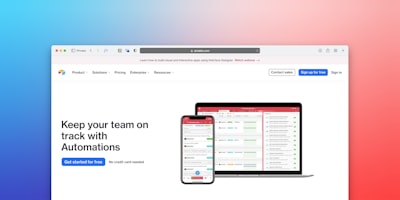
A corporate intranet is no longer just a repository for documents and internal announcements. Today, it is designed as an operational platform where people collaborate, share information, and run business processes in a coordinated way. When workflow automation is added, it becomes a strategic asset that reduces response times, eliminates repetitive tasks, and improves the employee experience. But what really makes an intranet with these features good? The answer is not in piling up functions, but in the balance between technology, design, and business.
A good intranet starts by understanding how the organization works. Every company has unique processes, legacy systems, and different work cultures. A solution that works in one company can fail in another if it is not adapted to its context. That is why the best approach does not start from a closed product, but from custom development that takes real information and decision flows into account. Q2BSTUDIO, as a company specialized in custom software applications, applies this logic from the discovery phase: current processes are analyzed, bottlenecks are identified, and indicators are defined before writing a single line of code.
The first pillar of an efficient intranet is user experience. If employees cannot find what they need in two clicks, they will go back to email and spreadsheets. Navigation must be simple, search precise, and notifications relevant. This requires design aimed at productivity, not just aesthetics. In addition, the intranet must be available from any device, both desktop and mobile, which requires a solid web architecture and an appropriate cloud deployment. This is where AWS and Azure cloud services come into play, ensuring availability, scalability, and security.
The second pillar is integration with existing systems. An intranet that does not connect to the ERP, CRM, or active directory creates information silos and forces users to duplicate data. Good solutions use APIs and connectors to interoperate with the tools the company already uses. For example, by integrating the intranet with the HR system, a vacation request can automatically trigger an approval workflow and update the team calendar. By connecting it to the CRM, a salesperson can view the customer history without leaving the internal platform. This orchestration capability is what differentiates a conventional intranet from a real automation platform.
The third pillar is workflow automation itself. It is not about rigid macro processes, but flexible workflows that adapt to the status of each task. Purchase requests, incident management, new employee onboarding, or contract review are examples of processes that can be visually modeled and executed with human intervention only when necessary. A good tool allows defining rules, deadlines, responsible parties, and escalation conditions. In addition, the system must record each step to audit and improve the process with real data. Process automation with software is a discipline that requires combining business logic with experience design, and that is where a partner with technical and functional expertise makes the difference.
The fourth pillar, increasingly relevant, is artificial intelligence. Employees do not want to click through ten menus to find a technical document or a form. They want to type a question in natural language and get the right answer. Artificial intelligence can transform the intranet into a conversational assistant that understands context, searches authorized sources, and provides answers with citations. It can also automatically classify incoming requests, prioritize urgent incidents, or generate report summaries. AI agents take this capability to the next level: they not only respond, but also execute tasks such as creating an incident, updating a record, or sending a notification when certain conditions are met. Of course, AI must be well trained with organizational data and supervised by humans at critical points.
The fifth pillar is security and governance. An intranet handles confidential information, from customer data to internal strategy. Therefore, role-based access control is essential, as well as audit logging of relevant actions. In addition, if the intranet connects to cloud AI services, it must be ensured that data is not misused and that connections are protected through VPN tunnels or private endpoints. Cybersecurity is not an add-on, but a transversal layer of the project. A responsible company must demand from its provider a clear privacy, GDPR compliance, and service continuity plan.
The sixth pillar is analytics. If you cannot measure, you cannot improve. A good intranet includes dashboards that show, in real time, the status of workflows, approval times, incident rates, or employee satisfaction levels. This data, integrated with Business Intelligence tools such as Power BI, allows management to make evidence-based decisions. For example, if a department takes twice as long as the average to approve requests, the dashboard reveals it and action can be taken on the cause.
Another fundamental aspect is maintainability. Many projects fail because the software becomes obsolete and depends on the original provider for any change. A good intranet delivers source code, technical documentation, and an administration portal so the internal team can adjust content, configure workflows, and manage users without constantly needing engineers. Training and support are also part of the value, because a tool that is not understood ends up abandoned.
From a results perspective, a well-executed intranet with automation has a direct impact on the bottom line. It shortens approval cycles, reduces data re-entry errors, decreases research time, and speeds up new employee onboarding. All this translates into recovered working hours and a better experience for talent. Organizations that integrate automation into their core processes obtain a return on investment in a reasonable timeframe, as long as the project is approached with a clear roadmap and measurable objectives.
When choosing a technology partner, it is important to assess the ability to understand the business, technical experience in integrations, and transparency in the collaboration model. Q2BSTUDIO brings a development partner vision, not a simple supplier: it works with agile methodologies, delivers fast releases, and adjusts workflows based on observed results. Its experience in AI, cloud, and automation allows it to tackle comprehensive projects without losing focus on what matters: employees working better and the business gaining efficiency.
In short, a good intranet with workflow automation is one that people use every day, connects with the existing technology ecosystem, simplifies processes, and provides data to keep improving.