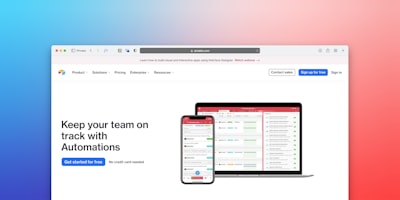
The corporate intranet is undergoing a profound change. For a long time, it was the place where documents were published, internal news was read and phone numbers were looked up. Today, however, it has become the operational heart of many organizations: a space where people collaborate, data flows and business processes are executed with less manual intervention. Workflow automation is the piece that turns a static intranet into a living work platform, and its evolution is setting the digital agenda for the coming years.
The first major shift is the integration of artificial intelligence into the work environment itself. Internal search engines no longer just return lists of documents; they begin to answer questions with verified sources. Virtual assistants help users find critical information, summarize contracts or prepare meetings. When that intelligence is combined with workflow automation, the intranet stops being an orderly archive and becomes an operating system for work: a place where knowledge is activated and tasks are solved without jumping from one tool to another.
Workflow automation in the intranet no longer means only creating simple rules such as if this happens, do that. The new generation incorporates AI agents capable of reasoning over data, deciding the next action, executing it and learning from the outcome. An agent could, for example, review a purchase request, validate the available budget, ask the manager for approval and update the ERP, all within the same corporate environment. Exceptional cases are escalated to people with full context, which reduces errors and speeds up operations.
This level of automation requires custom software. Closed platforms force organizations to adapt their processes to the tool, and that almost always ends in compromise. Every company has different approval flows, roles and regulations. That is why the natural evolution is to build custom software that integrates with corporate identity, master data and the rest of the technology ecosystem. With dedicated development, the intranet can grow at the same pace as the company, without being blocked by the limitations of a generic product. Q2BSTUDIO understands this need and supports the entire process, from design to deployment, combining software engineering, artificial intelligence and automation.
Infrastructure is also evolving. The intranet of the future cannot depend on an isolated server that saturates at peak hours. It needs elasticity, availability and advanced data capabilities. For this reason, many organizations combine their systems with cloud services AWS/Azure, where the intranet can scale on demand, use managed databases and consume AI services without building everything from scratch. That architecture also simplifies connections with other platforms and supports short delivery cycles for new functionality.
Cybersecurity is the design condition that supports everything else. An automated intranet manages confidential information, personal data and critical processes. A security failure not only compromises information; it can also disrupt entire workflows. Organizations must apply role-based access control, reinforced authentication, data encryption and audit logs. The zero trust model, in which no identity is trusted by default, becomes a basic principle. Security is integrated into every API, every AI agent and every connection with external systems.
Observability and data analytics are just as important. Without measurement, it is impossible to know whether automation is creating value. Business Intelligence platforms such as Power BI allow teams to visualize intranet indicators in real time: cycle times, approval rates, bottlenecks, cost per process and adoption by department. Combining operational data with usage data provides an objective view of performance. This is how intranet evolution is decided: with numbers, not impressions.
Q2BSTUDIO experience in automation projects and enterprise applications shows that success depends not only on technology but on an iterative approach. It starts with a short discovery phase to identify the highest-impact workflows. Then a minimum viable product is built in a few weeks and deployed in production with real integrations. From there, improvements are driven by data. This method reduces risk and lets the organization see results from the first month, rather than waiting for a large project that never finishes.
Change is also cultural. An intranet with workflow automation changes the way people work, the relationship with data and the responsibilities of each team. People need to understand what the system does, why each automation happens and when they can intervene. Continuous training and participatory design are as important as technical architecture. Employees must feel that they own the process, not that they are passive observers.
The starting point for any evolution must be a realistic inventory of existing systems. Organizations typically live with an ERP, a CRM, invoicing applications, corporate directories and collaboration tools. The intranet does not need to replace them; it needs to orchestrate them. Automation workflows must talk to all of them through well-governed APIs and connectors. Integrations become the real engine of change, and their quality determines whether automation works in daily operations or remains a technical demonstration.
Looking ahead, the intranet will continue to gain autonomy. Workflows will self-optimize based on results, business teams will be able to modify processes with low-code tools, and connections with suppliers and customers will become more standardized for secure data sharing. Sustainability will also enter the equation: companies will measure the impact of their operations, and the automations themselves will help meet environmental and regulatory goals.
In this scenario, companies that act early will have a clear advantage. An intranet with workflow automation is not a trend; it is the foundation of future competitive capabilities. Having a partner that masters custom software, AI and the cloud makes it possible to move forward with confidence.
Choosing a technology partner is not about delegating strategy; it is about gaining execution capability. Q2BSTUDIO brings experience in software development, AI implementation and process automation, with a practical, results-oriented vision. Its approach combines technology and business, helping each company build an intranet that meets current needs and can keep evolving without replacing everything that already works. The question is no longer whether the intranet will change, but how quickly your organization wants to be ready for that change.