The corporate intranet is no longer a simple document repository. In an environment where innovation depends on execution speed, the intranet with workflow automation becomes the organization's digital nervous system. It is not just about publishing news or storing files; it is about activating processes, connecting teams and generating continuous learning from data.
When a company includes automation in its innovation roadmap, it begins to see technology as a transformation lever, not as an expense. Internal workflows —approvals, incidents, onboarding, audits, project tracking— stop depending on scattered emails and spreadsheets. They become part of a platform that measures, corrects and optimizes every step. That is the foundation for scaling any business initiative.
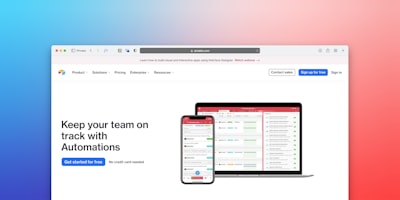
A traditional intranet is a place where people go to find information. An intranet with workflow automation is a place where things happen. When an employee requests time off, when an auditor reviews a contract or when a salesperson asks for a proposal, the platform orchestrates tasks, assigns owners, sets deadlines and records decisions. The organization becomes more predictable and, at the same time, more capable of experimenting.
That ability to experiment is what turns the intranet into an innovation enabler. If a company wants to test a new customer service process, a new hybrid work model or an internal awareness campaign, it does not need to build a solution from scratch. It needs to adjust existing flows, create new states, add rules and observe what happens. Automation accelerates the test-learn cycle.
Use cases can be very diverse: employee onboarding, incident management, budget approvals, supplier control, regulatory compliance or internal support. Each of these processes can be represented as a visible flow with clear owners and deadlines. Automating them not only reduces errors; it also reveals redundancies and improves collaboration between departments.
For this vision to be useful, the intranet needs process-oriented development. Custom software applications make it possible to model the real workflows of each organization, far from the limitations of generic solutions. A custom platform adapts to the digital maturity of the company and can grow with it: first with a pilot, then with more departments, more countries and more use cases.
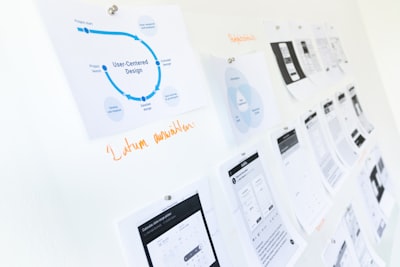
Design also matters. An innovative intranet cannot be a labyrinth of menus. People need to understand what is expected of them at every moment. Automated flows reduce ambiguity: the system indicates who should act, what information is required and what the deadline is. This improves employee experience and frees time for higher-value tasks.
Artificial intelligence adds an intelligence layer to automation. AI agents can classify requests, draft responses, extract data from documents or suggest next actions. However, to work accurately they need two things: well-defined processes and governed data. The intranet with workflow automation provides both.
Generative models can also be integrated to summarize internal news, translate content, search knowledge or detect anomalies in indicators. The portal becomes an assistant inside the organization. With configurable AI agents, business teams can adjust behaviors without constantly depending on engineering.
Integration with existing systems is another pillar. An intranet must not live in isolation. To automate a purchasing process it needs to connect to the ERP; to automate commercial management, to the CRM; to publish information, to corporate directories. The key is to expose and consume services securely, avoiding duplication and keeping a single source of truth.
In this integration, cloud architecture plays an essential role. Solutions based on AWS or Azure offer managed AI services, elastic databases and continuous deployment environments. They also allow production, test and development environments to be isolated. The cloud is not a final destination; it is the support that makes innovation possible without exposing the business to unnecessary risks.
Cybersecurity cannot be an added layer at the end. In an intranet with automated flows, every action leaves an audit trail. It is essential to define roles, permissions, access audits and incident response protocols. Secure identity management and integration with active directories prevent automation from becoming an entry point for attackers.
Observability is what sustains continuous improvement. With BI tools such as Power BI, teams can visualize bottlenecks, cycle times, workload and performance against indicators. Data is not only for reporting; it is for deciding. Every month, the innovation committee can prioritize the flows that have the greatest impact on strategy.
An innovation roadmap needs clear milestones. It makes no sense to automate all processes at once. The recommended approach is to identify a process with obvious pain, measure its current state, automate it and check the result. Then extend the pattern to other departments. This incremental logic reduces risk and builds confidence throughout the organization.
In addition to technology, the intranet with workflow automation involves a cultural change. People stop being owners of isolated tasks and become accountable for results within a process. For this to work, training is as important as code. It is necessary to explain why each flow is automated, what information is collected and how it is used. When employees understand the purpose, they adopt the tool and suggest improvements.
The business case must be built on clear metrics. Saying that the intranet is more modern is not enough; it is necessary to show how many hours are saved, how many errors are avoided and how much faster the company responds to internal or external clients. A well-executed automation initiative reduces operating costs, improves quality and frees talent. These are arguments any management committee understands.
At Q2BSTUDIO we understand the intranet as a living digital product. We are a software and technology company that designs custom software, integrates AI, strengthens cybersecurity, deploys infrastructure on AWS/Azure and creates dashboards with Power BI. Our work does not end when the solution goes live; we support the team to measure results and prioritize new capabilities. We listen to the client, model their processes and build a solution their team can operate autonomously.
The path to an innovative intranet does not have to be complex. In a first phase, critical processes and baseline metrics are defined. Then a pilot is built with the highest-impact flows. Finally, the solution is extended to new teams and advanced capabilities such as AI agents or BI dashboards are incorporated. Each phase delivers value and feeds the next one.
Measuring results should not be an academic exercise. Each automated flow can have associated indicators such as resolution time, number of completed tasks, employee satisfaction or cost per process. These indicators connect with business strategy and help justify new technology investments.
Experience shows that successful projects combine technical know-how and business knowledge. That is why it is advisable to work with a team that understands software design, system integration and AI deployment, but is also capable of asking about the company's real objectives. Technology is the means; operational change is the end.
The intranet with workflow automation is much more than an internal tool: it is the backbone of operations and the starting point for any transformation project. Companies that place it at the center of their innovation roadmap achieve sustainable competitive advantages. If you are looking for a technology partner with experience in custom software, AI, cybersecurity, cloud and Business Intelligence, Q2BSTUDIO can help you turn that vision into measurable reality.