Corporate digitalization often collides with a barrier that is not technological but financial. An intranet with workflow automation represents a strategic investment, but many companies need flexible payment schemes to undertake it without draining cash. That is why financing and installments have become a key lever for accelerating digital transformation.
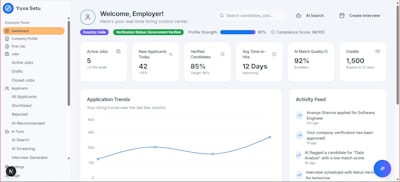
A modern intranet is not just a document repository. It is a platform that centralizes communications, processes and data, connecting departments, offices and countries. By incorporating workflow automation, organizations can reduce manual tasks, minimize errors and free up time for teams. The challenge is how to finance this leap without straining cash flow.
In this context, installment payment formulas allow the outlay to be aligned with value creation. The goal is not merely to defer costs, but to structure the investment so that each financed milestone corresponds to a real delivery. This logic is especially useful for custom software projects, where scope is defined in phases and results are measured objectively.
The most common financing options include milestone-based payments, monthly or quarterly subscriptions, and deferred payment plans linked to projected savings. There are also technology rental or leasing formulas, as well as agreements with financial institutions to cushion larger investments. The key is choosing a model that respects the seasonality of the business and does not create liquidity tension.
Q2BSTUDIO, a software development and technology company, works with procurement and finance teams to design tailored payment schedules. Its approach combines short deliveries, an MVP in a few weeks and phased billing, so that the client can verify progress before committing to the next investment. This reduces perceived risk and simplifies internal project approval.
The technical side also influences financing. An intranet with workflow automation built on custom software adapts to the company's actual processes instead of forcing operational change. This kind of development requires investment in analysis, architecture and integrations, but it delivers a stronger medium-term return.
Furthermore, the chosen technology infrastructure determines both budget and flexibility. Many solutions rely on AWS and Azure cloud services to scale without investment in physical hardware. The monthly operating expense model turns a large initial investment into predictable costs, which fits growth-oriented financial strategies.
Artificial intelligence adds a differentiating layer to the intranet. Generative AI systems, semantic search and AI agents can automate complex tasks such as classifying requests, drafting reports or resolving internal incidents. By integrating these services into workflows, the platform stops being passive and becomes an active productivity tool.
AI agents are especially relevant when they work together with process automation. They can extract invoice data, update CRM records, answer common questions or escalate exceptions to a manager. Their deployment requires a secure architecture with access control, traceability and human supervision to avoid incorrect decisions.
Cybersecurity cannot be separated from the financial plan. An intranet centralizes sensitive information and exposure to attacks can generate costs far higher than the initial investment. That is why measures such as multi-factor authentication, encryption, network segmentation and security audits should be included from the outset. A phased project can incorporate these safeguards without inflating the price.
In parallel, business indicators must be visible in order to justify the return. Integrating business intelligence tools such as Power BI enables monitoring of process times, bottlenecks and operational efficiency in real time. This turns the intranet into an executive information source and an objective basis for future expansions.
From a CFO's perspective, the business case is as important as the technical design. An intranet with workflow automation project should be presented with a clear use case, baseline metrics and an estimate of savings. The conclusions should include an ROI range and a payment schedule compatible with treasury policy.
Risk is further reduced with an incremental deployment strategy. The first phase can focus on a specific process with high operational volume; once validated, the results can finance the next expansion. This staged-start approach works particularly well in organizations with strict investment committees.
Q2BSTUDIO recommends combining technology and financing from the discovery phase. In two weeks, the process can be mapped, KPIs defined and budget estimated. An MVP is usually ready within four to eight weeks, which helps demonstrate value quickly and validate the convenience of expanding scope before committing all resources.
Moreover, it is not necessary to replace the entire technology ecosystem. The intranet can integrate with ERPs, CRMs and productivity tools through APIs or native connectors. The lower the adoption cost, the easier it is to align the project with the company's financial capacity.
Choosing a technology partner with experience in AI, integration and custom development makes the difference. Q2BSTUDIO applies a methodology of frequent deliveries, administration portals so teams can manage AI themselves, and full documentation. All code belongs to the client, avoiding dependencies that could make future evolution more expensive.
Ultimately, financing an intranet with workflow automation is a strategic decision that brings technology closer to business strategy. Installments are not an improvised solution but a governance approach that demands rigor, transparency and a medium-term vision. Companies that understand this can modernize without compromising stability.
For that, it is worth working with a team that speaks both technology and business. The combination of custom applications, AWS/Azure cloud, AI, cybersecurity and dashboards such as Power BI creates a robust solution. And, above all, it allows investment to be planned with the same precision as the software.