Flexible financing and payments for intranet with automation have become an enabling condition for many organizations. Technology is no longer the main obstacle; the way a corporate project is budgeted, approved, and paid often is. A modern intranet is not only a document repository; it acts as an operating core where employees check indicators, approve requests, coordinate teams, and automate repetitive tasks. Therefore, when a company decides to modernize its digital infrastructure, it needs a financial plan that supports implementation without compromising cash flow.
The starting point is understanding that an intranet with automation is not an infrastructure expense but an investment in operational efficiency. By centralizing processes such as employee onboarding, expense approvals, document management, support tickets, and executive reports, the company reduces waiting times and manual errors. The speed of adoption depends on payment flexibility and the provider's ability to deliver incremental value. That is why it makes sense to look for a technology partner that offers both custom software development and suitable financing options.
Q2BSTUDIO, a custom software development and technology consulting company, approaches intranet with automation projects from both a technical and an economic perspective. Instead of imposing a single payment and a closed calendar, it proposes a financing plan aligned with implementation milestones. This way of working fits procurement, finance, and IT departments that need to justify every disbursement and expect to see results before releasing new budget items. The goal is to base the investment decision on the platform's real utility, not only on an internal request for modernization.
A common model is payment by delivery milestones. The project starts with a discovery phase to map processes, roles, and existing systems. Then a functional prototype or MVP is developed to validate critical functions. At production time, integration with corporate systems and user training takes place. Each phase is paid when completed, so the client keeps control and can adjust scope if priorities change. For companies that want to avoid a large initial cash outlay, this structure is a natural solution.
Another alternative is subscription fees. The company pays a monthly or quarterly amount for usage, maintenance, and platform improvements. This model turns a capital investment into predictable operating expenditure, which is highly valued in organizations with tight annual budgets. In addition, a subscription makes it easier to include managed services, technical support, and security updates. If the organization grows, the provider can expand the license or infrastructure capacity without requiring the client to renegotiate the entire contract.
Deferred payments linked to realized savings are a formula that demonstrates confidence in the project. In this scheme, investment begins once the platform is already generating cost reductions or productivity gains. Applying this model requires baseline indicators measured before implementation. Q2BSTUDIO can support the definition of these KPIs during the analysis phase, so both parties have a clear reference. This model is especially useful in administrative process automation, where benefits are quickly quantifiable.
External financing through partner institutions is also possible, allowing the investment to be spread over longer terms. For projects that include cloud infrastructure, licenses, or cybersecurity services, this alternative helps distribute the total cost. The provider can facilitate contacts with finance partners, but the final decision remains with the company. In any case, what matters is that the financial plan does not compromise the technical quality of the project. An intranet with automation must be robust, scalable, and secure regardless of the number of payments used to finance it.
Speaking of security, a modern intranet manages sensitive employee, customer, and operational data. The investment must include protection mechanisms such as role-based access control, activity logging, encryption, audits, and regulatory compliance. Q2BSTUDIO integrates cybersecurity criteria from the design phase, whether on AWS/Azure cloud environments or hybrid infrastructure. Payment flexibility cannot jeopardize these aspects. Before signing a financial model, it is wise to review that the scope includes security policies and protection against unauthorized access.
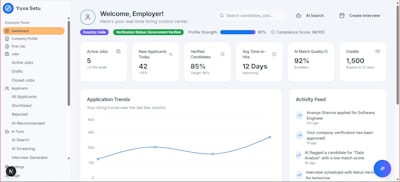
The business intelligence layer is another component that justifies the investment. By connecting the intranet to a Power BI dashboard or a Business Intelligence portal, executives gain real-time visibility into each area's performance. These screens show the state of workflows, request volume, average resolution time, and team workload. This information helps prioritize improvements, identify bottlenecks, and calculate return on investment with verified data. The value of an intranet increases when it becomes a source of intelligence for leadership.
AI agents add an intelligent automation layer that multiplies return. They can classify emails, draft responses, extract data from forms, answer employee questions, or escalate incidents. A corporate portal with AI agents reduces the administrative burden on internal teams and accelerates response times. When these assistants are integrated with business processes, the organization not only digitizes; it learns from every interaction to improve continuously. Q2BSTUDIO designs these agents on demand, with administration portals so business users can configure flows without depending on an engineering team.
Many companies hesitate between building a custom intranet and buying a standard platform. The advantage of choosing custom software development is that the solution adapts exactly to internal processes, integrates with existing software, and grows with the organization. The initial cost may be higher, but flexible payments lower the financial barrier. At the same time, the company keeps code ownership and avoids being trapped in rigid licenses. Q2BSTUDIO, with experience in custom software development for multiple sectors, combines this advantage with payment models that ease the decision.
Process automation with software, in turn, turns the intranet into a system capable of executing tasks autonomously. From invoice validation to task assignment and user provisioning in corporate applications, automated logic reduces manual intervention. The required technology includes APIs, ERP and CRM integrations, dynamic forms, and workflow tools. The higher the automation level, the easier it is to justify financing, because each optimized process translates into freed hours and avoided costs. Therefore, the design phase should prioritize flows with the greatest economic impact.
The ideal financial plan depends on the sector, company size, and economic context. A seasonal SME may prefer deferred payments during low-revenue months; a company with an approved budget may choose milestones; a multinational may prefer global subscriptions with centralized services. Early dialogue between provider and finance team prevents misunderstandings and ensures the commercial proposal fits reality. Q2BSTUDIO, a custom software development company, offers a free preliminary consultation to analyze this fit and recommend the most suitable payment structure.
Measuring return is easier when the intranet generates operational data. Typical metrics include onboarding time, hours spent on administrative tasks, speed of approvals, rate of repetitive incidents, and internal satisfaction scores. With a baseline defined at the start, it is possible to quantify the impact of automation and the new portal. If payment is tied to results, these indicators become the milestone that activates each installment. This way, finance departments stop seeing the intranet as a cost and perceive it as a business unit with measurable benefit.
In short, flexible financing and payments for intranet with automation are not an administrative detail but a factor that determines transformation speed. Having an economic plan aligned with value delivery allows organizations to start earlier, scale safely, and demonstrate results. Q2BSTUDIO advises companies that want to modernize their intranet with automation, artificial intelligence, and analytics, adapting both the technology architecture and payment terms. Every project is unique, and the best plan combines solid technology, security, visibility, and a financial structure the organization can sustain.