Calculating the total cost of an automated intranet requires going far beyond the price of a license. An efficient corporate intranet combines internal communication, document management, workflows, artificial intelligence and dashboards for decision making. If you also want to integrate AI and automation, the project becomes a technology initiative with direct impact on productivity and operating cost. For this reason, it is best to build a total cost of ownership (TCO) model that covers development, integration, operation and evolution over several years.
The most common mistake is to compare only software budgets. An intranet with process automation requires experience design, custom software to cover specific needs, integrations with existing systems, user training and continuous maintenance. It also requires a secure and governed AI layer, because internal assistants that generate answers from corporate documentation need access control, auditing and privacy. A cheap platform is useless if it cannot connect with the critical tools of the business.
To accurately answer the question of how much it costs, the project must be broken down into components. First, platform development: front-end, back-end, data architecture and workflow modules. Second, integration with Active Directory, SharePoint, Microsoft Teams, ERP, CRM or proprietary APIs. Third, cloud AWS/Azure infrastructure, including production environments, storage, private network and backups. Fourth, cybersecurity, with authentication, permissions, encryption, monitoring and penetration tests. Finally, the BI/Power BI layer for measuring indicators and the AI agents layer that automates recurring tasks.
A critical point is the maturity of data and processes. If the organization does not have documented processes, the cost of discovery and modeling will increase. If data is fragmented, integration will be more complex. Therefore, the calculation must begin with a discovery phase that identifies bottlenecks, dependencies and baseline KPIs. This phase usually lasts between two and four weeks and helps estimate the real scope. This analysis avoids surprises and makes it possible to prioritize features with higher return.
The development of an automated intranet is not a closed product. Companies that get better results work with an engineering team that understands both business and technology. Q2BSTUDIO, for example, approaches these projects with a combination of custom software, artificial intelligence and automation. Its approach is not to install a generic platform, but to design a solution that fits internal processes and gives the client code ownership and the ability to operate AI autonomously.
The AI layer must be included in the TCO. A semantic search engine, a virtual assistant or an agent that resolves incidents reduces manual work, but consumes computing resources and requires continuous tuning. The cost of AI includes the model, vector storage, queries, prompting, response validation and updates. Unlike a static feature, AI needs a continuous improvement cycle and humans in the loop to guarantee quality. Companies should plan a monthly operating budget for this layer.
AI agents are another cost and value factor. An agent can classify requests, update records, generate drafts or notify managers. Each agent requires defined objectives, controlled access to systems, result evaluation and supervision. It is not about creating simple scripts, but about deploying logic with governance. In a cost model, it is useful to estimate how many manual hours each agent replaces and compare that with development and operating costs. This turns technology into a measurable investment.
The cloud AWS/Azure infrastructure usually represents a significant part of recurring costs. Development, pre-production and production environments must be sized, as well as identity services, private network and encryption. A good practice is to use containers and serverless architectures to adjust consumption and avoid paying for idle capacity. It is also important to consider internet egress, private endpoints and backup policies. Having a partner that knows these platforms helps optimize spending from day one.
Cybersecurity is not a complement; it is a structural part of the cost. An intranet handles confidential information: payroll, customer data, contracts, intellectual property. Access must be role-based, activity must be logged, and communications between the intranet and internal systems must be protected. For companies with compliance requirements, it is advisable to include audits, pentesting and access reviews at least once a year. The cost of a security breach will always be greater than the cost of a good secure architecture.
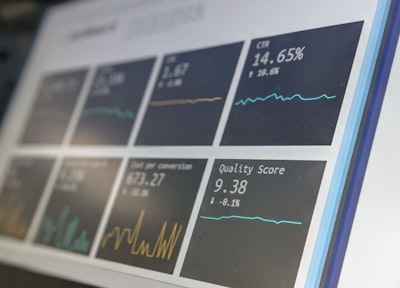
The BI/Power BI layer deserves its own budget item. An automated intranet must measure its own impact: process cycle time, bottlenecks, adoption rate, hours saved and employee satisfaction. Power BI makes it easier to integrate indicators from different sources and build executive dashboards. The cost includes data modeling, report development and training for the people who will interpret the information. Without metrics, the project is difficult to justify to the finance department.
To build a reliable budget, it helps to structure the calculation in scenarios. The base scenario can include an intranet with advanced search, standard workflow and dashboards. The optimal scenario adds generative AI, AI agents and automations that cross several systems. The conservative scenario delays AI until data is clean. Combining these scenarios with an estimate of employee adoption produces a cost range and a realistic payback schedule.
Organizational change costs must also be included. Training, internal communication and support during the first weeks are part of the project. An intranet that is not used is a lost cost. Therefore, companies should reserve between 10% and 15% of the total budget for adoption activities, documentation and support. This percentage varies, but it is more prudent to include it from the beginning than to add it when resistance appears.
Another aspect that is often forgotten is the life cycle. The automated intranet does not end when the first version is published. New workflows, regulatory changes, more users or the addition of new AI agents will create evolution needs. A good financial model separates the initial investment from recurring operations and defines semiannual review milestones. This practice makes the annual cost align with the value generated and prevents the project from becoming outdated.
An illustrative example can help frame the size. Imagine a company with 300 employees that wants to replace its static intranet with a platform containing approval workflows, an assistant that answers questions about internal policies and a Power BI dashboard. Custom development of modules, integration with Active Directory and Teams, and AI configuration can be completed in one quarter. The total cost in the first year will depend on process complexity, but a useful exercise is to calculate the cost per employee and compare it with the manual time recovered.
The key is not to confuse price with value. A well-designed automated intranet reduces errors, accelerates decisions and gives leadership visibility. Companies that integrate AI into their production processes get more impact than those that use it in isolation. Therefore, before signing a budget, it is wise to ask the provider for a business case with KPIs, risks and payback period. Q2BSTUDIO develops this analysis with the client and works with multidisciplinary teams of architects, engineers and security consultants.
In summary, calculating the total cost of an automated intranet requires a holistic view. You need to add custom software, integrations, AI, cybersecurity, cloud AWS/Azure, BI/Power BI, AI agents, training and maintenance. You also need to establish metrics from the beginning and review the model periodically. A provider with experience in software and technology, such as Q2BSTUDIO, can guide that estimate and build a scalable, secure and profitable solution. The goal is not to buy the cheapest option, but the one that generates the most sustainable value for the organization.